



Planting and Growing radish 'French Breakfast 3'

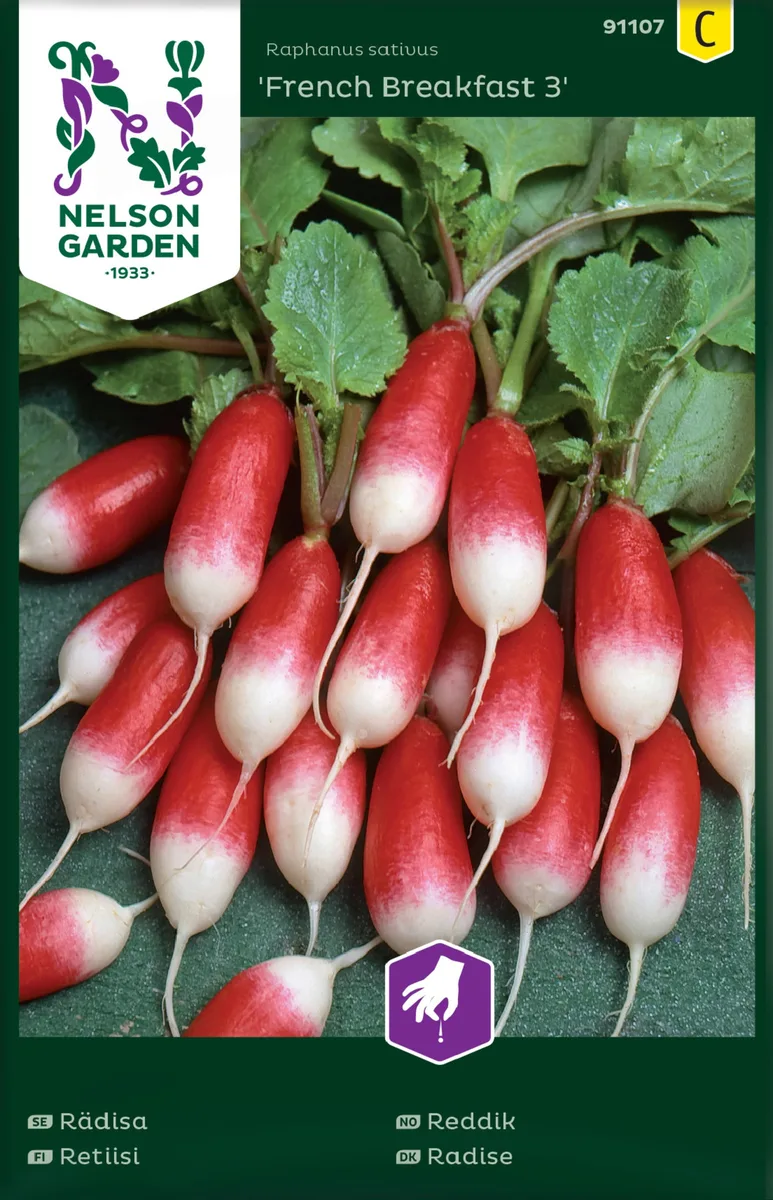
| Care difficulty | 1 / 5 |
|---|---|
| Watering schedule | Moderate regular watering, allowing brief slight drying between soakings |
| Sunlight requirements | Full sun · Partial shade |
| Ideal temperature | Information to be completed |
| Soil type | Chalk · Clay · Loam · Sand |
| Soil pH | Acid · Alkaline · Neutral |
| Soil moisture | Moist but well drained |
| Fertilizing | Balanced perennial feed every four weeks from spring through summer |
| Toxicity | Information to be completed |
How to Water radish 'French Breakfast 3'?
Moderate regular watering, allowing brief slight drying between soakings
Learn more →What Are the Sunlight Requirements for radish 'French Breakfast 3'?
Full sun · Partial shade
Learn more →What Soil Is Best for radish 'French Breakfast 3'?
- Soil type
- Chalk · Clay · Loam · Sand
- Soil pH
- Acid · Alkaline · Neutral
What Are the Moisture Requirements for radish 'French Breakfast 3'?
Moist but well drained
Learn more →How to Fertilize radish 'French Breakfast 3'?

Balanced perennial feed every four weeks from spring through summer
Learn more →How to Prune radish 'French Breakfast 3'?

No pruning required
Learn more →How to Propagate radish 'French Breakfast 3'?

Propagate by seed sown 1-2cm deep, from early spring to late summer
Learn more →How to Plant radish 'French Breakfast 3'?
Grow in full light or light shade, ideally in light, rich, near-neutral, and moist but well-drained soil; sow seed at frequent intervals from early spring to late summer, so that there is a succession of crops; sow in rows 15cm apart, at a depth of 1-2cm, and sow at or thin to a spacing of about 3 cm apart, and harvest them when young so that they do not become woody; for more advice, see radish cultivation
Learn more →Common Pests & Diseases

Diseases
May be susceptible to brassica downy mildew, brassica white blister, club root, damping off, fungal leaf spot, and virus diseases
Pests
May be susceptible to flea beetles, slugs and snails, and cabbage root fly
Explore the plant health library →