



Planting and Growing moonstones

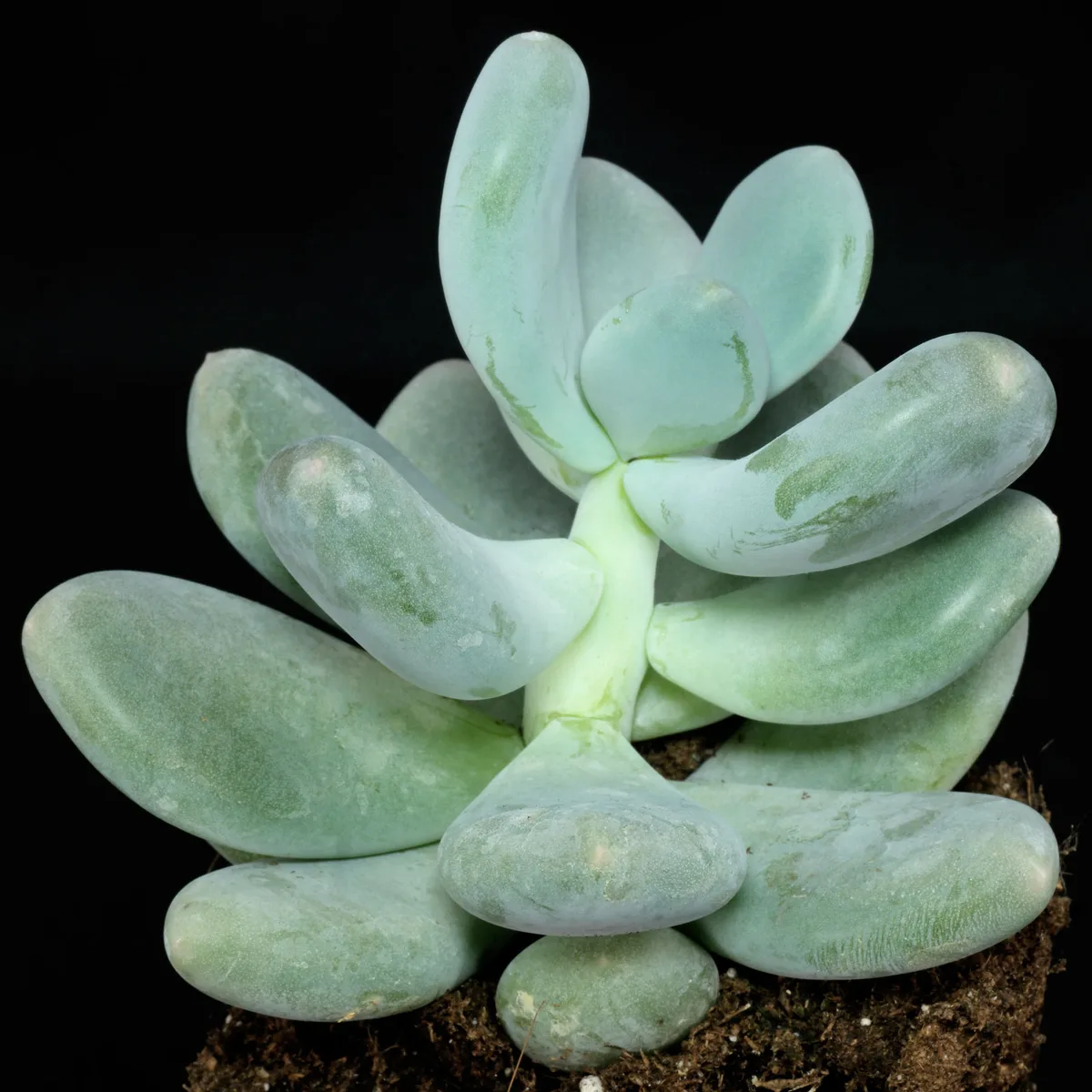
| Care difficulty | 3 / 5 |
|---|---|
| Watering schedule | Water thoroughly only when soil is completely dry; avoid water on leaves. |
| Sunlight requirements | Full sun |
| Ideal temperature | 18 – 28 °C |
| Soil type | Sand |
| Soil pH | Acid · Alkaline · Neutral |
| Soil moisture | Well drained |
| Fertilizing | Monthly with a diluted succulent fertilizer during spring and summer. |
| Toxicity | Information to be completed |
How to Water moonstones?
Pink Moonstone Succulents thrives in arid environments, embodying its drought-resistant nature by storing water within its fleshy leaves. These succulents prefer a dry climate and are adapted to infrequent rainfall, necessitating watering once every 2-3 weeks to mimic their natural habitat. Pink Moonstone Succulents is typically grown indoors due to its need for controlled watering and sensitivity to overhydration. As an evergreen plant, it retains its lush appearance year-round without the need for frequent watering.
Learn more →What Are the Sunlight Requirements for moonstones?
Pink Moonstone Succulents flourish best under full sunlight, where the intensity promotes robust growth and brighter pigmentation. They require several hours each day to thrive, but they can also tolerate partial sun exposure, adapting well to slightly less intense conditions. When light levels deviate from full sun, pink Moonstone Succulents may exhibit less vibrant hues and slower growth rates. When grown outdoors, pink Moonstone Succulents should be positioned in areas where they can receive plentiful sunlight without being overshadowed. In an indoor setting, placing them near a south-facing window ensures adequate light that mimics their natural habitat. Their ability to adapt to partial sun is a testament to their resilience, but full sunlight is key for optimal health and display of their characteristic colors.
Learn more →What Is the Ideal Temperature Range for moonstones?

The pink Moonstone Succulents shows impressive tolerance to temperature variations, withstanding cold as low as 0℃ (32℉) and heat up to 43℃ (109℉). Its resilience to temperature extremes means it can thrive in diverse environments. However, during extremely cold weather, frost could damage its foliage, causing it to turn mushy and discolored. Conversely, excessive heat may cause sunburn, evidenced by scorched, brown leaves. To care for pink Moonstone Succulents, protect it from frost with coverings or move it indoors, and provide shade and water during heatwaves. These measures ensure pink Moonstone Succulents remains healthy and vibrant in variable climates.
Learn more →What Soil Is Best for moonstones?
Pink Moonstone Succulents thrive in well-draining soil, which is crucial to prevent water-logging. A suitable mix includes succulent & cactus soil, combined with perlite or coarse sand for improved aeration. To enhance growth, incorporate slow-release fertilizer once at the beginning of the growing season. Ensure drainage by using pots with holes and avoiding compacted substrates. If succulent mix is unavailable, mix equal parts potting soil, coarse sand, and perlite or pumice to create a similar draining effect.
- Soil type
- Sand
- Soil pH
- Acid · Alkaline · Neutral
What Are the Moisture Requirements for moonstones?
Well drained
Learn more →How to Fertilize moonstones?

Fertilize pink Moonstone Succulents sparingly with a diluted succulent and cacti food during active growth in spring and summer. Monthly feeding at quarter strength promotes robust health and succulence. Avoid fertilization in dormant winter months to prevent root burn. Over-fertilizing can be detrimental, causing leggy growth or harming the root system. Always adhere to package instructions, and water soil before applying fertilizer to protect pink Moonstone Succulents's roots.
Learn more →How to Prune moonstones?

In order to keep a beautiful shape, large succulent plants may need pruning. For example, for echeveria planted in the garden, redundant branches or branches that are too dense need to be cut off in spring and fall. This depends on the plant's purpose and your preference. Tools for pruning mainly include knives, scissors, and some medicines (such as sulfur powder). In order to propagate new plants, cut some leaves in spring and fall. Select a stout stem with 5-6 leaves. Cut it off with a knife, then smear the wound with sulfur powder, and plant it after the wound is healed. Slightly wet the soil used for planting.
Learn more →How to Propagate moonstones?

Belonging to the Crassulaceae family, pink Moonstone Succulents can be effectively propagated through the cutting method. To achieve this, select a healthy, plump leaf from the plant, making a clean cut to avoid damage. The detached leaf should then be allowed to callous for several days before placing it on well-draining soil. Keeping the soil slightly moist and providing ample indirect sunlight will encourage root and new plantlet development. As a succulent, pink Moonstone Succulents requires minimal water during this process to prevent rot.
Learn more →How to Transplant moonstones?
The best time to transplant pink Moonstone Succulents is during late spring to mid-summer or from mid-fall to early winter, which promotes strong root establishment. Choose a well-draining location with partial sunlight, and gently loosen its root ball before transplanting for optimal growth.
Learn more →How to Care for moonstones in Winter?

Pink Moonstone Succulents originates from the arid landscapes of Mexico, naturally adapting to the winter chill by going dormant. This is its defense against the scarce water resources. Over winter, gardeners must mimic these conditions indoors, reducing watering tremendously. The plant's plump, fleshy leaves store enough water to tide it over, but overwatering can lead to deadly rot. So, keen observation of pink Moonstone Succulents's watering needs will set the scene for spring's vibrant growth.
Learn more →How to Plant moonstones?
Indoors-potted: For pink Moonstone Succulents indoors, ensure your pot has good drainage to prevent root rot which can occur if the plant sits in excess water. Outdoors-potted: When potted outside, pink Moonstone Succulents thrives with occasional watering; too much rainwater can harm it, so shelter during heavy downpours is advised. Outdoors-in the ground: Pink Moonstone Succulents requires well-draining soil outdoors to mimic its natural arid habitat; without this, the plant may struggle.
Learn more →How to Repot moonstones?
Best repotted biennially, pink Moonstone Succulents is a compact, fleshy succulent that doesn't require large containers. Choose spring for repotting to benefit its growth cycle. A slightly larger pot with drainage promotes health, mimicking its natural rocky outcrops. After repotting, water sparingly and provide bright, indirect light to prevent stress and maintain those plush, pink leaves.
Learn more →Common Pests & Diseases

Diseases
Generally disease-free
Pests
Generally pest-free
Explore the plant health library →Troubleshooting
Mushy Translucent Leaves, Leaf Drop, or Basal Stem Rot
moonstones (Pachyphytum oviferum) stores water in fleshy leaves and rots rapidly when kept wet in dense soil or cool weather. Handle gently to avoid knocking off fragile plump leaves or rubbing off the protective powdery epicuticular wax (farina).
| What you notice | Possible explanation | What to check next |
|---|---|---|
| Lower leaves turn translucent, yellow, and mushy, or drop at a light touch while soil is damp | Overwatering, poorly drained potting mix, or water trapped in leaf rosettes | Check whether the potting mix stays wet and inspect the stem base for blackening |
| Leaves look wrinkled, deflated, and thin while the gritty mix is completely dry | Underwatering during warm active growth | Feel deep into the pot and lift it to confirm total dryness |
| A few oldest bottom leaves dry into papery husks while upper growth stays firm | Normal lower leaf reabsorption as stems mature | Confirm upper leaves and stem are firm and unblemished |
- Pot in a sharply drained mineral-rich succulent mix (cactus compost amended with coarse grit, perlite, or pumice) in a pot with drainage holes.
- Water thoroughly only after the entire potting mix has dried out completely, and keep much drier during cool winter rest.
- Water at the soil line rather than pouring water into leaf rosettes or onto fuzzy foliage.
- If basal rot occurs, cut above the blackened stem with a sterile blade, let the cutting callus for several days, and root in dry-to-barely-damp gritty mix.
Stop watering immediately if the stem base turns black and soft; decayed roots cannot recover.
Handle fragile leaves by the pot rim rather than the stems to avoid accidental leaf loss.
Stretched Etiolated Growth, Faded Color, or Mealybugs
Insufficient direct sunlight causes stems to stretch and lose compact form or red leaf margins, while mealybugs hide in tight leaf axils.
| What you notice | Possible explanation | What to check next |
|---|---|---|
| Wide gaps between leaves, pale green color, and leaning or floppy stems | Insufficient bright light (etiolation) | Assess daily hours of direct sun or bright windowsill light |
| White cottony tufts in leaf axils or sticky residue on stems | Mealybug or scale infestation | Inspect tight leaf bases, stem junctions, and pot rims closely |
- Move gradually into brighter light (such as a sunny south- or west-facing windowsill) so leaves regain compact growth and natural red-tinted margins without sudden sunburn.
- Prune stretched stems in spring, allow cut ends to callus for a few days, and root cuttings in gritty succulent mix.
- Isolate pest-infested plants and dab visible mealybugs with a cotton swab dipped in rubbing alcohol.
Acclimate shade-grown succulents to intense summer sun gradually over one to two weeks to prevent bleached sunburn scars.