



Planting and Growing chrysanthemum 'Pennine Ginger'

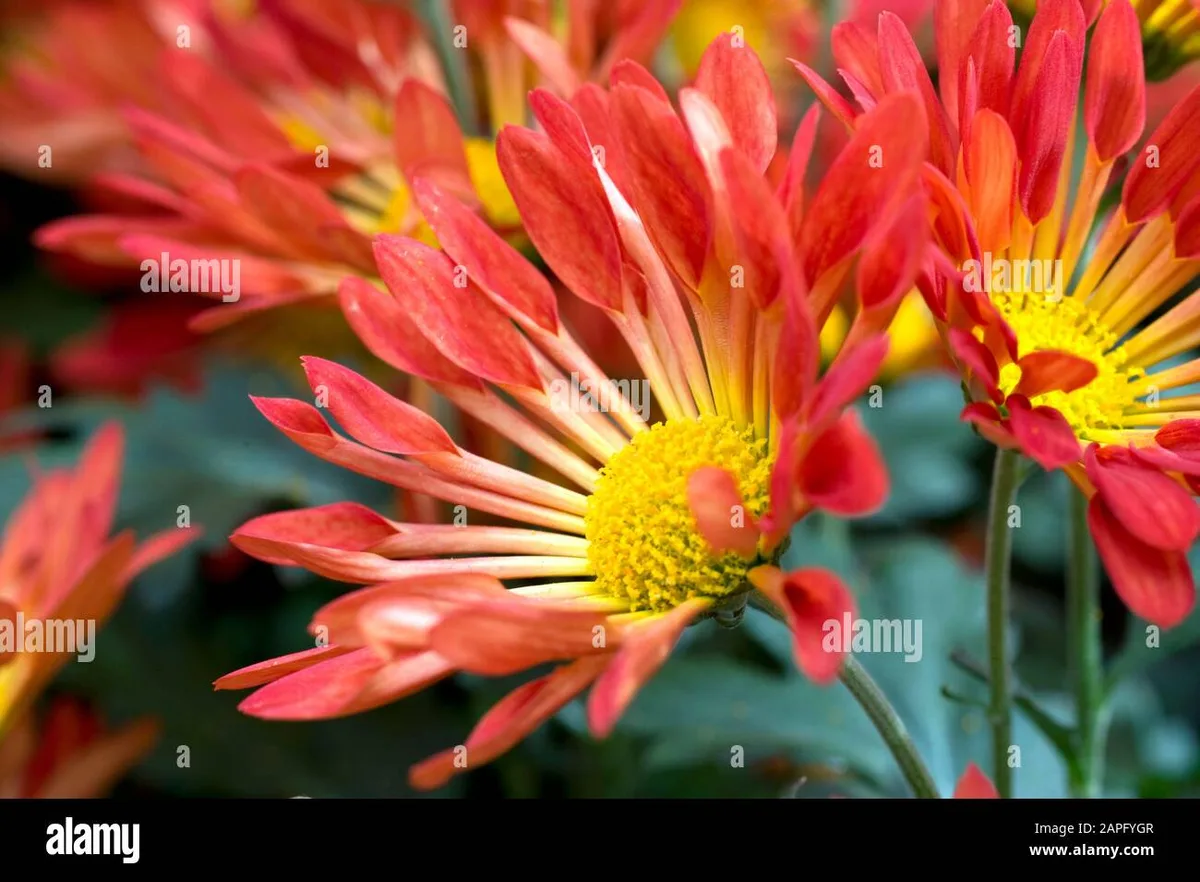
| Care difficulty | 2 / 5 |
|---|---|
| Watering schedule | Keep soil evenly moist during active growth and budding |
| Sunlight requirements | Full sun |
| Ideal temperature | Information to be completed |
| Soil type | Clay · Loam · Sand |
| Soil pH | Acid · Alkaline · Neutral |
| Soil moisture | Moist but well drained |
| Fertilizing | Regular balanced feed, switching to higher potash near bloom |
| Toxicity | Skin allergen. Wear gloves and other protective equipment when handling |
How to Water chrysanthemum 'Pennine Ginger'?
Keep soil evenly moist during active growth and budding
Learn more →What Are the Sunlight Requirements for chrysanthemum 'Pennine Ginger'?
Full sun
Learn more →What Soil Is Best for chrysanthemum 'Pennine Ginger'?
- Soil type
- Clay · Loam · Sand
- Soil pH
- Acid · Alkaline · Neutral
What Are the Moisture Requirements for chrysanthemum 'Pennine Ginger'?
Moist but well drained
Learn more →How to Fertilize chrysanthemum 'Pennine Ginger'?

Regular balanced feed, switching to higher potash near bloom
Learn more →How to Prune chrysanthemum 'Pennine Ginger'?

Cut back to near ground level in the autumn, before lifting and storing for the winter
Learn more →How to Propagate chrysanthemum 'Pennine Ginger'?

Propagate by softwood cuttings taken in spring from shoots from stored stools
Learn more →How to Plant chrysanthemum 'Pennine Ginger'?
Grow in a sheltered site in full sun in fertile well-drained soil, enriched with organic matter and general purpose fertiliser. Water freely in dry weather. Pinching out the growing tip when the plants are 15-20cm tall to encourage free flowering bushy plants. Staking is usually required. There is no need to deadhead. In mild areas leave in the ground protected by a thick mulch. Elsewhere lift the crowns and store in a greenhouse, raising fresh plants from these each year
Learn more →Common Pests & Diseases

Diseases
May be susceptible to glasshouse grey mould, powdery mildews and chrysanthemum white rust
Pests
May be susceptible to aphids and leaf miners . Leaf and bud eelworms can damage stock that has not been heat-treated. Earwigs sometimes damage blooms. Capsid bug and glasshouse red spider mite are occasional pests
Explore the plant health library →The Toxicity of chrysanthemum 'Pennine Ginger'
Skin allergen. Wear gloves and other protective equipment when handling