



Planting and Growing date palm

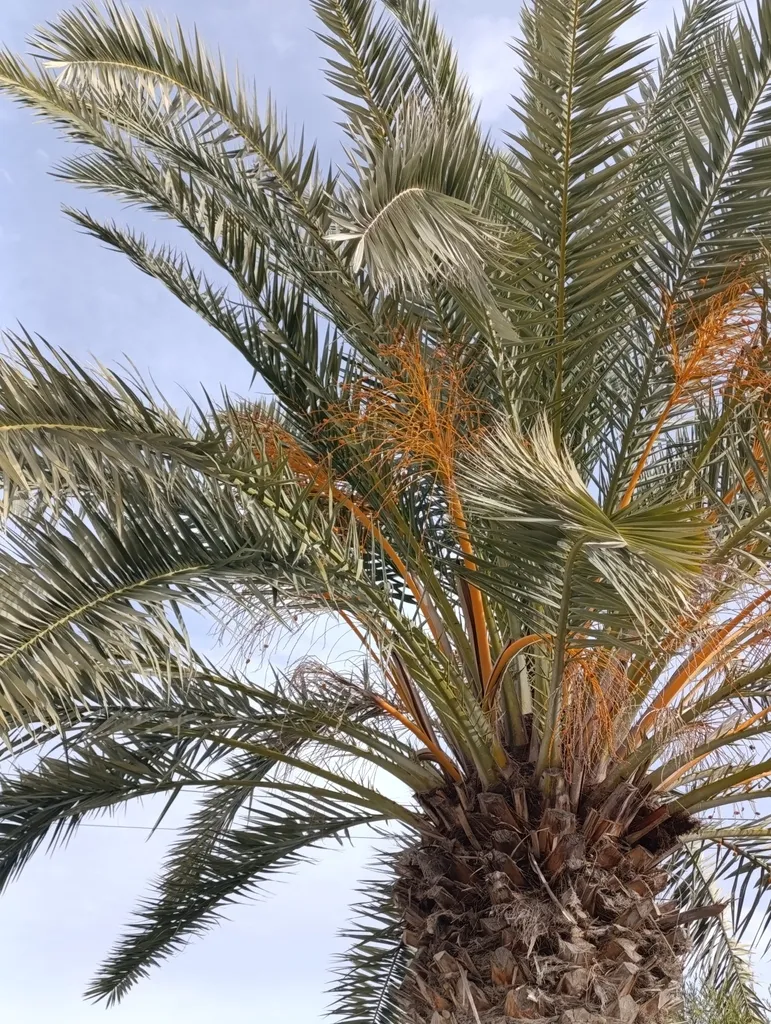
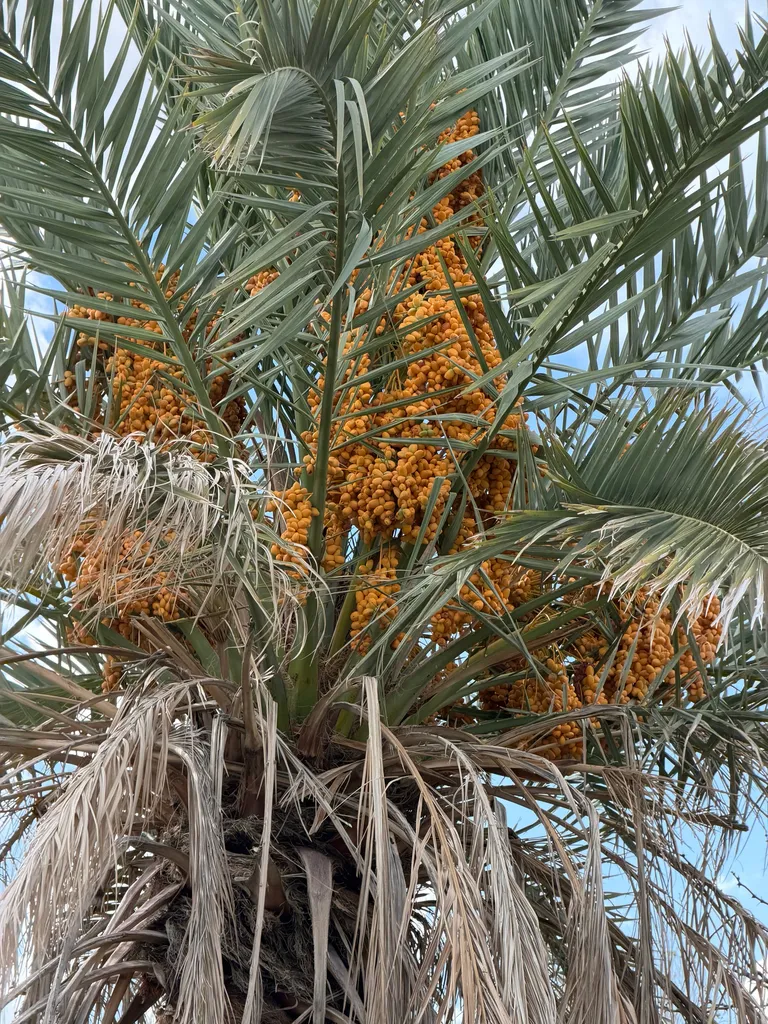
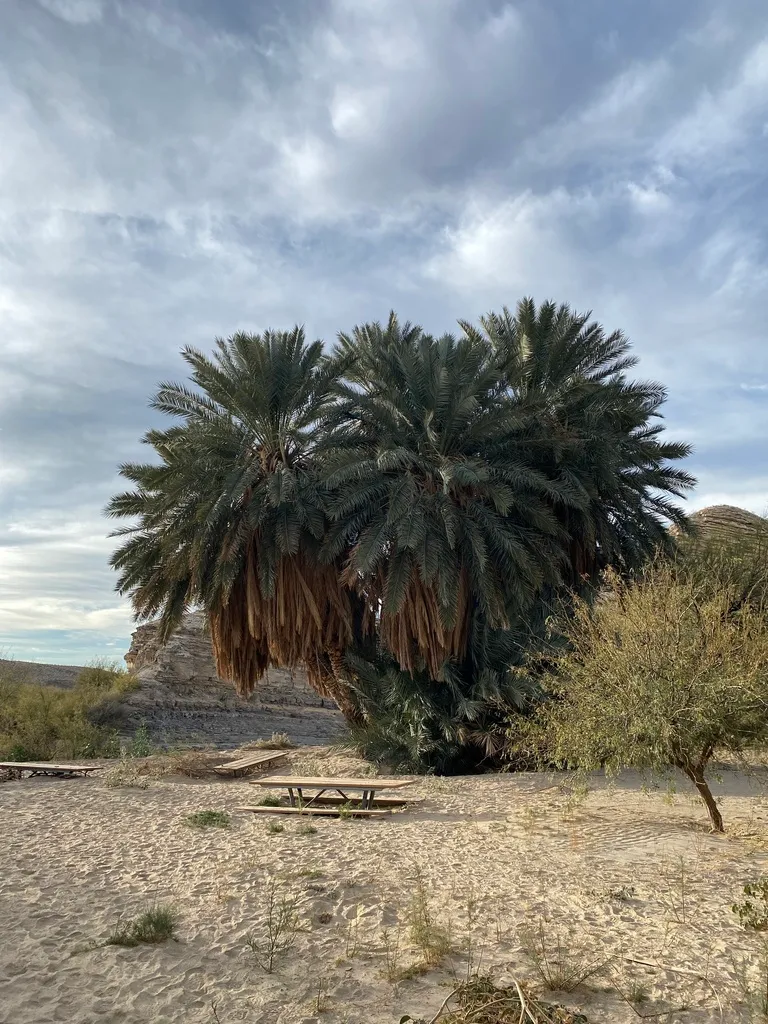
| Care difficulty | 2 / 5 |
|---|---|
| Watering schedule | Moderate regular watering, allowing brief slight drying between soakings |
| Sunlight requirements | Full sun |
| Ideal temperature | 15 – 25 °C |
| Soil type | Loam · Sand |
| Soil pH | Acid · Alkaline · Neutral |
| Soil moisture | Well drained |
| Fertilizing | Balanced perennial feed every four weeks from spring through summer |
| Toxicity | Information to be completed |
How to Water date palm?
Originating from arid regions, date palm has adapted to thrive with minimal moisture, displaying a high drought tolerance. Its natural habitat dictates a preference for dry conditions over frequent watering. The appropriate watering schedule for date palm is once every 1-2 weeks, ensuring the soil dries out between sessions. As an outdoor plant commonly cultivated in hot climates, date palm's deep root system allows it to efficiently utilize water during intense heat and less frequent rainfalls.
Learn more →What Are the Sunlight Requirements for date palm?
Date palm thrives in full sun conditions, which is the key to its robust growth and fruit production. The optimal light should be intense and direct for the majority of the day. While date palm can tolerate partial sun, long-term exposure to less intense light may lead to suboptimal growth and reduced yield. Adaptive traits such as its sturdy leaves help date palm adjust to varying light conditions, ensuring resilience in less than ideal exposures. Outdoors, date palm should be planted in locations where they can receive unobstructed sunlight for best performance. The specific planting positions should favor open spaces to accommodate date palm's size and light needs.
Learn more →What Is the Ideal Temperature Range for date palm?

Date palm is remarkably resilient to temperature variations. It can endure cold conditions down to 0℃ (32℉) and withstand intense heat up to 45℃ (113℉). This adaptability implies that date palm can be cultivated in a wide range of environments but requires specific care to thrive. In cold conditions, symptoms like browning fronds or slowed growth may indicate distress. Conversely, overheating may cause leaf scorch or dehydration. To mitigate these extremes, protective measures such as frost covers in winter or adequate watering and shading in the peak of summer are essential. These strategies ensure date palm remains healthy and robust across varying climates.
Learn more →What Soil Is Best for date palm?
Date palm requires well-drained soil to avoid water-logging. Use a mix of garden soil, sand, and perlite to improve aeration. If sand or perlite is unavailable, coarse grit or pumice can be alternatives. Ensure good drainage by placing gravel at the pot's bottom. Fertilize monthly with a balanced liquid fertilizer during the growing season to boost growth.
- Soil type
- Loam · Sand
- Soil pH
- Acid · Alkaline · Neutral
What Are the Moisture Requirements for date palm?
Well drained
Learn more →How to Fertilize date palm?

For date palm, apply high-phosphorus fertilizer at planting to bolster root growth, followed by balanced nutrition fertilizers during growth phases for optimal fruiting. Fertilize semi-annually: once at the onset of the warm season and again in mid-fall. Use recommended label rates, adjusting for plant size and soil fertility. Caution against over-fertilization to prevent growth issues and environmental harm. Monitor response to adjust schedules and dosages, especially in varying climates. Practical tip: ensure even distribution around the drip line, not near the trunk.
Learn more →How to Prune date palm?

Date palm, known for its sweet fruit, requires thoughtful pruning. Focus on removing dead or damaged fronds and inflorescences in early spring to promote healthy growth. Prune old fruit stalks post-harvest to prevent disease and improve air circulation. Optimal timing aligns with its growth cycle, preventing unnecessary stress. Pruning enhances vigor, yield, and aesthetics.
Learn more →How to Propagate date palm?

Date palm is predominantly propagated through seeds, yet for uniformity in cultivation, growers often resort to vegetative methods including offshoots and tissue culture. Offshoots guarantee clones of the mother plant and are detached for replanting after reaching a suitable size. Tissue culture in laboratories can mass-produce genetically identical plants. For optimal success, maintain soil consistency and leverage professional know-how in offshoot separation and tissue culture techniques.
Learn more →How to Transplant date palm?
Transplant date palm during early to mid-spring or late fall to mid-winter for optimal results, as these seasons offer ideal conditions for root establishment. Ensure date palm is placed in a sunny location with well-draining soil. Gently loosen the root ball when transplanting to encourage new growth.
Learn more →How to Care for date palm in Winter?

Date palm hails from arid desert climes, so winter is unfamiliar territory. Naturally adapted to drier, hotter conditions, date palm prefers mild winters with little temperature fluctuation. However, if it drops below 20°F, damage could occur. Winter care requires shelter from harsh cold, reducing watering, and monitoring for frost damage. So, keep an eye on temperature variations and your date palm will continue to thrive.
Learn more →How to Plant date palm?
Indoors-potted: Keep your date palm in a spot where it can bask in plenty of ambient light; rotating the pot occasionally promotes even growth. Outdoors-potted: Outdoor potted date palm thrive with good air circulation; shelter from strong winds preserves their elegant fronds. Outdoors-in the ground: Date palm are not frost-tolerant and should be planted outdoors only in warm climates; they require ample space to accommodate their extensive root system.
Learn more →How to Repot date palm?
Ideal for repotting every 1-2 years, date palm thrives when given ample space to accommodate its robust size. Repot in spring to align with its growth cycle. Choose a large, sturdy container to support its structure. Post-repot, ensure full sun and adjust watering to match the root's recovery—crucial for date palm's successful transition.
Learn more →How to Harvest date palm?

To produce fruit, a male and female plant must be grown together. Instead of depending on the wind, it is advisable to hand-pollinate because fruiting can be difficult. A female tree will produce fruit after around eight years if grown from seed, and should produce about 20 pounds of dates as a first yield. The fruit can be harvested in the fall and early winter by pulling the ripe fruits from the stalks. You can tell if they are ready to be collected because the fruit will be dark purple with shiny, wrinkled skin. The fruit will ripen at different speeds, so you may have to harvest across a few days - be patient and only harvest the ripe fruit.
Learn more →Common Pests & Diseases

Diseases
Generally disease-free
Pests
May be susceptible to glasshouse red spider mite and scale insects
Explore the plant health library →The Toxicity of date palm
Information to be completed