



Planting and Growing missionary plant

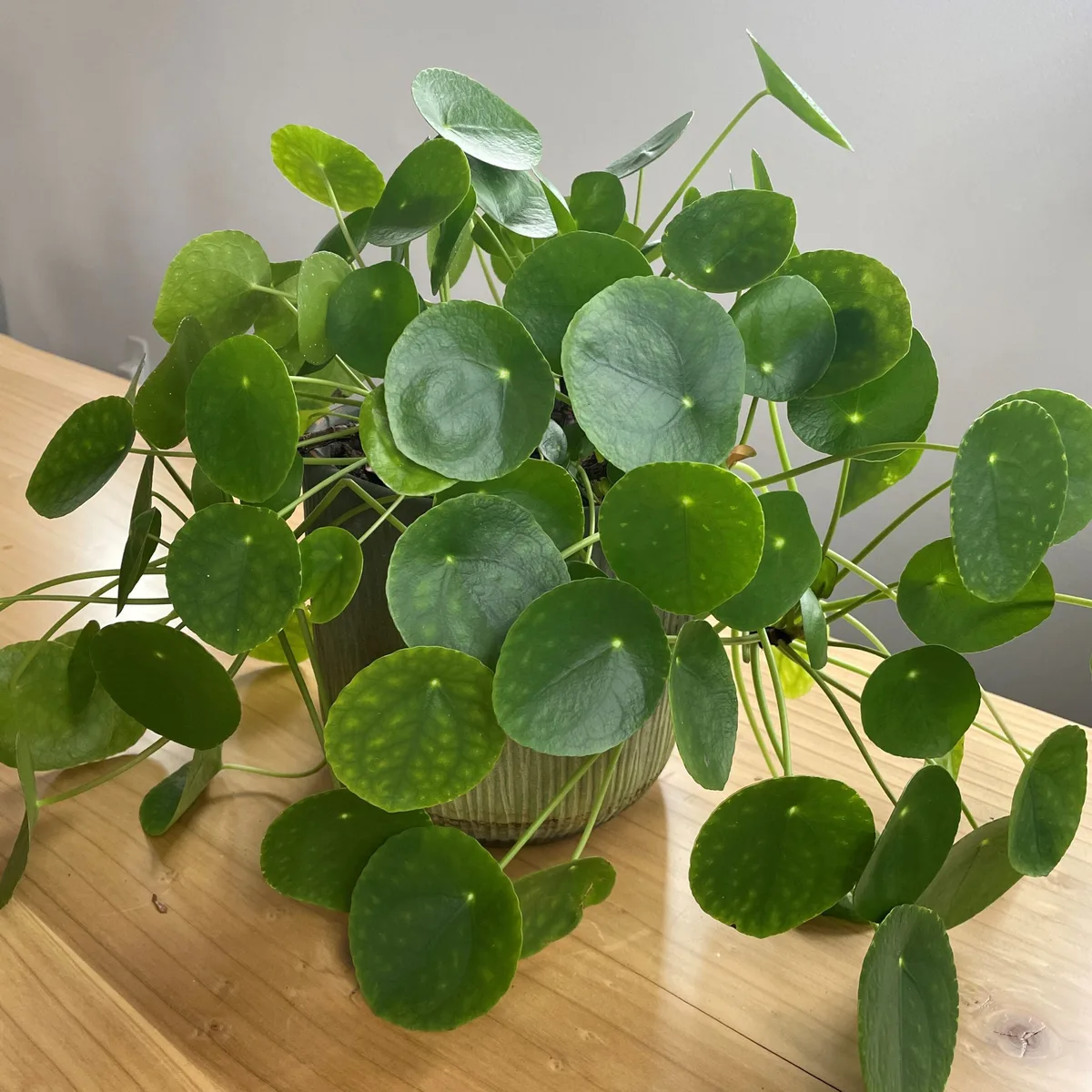
| Care difficulty | 2 / 5 |
|---|---|
| Watering schedule | Water when top inch of soil is dry |
| Sunlight requirements | Partial shade |
| Ideal temperature | 18 – 27 °C |
| Soil type | Chalk · Sand |
| Soil pH | Acid · Alkaline · Neutral |
| Soil moisture | Well drained |
| Fertilizing | Every 4 weeks during growing season |
| Toxicity | Information to be completed |
How to Water missionary plant?
Originating from the understory of mountain forests in Yunnan Province, China, chinese money plant thrives in environments with consistent moisture and high humidity. It exhibits a preference for evenly moist soil but is forgiving if watering is occasionally delayed. Watering should be consistent, equating to once every week to maintain its lush foliage. Given its adaptability to indoor settings due to moderate light and temperature requirements, chinese money plant is an ideal houseplant that benefits from being placed in rooms with higher humidity levels, such as kitchens or bathrooms, which can mimic its native habitat's moisture conditions.
Learn more →What Are the Sunlight Requirements for missionary plant?
Chinese money plant thrives in bright, indirect light but can tolerate lower light conditions such as full shade. Optimal growth is achieved with exposure to light for the majority of the day without direct sun that can scorch its leaves. When lighting is suboptimal, chinese money plant's foliage may become leggy as it stretches towards the light source. In an indoor setting, placement near a north-facing window is ideal. Outdoors, chinese money plant should be positioned where it can receive dappled sunlight. Adaptive traits like the glossy texture of its leaves help in maximizing light absorption while minimizing damage from excess light.
Learn more →What Is the Ideal Temperature Range for missionary plant?

Chinese money plant demonstrates substantial resilience to temperature fluctuations, tolerating ranges from 0℃ (32℉) to 43℃ (109℉). Its adaptability to cold and heat underscores its robust nature. However, it is vital to take protective measures during extreme conditions to prevent damage. Prolonged exposure to temperatures below 0℃ may cause leaf drop and wilting, while temperatures above 43℃ can lead to scorching and dehydration. In case of overcooling, move chinese money plant to a warmer spot and ensure proper insulation; for overheating, provide shade and increase humidity. Understanding these tolerances helps ensure chinese money plant's thriving health in diverse environments.
Learn more →What Soil Is Best for missionary plant?
- Soil type
- Chalk · Sand
- Soil pH
- Acid · Alkaline · Neutral
What Are the Moisture Requirements for missionary plant?
Well drained
Learn more →How to Fertilize missionary plant?

For chinese money plant, use high nitrogen fertilizer every 4 weeks during spring/summer, per manufacturer's instructions. Fertilizing supports vigorous growth and lusher leaves. Reduce frequency to once every 8 weeks in fall/winter. Over-fertilizing can harm roots; ensure the soil is moist before application. Dilute to half-strength for young or stressed chinese money plant to avoid burn.
Learn more →How to Prune missionary plant?

Chinese money plant is known for its round, coin-shaped leaves. Prune in early to late spring to encourage new growth and maintain its shape. Trim offshoots at the base to prevent crowding and rejuvenate the plant. Remove any yellow or damaged leaves to promote overall health. Regular pruning helps enhance air circulation and light penetration, resulting in a fuller, more vigorous plant.
Learn more →How to Propagate missionary plant?

Chinese money plant primarily propagates via cuttings, which is best carried out during spring and summer. It has a relatively easy propagation process, with new growth emerging as a sign of success. Maintain high humidity and warmth to encourage faster rooting.
Learn more →How to Transplant missionary plant?
The best time to transplant chinese money plant is during mid-to-late spring or mid-to-late fall, which allows for optimal root establishment. Choose a bright, well-draining location for best results. Remember to be gentle while transplanting to avoid damaging its delicate roots.
Learn more →How to Care for missionary plant in Winter?

Originally from the Yunnan province of China, chinese money plant is adapted to milder winters with little to no frost. Naturally shielded under large trees, it has developed resistance to low light conditions. During winter, gardeners should endeavour to replicate this environment. Keep chinese money plant in a moderately lit spot away from direct sunlight, maintaining the temperature above 12°C. Ensure consistent moisture without waterlogging the soil. Rotate chinese money plant occasionally for even growth, and avoid sudden temperature changes to maintain its vibrant green charm.
Learn more →How to Plant missionary plant?
Indoors-potted: Thriving in a cozy indoor spot, chinese money plant enjoys high humidity – consider placing it near other plants to create a mini-microclimate. Outdoors-potted: In outdoor pots, chinese money plant needs protection from strong winds which can damage its circular leaves and compromise its unique structure. Outdoors-in the ground: Not typically suited for outdoor ground planting; if attempted, ensure chinese money plant is sheltered from harsh conditions that could stunt its growth.
Learn more →How to Repot missionary plant?
For chinese money plant, repot every 2-3 years to support its compact, upright habit, as root-bound plants inhibit its distinctive coin-shaped leaves' growth. Best repotted in spring for vibrant growth, use a container a few inches larger to accommodate its size. Post-repotting, place in bright, indirect light and water sparingly once the top soil is dry to encourage a healthy recovery.
Learn more →How to Harvest missionary plant?

Information to be completed
Learn more →Common Pests & Diseases

Diseases
May be susceptible to powdery mildews
Pests
May be susceptible to scale insects
Explore the plant health library →Troubleshooting
Curling, Cupping, or Dropping Lower Leaves
Pilea peperomioides (Chinese money plant) has semi-succulent round leaves that cup inward or curl when light, heat, or watering is out of balance, and naturally sheds its oldest basal leaves as the main stem grows.
| What you notice | Possible explanation | What to check next |
|---|---|---|
| Leaves cup upward or curl inward near a bright window or heat source while soil is dry | Excess direct sunlight, heat stress, or underwatering | Feel 1 to 2 inches into the potting mix; water thoroughly if dry and shield from harsh afternoon sun. |
| Lower leaves turn yellow, limp, or develop dark water-soaked spots while potting mix stays soggy | Overwatering or poor pot drainage | Empty standing water from the saucer and allow the top layer of mix to dry out between waterings. |
| One or two oldest bottom leaves yellow and drop slowly while top leaves stay flat and green | Normal aging of older foliage as the woody stem elongates | Remove spent bottom leaves cleanly at the stem. |
- Allow the top 1 to 2 inches of potting mix to dry out before watering thoroughly, and empty excess saucer water promptly.
- Place in bright, indirect light (such as near an east-facing window or filtered south/west window) and rotate the pot a quarter turn weekly so the plant grows symmetrically.
- Grow in a well-draining potting mix amended with perlite in a pot with open drainage holes.
- Feed monthly during spring and summer with a balanced liquid fertilizer diluted to half strength, and pause feeding in winter.
Pilea peperomioides is listed as non-toxic to cats and dogs by the ASPCA.
Leggy Leaning Stem or Overcrowded Offsets (Pups)
Chinese money plants lean strongly toward light and produce abundant baby pups from the soil and stem base.
| What you notice | Possible explanation | What to check next |
|---|---|---|
| Main stem leans sharply toward a window and has a bare lower trunk | One-sided light exposure and natural lower-leaf shedding | Rotate the pot weekly, stake loosely if top-heavy, or behead and re-root the top crown in spring if overly tall. |
| Numerous pups crowd the pot and parent leaves begin shrinking | Offshoots competing for pot space and nutrients | Separate rooted pups in spring or summer to pot individually or leave a few for a fuller mound. |
- Rotate the pot regularly for an upright, symmetrical rosette.
- To propagate pups, cut offshoots with a clean knife about 1 inch below the soil line (ideally with some roots attached) and pot into small containers of moist, well-draining mix.
- If a mature plant becomes overly tall and bare, cut the top stem in spring, root it in water or moist mix, and let the remaining base sprout new offsets.
Tiny white mineral dots on the undersides of Pilea leaves are normal salt/mineral excretions through hydathodes, not pests.
The Toxicity of missionary plant
Information to be completed