



Planting and Growing common staghorn fern

| Care difficulty | 3 / 5 |
|---|---|
| Watering schedule | Keep the growing medium consistently moist; mist fronds regularly; avoid drying out. |
| Sunlight requirements | Partial shade |
| Ideal temperature | 18 – 27 °C |
| Soil type | Loam |
| Soil pH | Neutral |
| Soil moisture | Moist but well drained |
| Fertilizing | Monthly with a diluted liquid fertilizer during the growing season. |
| Toxicity | Information to be completed |
How to Water common staghorn fern?
Originating from the humid environments of tropical rainforests, elkhorn fern thrives in moisture-rich air and can tolerate brief periods of dryness. Its epiphytic nature allows it to absorb water from the surrounding atmosphere, making it moderately drought-tolerant. For optimal growth, elkhorn fern prefers consistent watering every week. As an epiphyte commonly grown indoors, elkhorn fern benefits greatly from regular misting to replicate its native humid conditions, ensuring that its unique foliar structure remains hydrated.
Learn more →What Are the Sunlight Requirements for common staghorn fern?
Elkhorn fern thrives under partial sun, which entails bright but indirect light, ideally for a few hours daily. While elkhorn fern tolerates full shade, prolonged absence of adequate light can lead to suboptimal growth. Elkhorn fern's foliage may adapt to lower light by becoming larger in an attempt to maximize light capture. Outdoor placements should mimic their natural habitat, under tree canopies or on shaded rocks, avoiding direct afternoon sun. If grown indoors, eastern or northern windowsills are appropriate positions to meet its light requirements. Understanding and providing elkhorn fern's ideal light conditions will ensure robust health and vitality.
Learn more →What Is the Ideal Temperature Range for common staghorn fern?

Elkhorn fern exhibits impressive resilience to temperature variations, tolerating cold down to 0℃ (32℉) and heat up to 43℃ (109℉). This adaptability makes it suitable for diverse environments. In colder conditions, elkhorn fern may show symptoms like wilting or browning fronds, whereas excessive heat can cause leaf scorch or dehydration. Protect elkhorn fern from frost and provide ample humidity during high temperatures to prevent damage. Monitoring environmental conditions closely and taking appropriate measures will ensure the plant thrives, highlighting its robust nature despite potential temperature stressors.
Learn more →What Soil Is Best for common staghorn fern?
Elkhorn fern thrives with good soil aeration to prevent water-logging. A suitable mix includes equal parts of potting mix, orchid bark, and perlite for optimal drainage. If bark isn't available, coconut coir can be substituted. Ensure to add a balanced slow-release fertilizer during the growing season for improved growth. Maintain drainage to keep the roots healthy.
- Soil type
- Loam
- Soil pH
- Neutral
What Are the Moisture Requirements for common staghorn fern?
Moist but well drained
Learn more →How to Fertilize common staghorn fern?

For elkhorn fern, fertilize sparingly with high nitrogen fertilizers during the growing season to bolster foliage development—quarter strength every month is ample. In winter, reduce to bi-monthly or pause as growth slows. Over-fertilization risks harm, so apply carefully to avoid buildup. Young elkhorn fern benefit from regular feeding, whereas mature ones require less. Diluted, slow-release options are ideal to maintain vigor without root burn. Monitor closely to adjust as needed, ensuring elkhorn fern remains robust and thrive.
Learn more →How to Prune common staghorn fern?

Elkhorn fern is known for its large, bifurcated fronds and epiphytic nature. Prune elkhorn fern in early spring to remove dead or damaged fronds, which encourages healthy growth and improves air circulation. Sterilize pruning shears before cutting close to the base, avoiding new growth areas. Pruning helps maintain shape and prevents overcrowding, enhancing the plant's aesthetic appeal and health. Ensure to prune minimally to avoid stress on the plant.
Learn more →How to Propagate common staghorn fern?

Elkhorn fern thrives when propagated through division, a method suitable due to its natural growth pattern. Carefully separate the offsets or pups from the parent plant, ensuring each division has sufficient roots and foliage to thrive independently. Plant the divisions in a well-draining soil mix typical for epiphytes and maintain a humid environment, crucial for root establishment and early growth stages. Regular misting helps simulate the natural humid habitats, enhancing the chances of successful propagation.
Learn more →How to Transplant common staghorn fern?
The ideal season for transplanting elkhorn fern is in the warmer months of early summer through mid-fall or early winter, as the plant thrives in milder temperatures. Ensure it's placed in a well-lit, warm, and humid location. Follow specific transplant tips when necessary, and happy planting!
Learn more →How to Care for common staghorn fern in Winter?

Elkhorn fern thrives in warmer climates with high humidity, native to Australia, New Guinea, and Java. Its winter survival strategy involves funnel-shaped fronds collecting falling debris for nutrients. During winter, indoor elkhorn fern would benefit from reduced water and increased humidity, mimicking their natural dormant period. Avoid sub-freezing temperatures and ensure their unique, moisture-retaining fronds are not overly wet, reducing the risk of fungal diseases.
Learn more →How to Plant common staghorn fern?
Indoors-potted: Thriving in the coziness of your home, elkhorn fern enjoys stable climates; just ensure good air circulation to mimic its native habitat. Outdoors-potted: Elkhorn fern outdoors can be a showstopper on patios but watch for frost - it's not a fan of cold snaps! Outdoors-in the ground: Plant elkhorn fern under a tree canopy to create an ideal microclimate; they adore that dappled light and extra humidity.
Learn more →How to Repot common staghorn fern?
Repot elkhorn fern during spring every 2-3 years, allowing for its epiphytic growth habit and antler-like fronds—ideal for hanging displays. Choose shallow, wide pots to mimic its natural attachment to tree trunks. Ensure ample drainage and light, well-aerating potting mix. After repotting, water sparingly and place in bright, indirect light to prevent stress and encourage robust growth.
Learn more →Common Pests & Diseases

Diseases
Generally disease free
Pests
Susceptible to scale insects
Explore the plant health library →Troubleshooting
Browning Shield Fronds vs. Drooping, Blackening Fertile Fronds
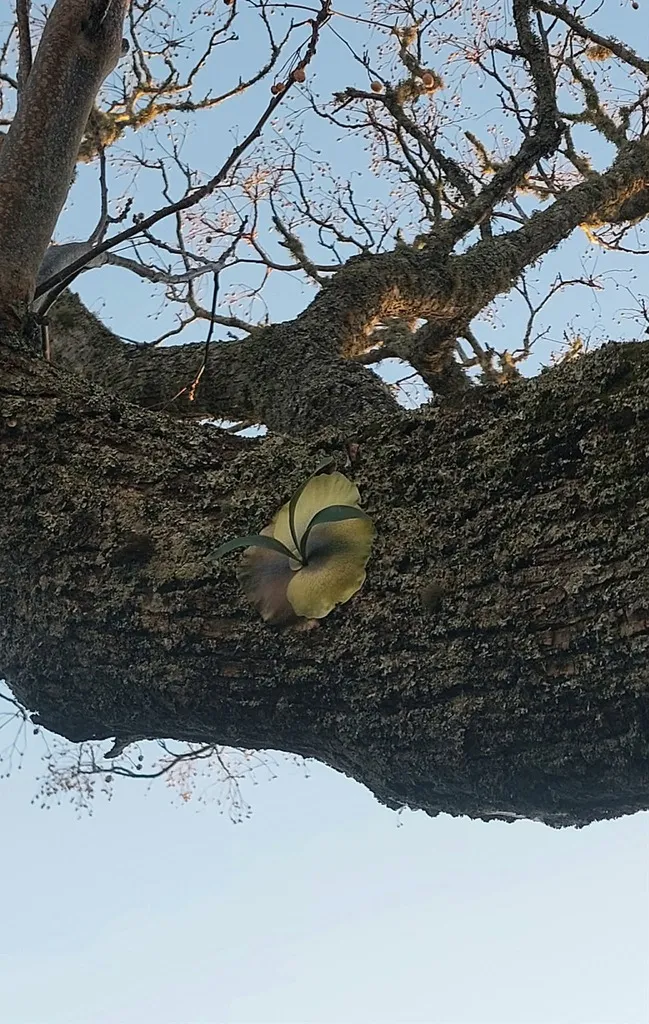
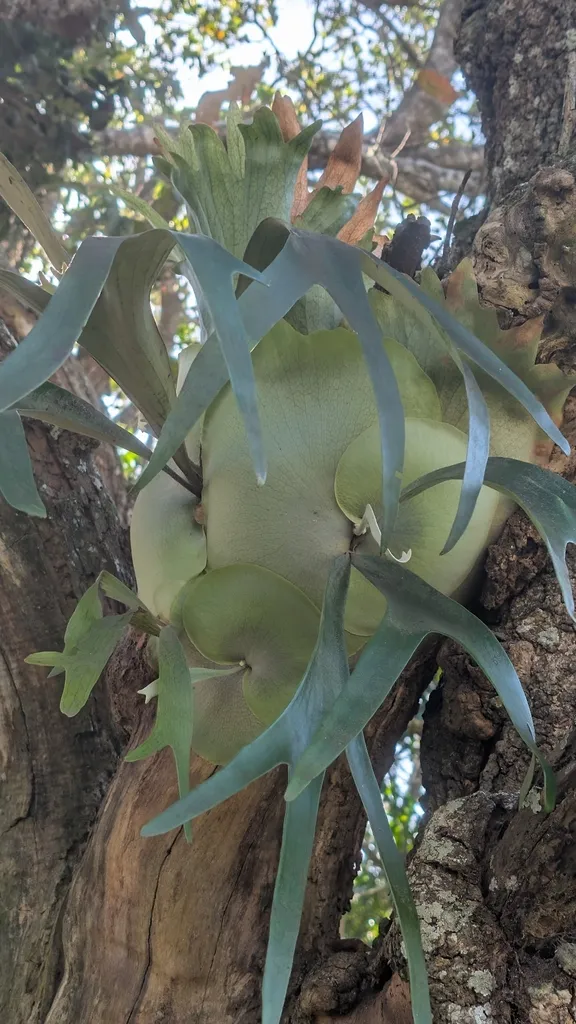
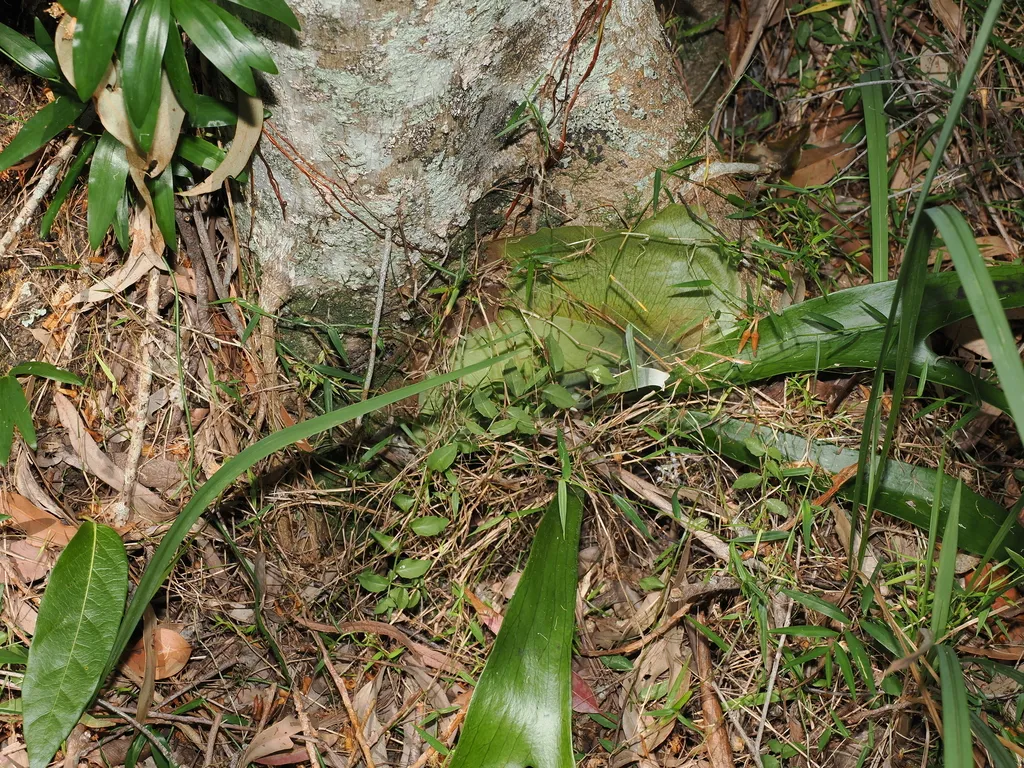
Platycerium bifurcatum (staghorn fern) is an epiphytic fern with two distinct frond types: rounded basal shield fronds that naturally turn brown and papery to protect the roots, and forked green antler-like fertile fronds.
| What you notice | Possible explanation | What to check next |
|---|---|---|
| Rounded basal shield fronds turn tan or brown and papery while green antler fronds stay firm | Normal maturation of shield fronds (do not remove them) | Leave brown shield fronds intact, as they anchor the plant and hold moisture and nutrients. |
| Forked green fronds turn black from the base upward and feel soft or mushy | Overwatering or stagnant, poorly drained sphagnum moss around the root ball | Allow the moss/bark medium to dry much more between waterings and improve air circulation. |
| Green antler fronds droop limply and turn pale gray-green with crispy brown tips | Underwatering or very dry indoor air | Soak the mounted root ball or pot thoroughly in room-temperature water, then drain completely. |
- Water when the sphagnum moss or bark root ball feels nearly dry and light—soak mounted ferns in a basin of room-temperature rainwater or filtered water for 15 to 20 minutes, then let drip dry completely before rehanging.
- Place in bright, indirect light (such as near an east- or north-facing window) out of direct midday sun.
- Keep in warm indoor temperatures above 13°C to 15°C (55°F to 60°F) with moderate humidity and gentle airflow.
Never peel off brown shield fronds or wipe away the silvery-white hair-like scales (trichomes) on green fronds, as those hairs help absorb moisture and protect the leaf surface.
Brown Spots on Fertile Fronds or Scale Insects
Underside brown spore patches on mature antler tips are normal reproductive structures, whereas hard oval bumps along stems indicate scale.
| What you notice | Possible explanation | What to check next |
|---|---|---|
| Velvety rust-brown patches coat the undersides of mature forked frond tips | Normal spore patches (sporangia) on fertile fronds | Leave them alone—these are healthy reproductive structures, not a fungal disease. |
| Small brown dome-like bumps cluster along frond bases with sticky residue | Scale insects | Isolate the fern and gently dab or scrape off scale insects with a damp cloth or cotton swab. |
- Distinguish symmetrical velvety spore patches under frond tips from scattered raised scale insects before taking any action.
- Feed lightly once a month during spring and summer with a balanced liquid fertilizer diluted to quarter strength, and skip feeding in winter.
- Platycerium bifurcatum is listed as non-toxic to cats and dogs by the ASPCA.
Avoid oil- or solvent-based leaf shines or harsh sprays on staghorn ferns, which damage their protective trichomes.