



Planting and Growing silver elkhorn fern

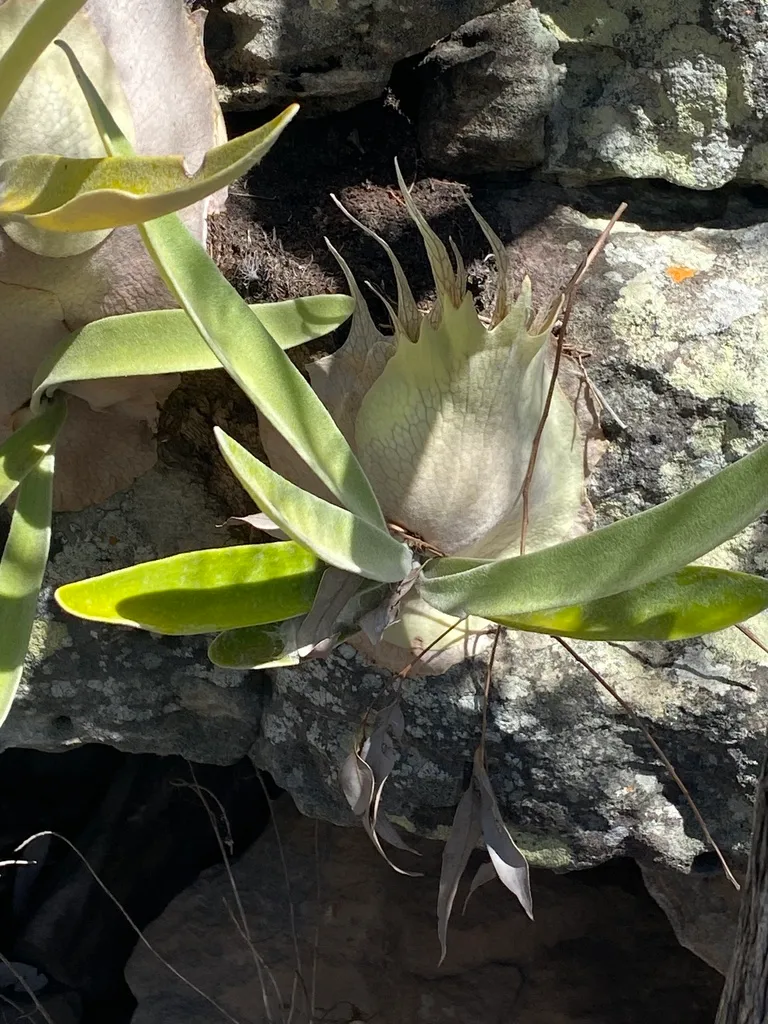


| Care difficulty | 3 / 5 |
|---|---|
| Watering schedule | Moderate regular watering, allowing brief slight drying between soakings |
| Sunlight requirements | Partial shade |
| Ideal temperature | 18 – 27 °C |
| Soil type | Loam |
| Soil pH | Neutral |
| Soil moisture | Moist but well drained |
| Fertilizing | Balanced perennial feed every four weeks from spring through summer |
| Toxicity | Information to be completed |
How to Water silver elkhorn fern?
Although the silver elkhorn requires plenty of water, too much will be detrimental to the plant - since it naturally attaches itself to tree trunks, it's used to regular water that quickly drains away. Watering once a week in the warmer months is usually enough, but ensure that the soil has dried out and the fronds look slightly wilted before each watering. In the winter, you can cut back on watering to just a couple of times a month. Since the silver elkhorn also takes in water from the environment around it, humidity is important too. Misting the plant can be helpful, but only ever mist the new, green leaves - those dark, dry-looking leaves that have clustered around the bottom of your silver elkhorn are busy producing spores, and watering them will interfere with this.
Learn more →What Are the Sunlight Requirements for silver elkhorn fern?
Silver elkhorn performs best in dappled sunlight - it enjoys bright sun, but this needs to be indirect. 6 hours of sun a day is ideal, but your plant will need some extra shading if the sun is particularly intense, otherwise it may end up scorched. Keep in mind that inadequate light inhibits growth while promoting fungal diseases, meaning that you need to get the light levels right for your plant.
Learn more →What Is the Ideal Temperature Range for silver elkhorn fern?

Hardy down to USDA plant hardiness zones 10 and 11 as a perennial, but grown as an annual in colder regions, silver elkhorn requires temperatures to be between 16 to 27 ℃ in order to thrive. The plant is not at all tolerant of frost, but is drought-tolerant once established. The plant may also require staking when grown in windy areas without the protection of taller plants around it.
Learn more →What Soil Is Best for silver elkhorn fern?
Since the silver elkhorn does not naturally grow in soil, attaching itself to trees instead, you need to get your soil mix right in order for the plant to thrive. Choose a well-draining medium, such as sphagnum moss or pine bark, and try to keep the pH neutral to acidic. Cactus soil is another option, or a regular potting mix can be used too, but mix this with sand in order to lighten it up.
- Soil type
- Loam
- Soil pH
- Neutral
What Are the Moisture Requirements for silver elkhorn fern?
Moist but well drained
Learn more →How to Fertilize silver elkhorn fern?

Your silver elkhorn should be fed with a balanced, low-concentration fertilizer diluted in water to help it thrive. Young plants should be fed monthly during the active growth period, and once every other month when dormant. Established plants will only need one or two feeds throughout the entire growing season. Choose a balanced liquid fertilizer; a 1:1:1 if using an organic fertilizer, such as fish emulsion, or 8:8:8 if using a chemical fertilizer. Some growers also recommend placing banana slices or peel into your growing medium to give the plant a boost of potassium.
Learn more →How to Prune silver elkhorn fern?

Silver elkhorn, known for its silver fronds and antler-like appearance, benefits from minimal pruning. Optimal pruning should be conducted in early spring, aligning with its growth cycle. Focus on removing dead or damaged fronds to enhance overall plant health. Pruning also helps maintain an attractive shape and improves air circulation. Avoid cutting healthy green fronds, as this can stunt growth. Proper pruning encourages vigorous, lush growth and contributes to silver elkhorn's ornamental appeal.
Learn more →How to Propagate silver elkhorn fern?

Unlike most plants, silver elkhorn produces spores instead of seeds, and these are tricky to propagate from. However, it can also be propagated through the "pups" it produces around the base of its stems, which can be gently removed with a sharp knife. The carefully-removed pup then needs to be wrapped in damp sphagnum moss and tied loosely to some bark or wood.
Learn more →How to Transplant silver elkhorn fern?
For silver elkhorn, the perfect time to relocate is from the onset of early spring through the end of spring, as this period ensures optimum root establishment. Choose a bright, indirect light location to encourage healthy growth. Ensure gentle handling to avoid root damage.
Learn more →How to Plant silver elkhorn fern?
The silver elkhorn, which most choose to purchase as a small plant, is best planted in a wire-mesh hanging basket, although regular pots can be used too. Fill your chosen container with your potting medium, and then place your plant in. The root ball won't be very big, so make sure that it comes into contact with the soil. Water after planting. Keep in mind that re-potting will be necessary quite frequently, since the plant grows quickly. To mount your silver elkhorn onto a board, attach some wire to the board first, and place some sphagnum moss around this. Then, sit your plant on top, ensuring that its roots are touching the sphagnum moss. Water after planting, ensuring that the sphagnum moss is well-saturated.
Learn more →Common Pests & Diseases

Diseases
Generally disease-free
Pests
Generally pest-free
Explore the plant health library →Troubleshooting
Crispy Brown Fronds vs. Dark Soggy Crown Rot
silver elkhorn fern (Platycerium veitchii) has delicate fronds that quickly crisp in dry indoor air, direct hot sun, or dry soil, yet its rhizomes and roots rot if left standing in stagnant water.
| What you notice | Possible explanation | What to check next |
|---|---|---|
| Fronds curl, turn pale grey-green, and dry out crisply while the potting mix or mount feels dry | Underwatering, low ambient humidity, or hot drying drafts | Check moisture in the root zone and evaluate proximity to heaters, vents, or direct sun |
| New unfurling fronds blacken and collapse at the base while the potting medium stays waterlogged | Root or crown rot from stagnant, poorly drained soil | Inspect container drainage holes and check whether excess water sits in the saucer |
- Grow in an airy, humus-rich, moisture-retentive but free-draining fern mix (or mounted on bark/wood with sphagnum moss for Platycerium veitchii).
- Keep moisture steady: Moderate regular watering, allowing brief slight drying between soakings, and empty saucers promptly after watering.
- Provide dappled or bright filtered light out of direct midday sun, and increase humidity with a pebble tray or humidifier.
For Platycerium veitchii, never remove the brown papery basal shield fronds—they protect the roots and hold moisture and nutrients.
Scale Insects, Mealybugs, or Frond Scorch
Indoor and greenhouse ferns can attract scale insects or mealybugs along frond midribs, while direct sun or full-strength fertilizer burns sensitive foliage.
| What you notice | Possible explanation | What to check next |
|---|---|---|
| Small brown oval bumps along frond stems/undersides, sticky residue, or white cottony tufts | Sap-sucking pests (Generally pest-free) | Inspect frond undersides and stipes closely under bright light |
| Bleached or scorched brown patches on upper fronds | Direct sunlight exposure or overly concentrated fertilizer | Check whether direct sun hits the fronds and review fertilizer dilution |
- Trim dead or heavily infested fronds cleanly at the base in early spring before new croziers unfurl.
- Isolate pest-infested plants and wipe scale or mealybugs manually with a damp cloth or cotton swab dipped in rubbing alcohol (avoid harsh oil sprays on delicate maidenhair fronds).
- Feed only with a weak, half-strength balanced or high-nitrogen liquid fertilizer during warm spring and summer growth.
Avoid wiping the silvery-white hair layer (trichomes) off Platycerium veitchii fronds, as those hairs help reflect sun and conserve moisture.