



Planting and Growing Douglas fir


| Care difficulty | 2 / 5 |
|---|---|
| Watering schedule | Water deeply and regularly during the first few years; established trees are drought-tolerant. |
| Sunlight requirements | Full sun |
| Ideal temperature | 15 – 25 °C |
| Soil type | Clay · Loam · Sand |
| Soil pH | Acid · Neutral |
| Soil moisture | Well drained |
| Fertilizing | Apply a balanced slow-release fertilizer in spring if growth is poor. |
| Toxicity | Information to be completed |
How to Water Douglas fir?
Originating from moist forest environments, common douglas-fir has adapted to thrive with moderate moisture levels. This species exhibits a preference for consistent humidity and is moderately drought-tolerant. Watering practices should mimic its natural habitat, equating to once every 1-2 weeks. Typically found outdoors, common douglas-fir benefits from the seasonal rainfall patterns that align with its growth cycles, ensuring optimal hydration during key developmental phases.
Learn more →What Are the Sunlight Requirements for Douglas fir?
Common douglas-fir thrives best under full sun conditions, receiving unfiltered sunlight for at least 6 hours a day. It possesses high adaptability, tolerating partial sun with some light shade, though this might slightly compromise its growth vigor and density. Adapting to varying light levels, common douglas-fir can show adjustments in foliage density and orientation to maximize light absorption. When grown outdoors, common douglas-fir should be placed in a location with clear exposure to the sky, ideally away from taller structures or trees that could significantly block sunlight. Its robust nature accommodates a range of outdoor environments, but optimal light availability is crucial for its health and growth.
Learn more →What Is the Ideal Temperature Range for Douglas fir?

Common douglas-fir exhibits significant resilience to temperature variations, tolerating cold down to -20℃ (-4℉) and heat up to 35℃ (95℉). This adaptability allows common douglas-fir to thrive in a range of environments. However, in extreme cold or heat, symptoms such as needle discoloration or bark cracking may occur. Protective measures, like mulching in winter and providing shade or supplemental watering in summer, are crucial. Ensuring appropriate care during temperature extremes helps maintain common douglas-fir's health and growth.
Learn more →What Soil Is Best for Douglas fir?
Common douglas-fir thrives in its native habitat of western North America, characterized by a pH range of 5.0-7.5 and soil composed of loam, clay, sand, and chalky material. This pH preference aids in effective nutrient absorption. For optimal growth, prepare a soil mix with 50% loam, 30% sand, and 20% organic matter like compost. Ensure excellent drainage by incorporating perlite or coarse sand. Avoid water-logging by planting in well-drained areas. Amend soil with a balanced fertilizer in spring, following package instructions. Proper soil management will promote healthy and robust growth of common douglas-fir.
- Soil type
- Clay · Loam · Sand
- Soil pH
- Acid · Neutral
What Are the Moisture Requirements for Douglas fir?
Well drained
Learn more →How to Fertilize Douglas fir?

To foster robust growth in common douglas-fir, apply a balanced nutrition fertilizer annually, ideally in early spring before new growth starts. Benefits include improved health and vigor. Use fertilizer according to its label, avoiding over-fertilization which can harm common douglas-fir. During the active growing season, lighter, more frequent feedings may be beneficial. Always water common douglas-fir thoroughly after fertilizing to facilitate nutrient uptake. For young common douglas-fir, more nitrogen-rich mixes support growth, switching to phosphorus and potassium as common douglas-fir matures to encourage root and shoot development.
Learn more →How to Prune Douglas fir?

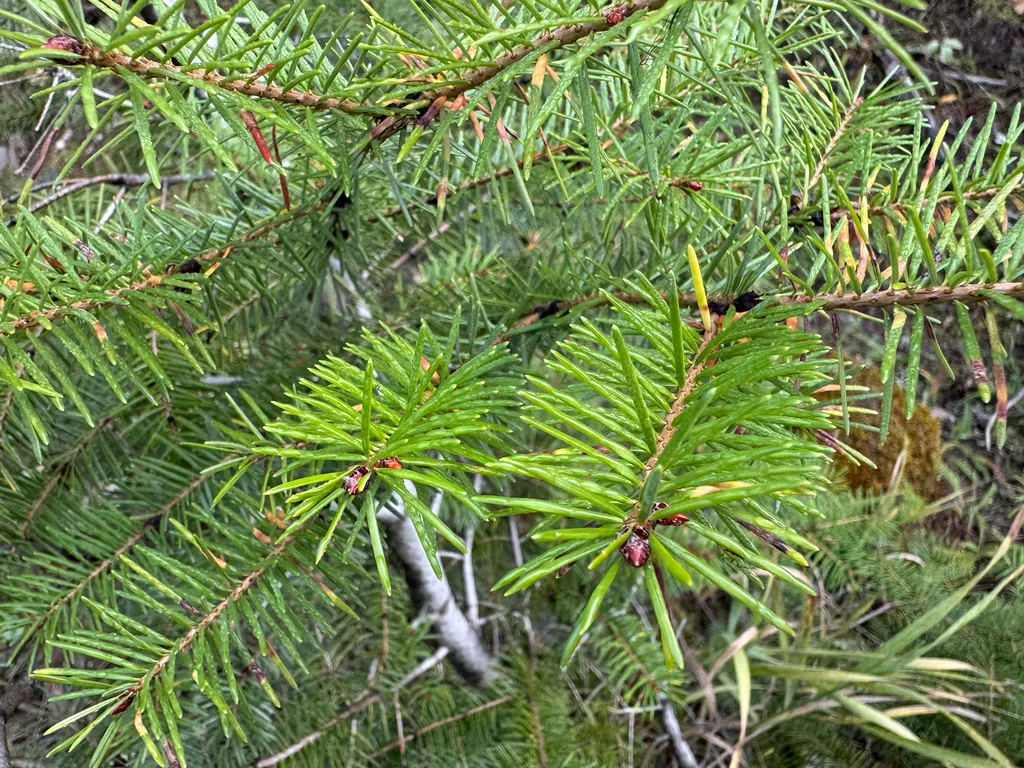
Common douglas-fir is an evergreen conifer known for its tall, pyramidal shape and soft, flat needles. Prune in early to late winter when the tree is dormant. Focus on removing dead, damaged, or diseased branches. Thin crowded areas to improve air circulation and sunlight penetration. Avoid excessive pruning to maintain the tree's natural shape and health. Proper pruning enhances growth and aesthetics while reducing disease risk.
Learn more →How to Propagate Douglas fir?

The ideal propagation season for common douglas-fir is during Autumn and Winter, with preferred methods being layering, cutting, and sowing. Propagation is moderately difficult, but successful indicators include root development and new growth. Ensure proper soil preparation and moisture for optimal results.
Learn more →How to Transplant Douglas fir?
The ideal season to transplant common douglas-fir is from mid-spring to late spring or mid-winter to late winter, allowing roots to establish before seasonal growth. Ensure the transplant location has well-drained soil and partial to full sunlight. Gently tease the root ball when transplanting, if needed, to encourage healthy growth.
Learn more →How to Plant Douglas fir?
Indoors-potted: Growing common douglas-fir indoors requires a large space to accommodate its potential growth, be cautious of limited room affecting its natural shape. Outdoors-potted: When potted outdoors, ensure common douglas-fir's container is sturdy and allows for root expansion; mobility may be needed for environmental changes. Outdoors-in the ground: Common douglas-fir thrives best planted in the ground outside where it can reach majestic heights, remember to account for its wide spread over time.
Learn more →Common Pests & Diseases

Diseases
Generally disease free
Pests
Douglas fir adelgids may occur
Explore the plant health library →