



Planting and Growing organ pipe cactus

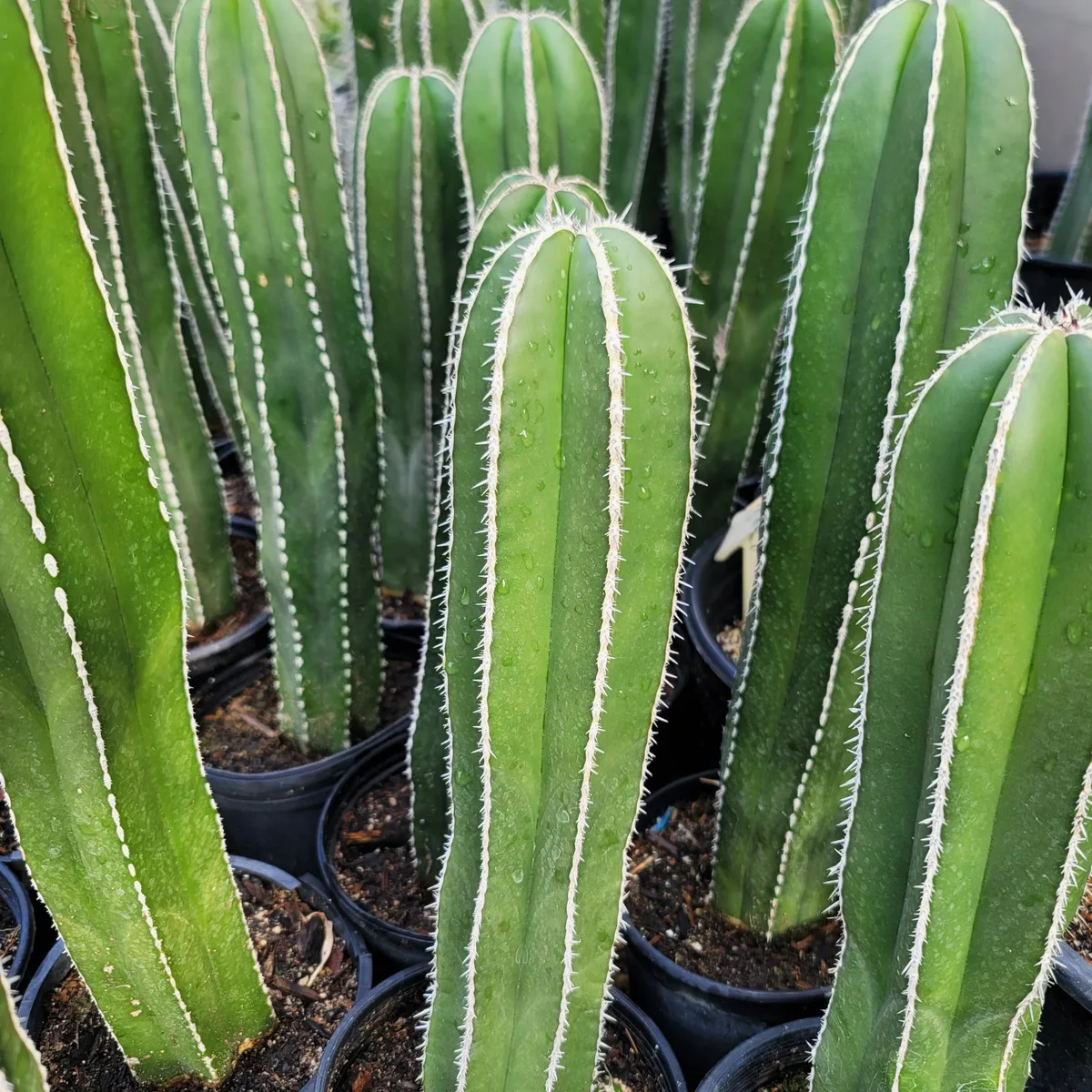
| Care difficulty | 2 / 5 |
|---|---|
| Watering schedule | Water sparsely, fully dry substrate completely between all waterings |
| Sunlight requirements | Full sun |
| Ideal temperature | 18 – 28 °C |
| Soil type | Loam · Sand |
| Soil pH | Acid · Alkaline · Neutral |
| Soil moisture | Well drained |
| Fertilizing | Feed heavily diluted low-nitrogen cactus fertilizer monthly in summer |
| Toxicity | Information to be completed |
How to Water organ pipe cactus?
Adapted to arid environments, mexican fence post cactus thrives with minimal moisture and is highly drought-tolerant. In its native habitat, it experiences infrequent rainfalls, necessitating a watering schedule of once every three weeks to mimic these conditions. As an outdoor plant typically found in hot climates, mexican fence post cactus has adapted to conserve water within its robust structure. Emphasizing this resilience, mexican fence post cactus can endure prolonged dry spells by efficiently managing its internal water reserves during peak growth cycles.
Learn more →What Are the Sunlight Requirements for organ pipe cactus?
Mexican fence post cactus thrives in full sunlight, necessitating extensive exposure to direct sunlight for optimal growth and health. This ideal configuration boosts photosynthesis, enhancing vigor and flowering potential. Although mexican fence post cactus can adapt to partial sun, such conditions might result in slower growth and reduced structural robustness. To maintain health outside, it’s best to position mexican fence post cactus in areas where they can receive unobstructed sunlight for most of the day. They display remarkable resilience against intense light, but consistent partial shade could affect their natural vigor and aesthetic form.
Learn more →What Is the Ideal Temperature Range for organ pipe cactus?

Mexican fence post cactus showcases impressive adaptability to temperature fluctuations, tolerating cold down to 0℃ (32℉) and heat up to 43℃ (109℉). However, protective measures are crucial during extreme weather. In cold conditions, mexican fence post cactus may exhibit shriveled or discolored stems, indicating stress. Overheating can cause yellowing or burnt spots. To counteract cold, insulate the base with mulch or coverings. For heat, ensure adequate shade and hydration. This resilience makes mexican fence post cactus suitable for diverse environments, but attention to extreme temperature adjustments is essential for optimal care.
Learn more →What Soil Is Best for organ pipe cactus?
Mexican fence post cactus grows best in fertile, gravel-rich, water-permeable soil with a pH value of 6-7. The culture soil formula often used is 60% vermiculite + 20% coco coir or peat moss + 20% sandy soil. A small amount of organic potting soil can also be added. Lightweight culture media such as vermiculite can be added to improve the air permeability of the soil. Eggshell powder or vermicompost can also be added to increase the soil fertility. Roots of mexican fence post cactus are very sensitive to oxygen deficiency. If the soil is poorly permeable to air and water, root rot can set in. It's easy to judge permeability: when watering, water should pass through the medium quickly, rather than stop at the soil surface and slowly seep down. Repot and loosen the soil every year to ensure the air permeability of the soil.
- Soil type
- Loam · Sand
- Soil pH
- Acid · Alkaline · Neutral
What Are the Moisture Requirements for organ pipe cactus?
Well drained
Learn more →How to Fertilize organ pipe cactus?

For the optimal care of mexican fence post cactus, fertilize with a balanced succulents and cacti food during the growing season (spring to early autumn). Monthly applications are sufficient, adhering to a quarter-strength dilution to prevent root burn and to accommodate the plant's low nutrient needs. This promotes robust growth and resilience. Avoid winter fertilization to respect mexican fence post cactus's natural rest period. Adjust quantity based on plant size, using label recommendations as a guide. Rinse soil post-application to distribute nutrients and prevent salt buildup.
Learn more →How to Prune organ pipe cactus?

Mexican fence post cactus does not require much pruning. Remove withered flowers and branches so the plant uses nutrients on healthy growth.
Learn more →How to Propagate organ pipe cactus?

In addition to the seeding mentioned above, main propagation methods include division and grafting. To divide, cut off the tip or lateral branches of the stem with a knife and plant it in soil. After a period of time, many small shoots will grow up near the cut. When a shoot grows to proper size, it can be cut off and transplanted to form a new plant. To graft, select a suitable rootstock. Cut the tip of the rootstock, such as the stem of pitahaya (Hylocereus undatus), and then put mexican fence post cactus, with its roots removed, in the center of the rootstock and fix it with a rope. After 1-2 weeks, the two parts grow together and the rope can be removed.
Learn more →How to Transplant organ pipe cactus?
The prime time to transplant mexican fence post cactus is from late spring through midsummer—a period of vigorous growth. Choosing a site with full sun exposure ensures your mexican fence post cactus thrives. When relocating, prioritize well-draining soil for a successful transition.
Learn more →How to Care for organ pipe cactus in Winter?

Information to be completed
Learn more →How to Plant organ pipe cactus?
Sow, plant, or repot in spring or fall when the temperature is 15 to 20 ℃ . Keep air humidity high when seeding. Use plastic film to cover the soil and remove it after the seeds germinate. Use permeable clay flowerpots for potted plants. Too large a flowerpot accumulates water easily, while too small a flowerpot limits the development of roots. Before planting, expose soil to blazing sunlight and disinfect to kill pathogens. If planted in the garden, mexican fence post cactus prefers an area with full sun and loose soil. Remove all weeds and replace the soil if needed to ensure good water permeability and avoid root rot. Wear gloves or use tongs when planting to prevent your fingers from getting pricked. You can also wrap the plant in a towel to help you move it.
Learn more →How to Repot organ pipe cactus?
Repot mexican fence post cactus every 2-3 years to accommodate its vertical growth, ideally before the active growing season. Choose tall containers to mimic its natural growth habit and support its stature. After repotting, provide well-draining soil and minimal water to reduce stress and encourage recovery. Keep mexican fence post cactus in bright light to thrive post-repot.
Learn more →How to Harvest organ pipe cactus?

Most fruits of mexican fence post cactus are edible. Pick the fruit when they turn red. Avoid food safety issues by confirming the species with experts. Wear gloves or use scissors and other tools to harvest.
Learn more →Common Pests & Diseases

Diseases
Generally disease-free
Pests
Maybe susceptible to scale insects and sometimes mealybugs
Explore the plant health library →The Toxicity of organ pipe cactus
Information to be completed