



Planting and Growing English lavender 'Peter Pan'

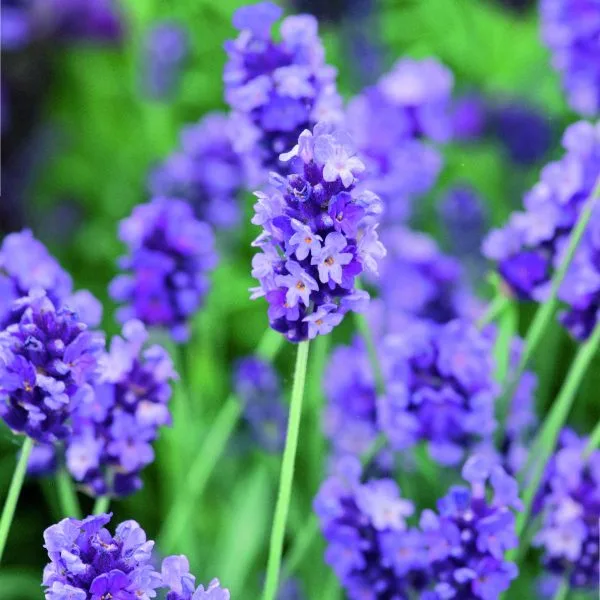
| Care difficulty | 2 / 5 |
|---|---|
| Watering schedule | Moderate regular watering, allowing brief slight drying between soakings |
| Sunlight requirements | Full sun |
| Ideal temperature | Information to be completed |
| Soil type | Sand · Chalk · Loam |
| Soil pH | Neutral · Alkaline · Acid |
| Soil moisture | Well drained |
| Fertilizing | Balanced perennial feed every four weeks from spring through summer |
| Toxicity | Information to be completed |
How to Water English lavender 'Peter Pan'?
Moderate regular watering, allowing brief slight drying between soakings
Learn more →What Are the Sunlight Requirements for English lavender 'Peter Pan'?
Full sun
Learn more →What Soil Is Best for English lavender 'Peter Pan'?
- Soil type
- Sand · Chalk · Loam
- Soil pH
- Neutral · Alkaline · Acid
What Are the Moisture Requirements for English lavender 'Peter Pan'?
Well drained
Learn more →How to Fertilize English lavender 'Peter Pan'?

Balanced perennial feed every four weeks from spring through summer
Learn more →How to Prune English lavender 'Peter Pan'?

Shorten flowered shoots to about 1.5–2.5 cm from the previous year's growth. Prune in early spring or mid-spring.
Learn more →How to Propagate English lavender 'Peter Pan'?

Propagate by semi-ripe cuttings in late summer, or by softwood cuttings of new growth in early summer
Learn more →How to Plant English lavender 'Peter Pan'?
Grow in full sun in well-drained soil; for more advice, see lavender cultivation
Learn more →Common Pests & Diseases

Diseases
May be susceptible to grey moulds (Botrytis) and honey fungus (rarely)
Pests
May be susceptible to rosemary beetle, and to cuckoo spit (froghopper or spittle bug nymphs)
Explore the plant health library →