



Planting and Growing Pinwheel Flower


| Care difficulty | 2 / 5 |
|---|---|
| Watering schedule | Keep soil evenly moist, reduce in winter |
| Sunlight requirements | Partial shade |
| Ideal temperature | 20 – 30 °C |
| Soil type | Loam · Sand |
| Soil pH | Acid · Neutral |
| Soil moisture | Moist but well drained |
| Fertilizing | Bi-weekly during growing season |
| Toxicity | All parts of the plant contain milky sap that may cause skin irritation; ingestion can cause digestive upset. Keep away from pets and children. |
How to Water Pinwheel Flower?
Originating from tropical regions, crape jasmine thrives in consistently moist soil conditions akin to its native humid environment. This species is characterized by a moderate need for water and can tolerate brief periods of dryness. Its watering regimen aligns with a weekly schedule, ensuring the soil remains evenly hydrated without becoming waterlogged. Typically cultivated outdoors due to its preference for warm climates, crape jasmine benefits greatly from mulching which helps retain soil moisture and mimics the plant's natural layer of leaf litter in tropical settings.
Learn more →What Are the Sunlight Requirements for Pinwheel Flower?
Crape jasmine thrives in full sunlight, which is crucial for optimal growth, health, and abundant flowering. While it prefers continuous exposure to bright light, crape jasmine demonstrates good tolerance to partial sun conditions. In less than ideal light, such as partial sun, crape jasmine may experience slower growth rates and reduced blooming. Adaptively, crape jasmine can adjust its foliage orientation to maximize light absorption under varied light exposures. For outdoor cultivation, crape jasmine is best positioned in areas that receive direct sunlight for most of the day to ensure vigorous growth and flowering.
Learn more →What Is the Ideal Temperature Range for Pinwheel Flower?

Crape jasmine exhibits notable resilience to a range of temperatures, enduring cold down to 5°C (41°F) and heat up to 45°C (113°F). Such adaptability implies that crape jasmine can thrive in diverse environments but requires care in extremely cold or hot conditions. Signs of distress include wilting, leaf drop, or scorched foliage in high heat, and browning or drooping leaves in cold. Protective measures like mulching or shading can mitigate these issues. This temperature endurance allows crape jasmine to be a versatile addition to both indoor and outdoor settings, provided these care considerations are met.
Learn more →What Soil Is Best for Pinwheel Flower?
For optimal growth, ensure excellent soil aeration and drainage for crape jasmine. Use a mix of garden soil, perlite, and compost (2:1:1) to increase drainage and nutrients. If perlite is unavailable, coarse sand is a suitable alternative. Avoid water-logging by ensuring the pot or bed has proper drainage holes. Enhance growth with a balanced fertilizer every 4-6 weeks during the growing season.
- Soil type
- Loam · Sand
- Soil pH
- Acid · Neutral
What Are the Moisture Requirements for Pinwheel Flower?
Moist but well drained
Learn more →How to Fertilize Pinwheel Flower?

For crape jasmine, optimal fertilization involves using high nitrogen fertilizers, which promote lush vegetative growth and support prolific blooming. Apply a balanced, water-soluble fertilizer every 3-4 weeks during the growing season for robust health; reduce frequency in the dormant winter period. Accurate dosing is crucial—follow package instructions to prevent root burn. Seasonal variations matter; increase feeding in spring and summer, taper off in fall, and pause in winter. A regular feeding schedule ensures crape jasmine maintains vigor and displays vibrant flowers, highlighting the benefits of tailored plant nutrition.
Learn more →How to Prune Pinwheel Flower?

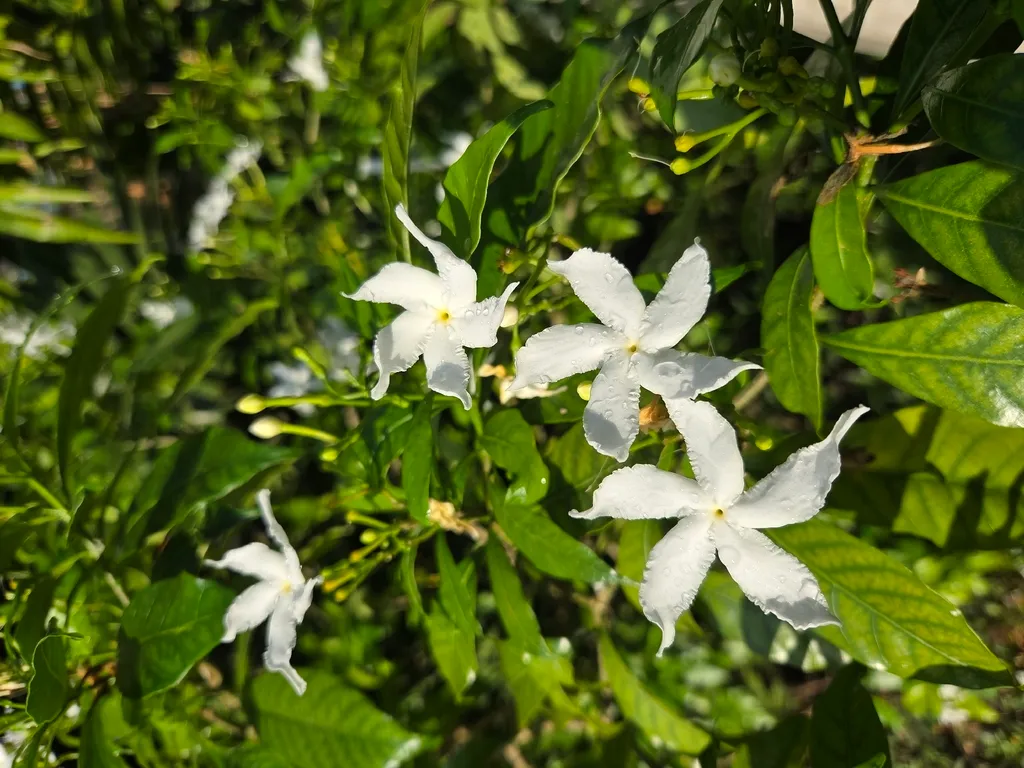
Crape jasmine is characterized by its glossy leaves and fragrant, white flowers. For optimal growth, prune crape jasmine in later spring, after blooming. Remove dead or diseased branches first, then shape the plant to maintain its desired size and form. Light thinning of interior branches enhances airflow and reduces pest issues. Regular pruning promotes healthier blooms and prevents legginess. Ensure to use clean, sharp tools to avoid damage.
Learn more →How to Propagate Pinwheel Flower?

Crape jasmine favors the warmer Spring and Summer seasons for propagation, primarily through cutting methods. Success is signaled by new leaf growth, and consistent moisture is crucial during this period.
Learn more →How to Transplant Pinwheel Flower?
For the best success transplanting crape jasmine, aim for mid to late spring, when temperatures are moderate and soil is warming up, promoting healthy root development. Ensure the plant is placed in a bright, well-draining location. Gentle handling of the root ball during transplant is crucial for a smooth transition.
Learn more →How to Care for Pinwheel Flower in Winter?

Crape jasmine, hailing from tropical Asia, is naturally adapted to frost-free climates. In their winter slumber, they persevere by reducing growth. Still, they're susceptible to cold and must be moved indoors in temperate regions, supported with bright light and minimum watering. Mulching proves beneficial in fostering root warmth, and a protective cover is useful in a sudden chill. Understandably, winter care for crape jasmine is a delicate dance between providing warmth, light, and just enough water.
Learn more →How to Plant Pinwheel Flower?
Indoors-potted: In an indoor setting, crape jasmine thrives with ample ambient light and consistent temperatures, ensuring its lustrous foliage and flowers brighten any room. Outdoors-potted: Potted outside, crape jasmine requires a sheltered spot to protect its delicate blooms from strong winds while still enjoying the benefits of natural elements. Outdoors-in the ground: Crape jasmine, when planted in the ground, appreciates mulching to retain moisture and stabilize root temperature, enhancing both growth and flowering potential.
Learn more →How to Repot Pinwheel Flower?
Repot crape jasmine every 2-3 years in early spring, to match its growth cycle. This compact, bushy evergreen prefers larger pots that accommodate its root system without crowding. Post-repotting, give crape jasmine bright, indirect light and keep the soil consistently moist for a steady recovery. Avoid overwatering; crape jasmine requires well-draining soil to thrive. Friendly reminder: handle crape jasmine's roots with care—they're key to its beautiful growth!
Learn more →Common Pests & Diseases

Diseases
Generally healthy but may be susceptible to root rot if overwatered or grown in poorly drained soil. Leaf spot diseases can occur in humid conditions.
Pests
Common pests include mealybugs, scale insects, and spider mites, especially when grown indoors or under glass.
Explore the plant health library →The Toxicity of Pinwheel Flower
All parts of the plant contain milky sap that may cause skin irritation; ingestion can cause digestive upset. Keep away from pets and children.