



Planting and Growing Dwarf Umbrella Tree

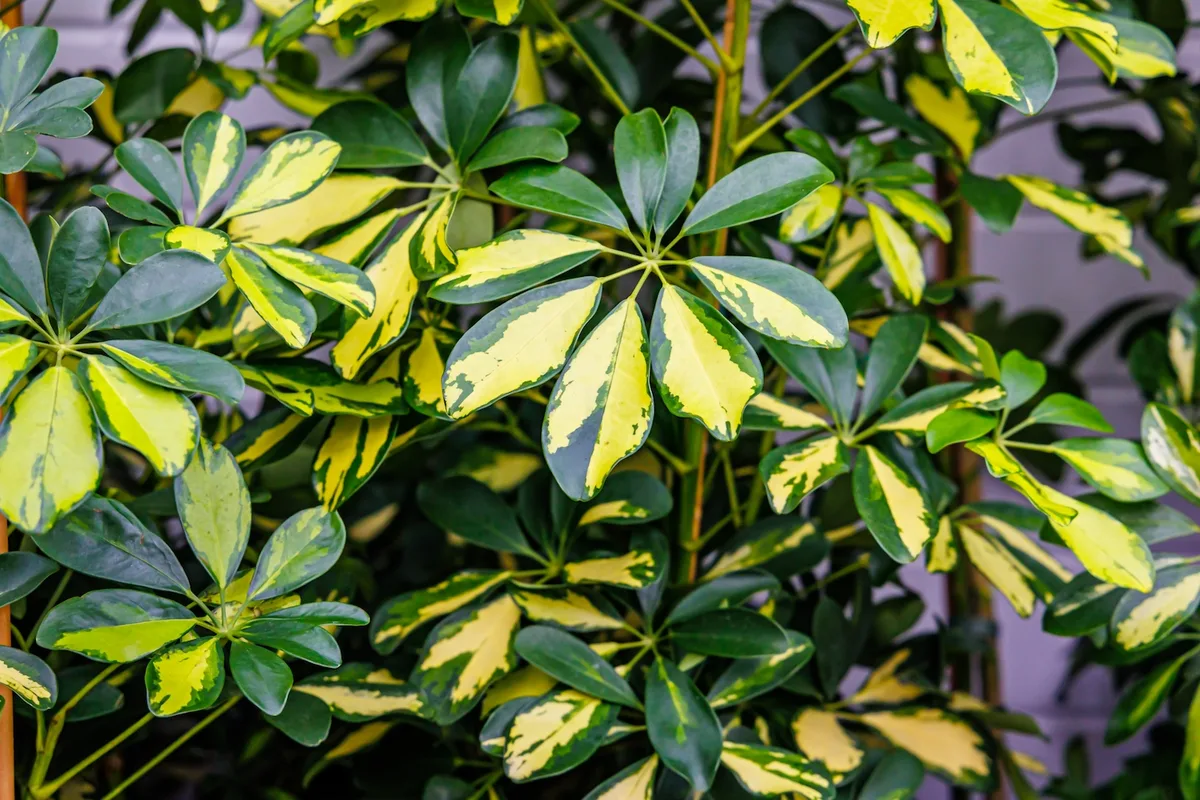
| Care difficulty | 2 / 5 |
|---|---|
| Watering schedule | Water when the top inch of soil is dry; reduce watering in winter. |
| Sunlight requirements | Bright indirect light |
| Ideal temperature | 18 – 27 °C |
| Soil type | Loam · Peat |
| Soil pH | Neutral |
| Soil moisture | Moist but well drained |
| Fertilizing | Monthly during the growing season with a balanced fertilizer. |
| Toxicity | Toxic to humans and pets if ingested, causing oral irritation and vomiting due to calcium oxalate crystals. |
How to Water Dwarf Umbrella Tree?
Thriving in humid environments, dwarf umbrella tree is well-adapted to the moisture levels of its native tropical settings. This species exhibits a preference for consistent soil moisture without being waterlogged, demonstrating moderate drought tolerance. Watering should be adjusted to once every 1-2 weeks, ensuring the soil partially dries between sessions. Typically grown indoors due to its size and ornamental appeal, dwarf umbrella tree benefits from higher humidity levels that mimic its natural habitat, promoting lush foliage and robust growth.
Learn more →What Are the Sunlight Requirements for Dwarf Umbrella Tree?
Dwarf umbrella tree flourishes in bright, indirect light but is quite adaptable, thriving under partial sun conditions. Optimal growth is achieved with consistent light but avoiding intense midday sun which can scorch its leaves. When placed indoors, it prefers spots where natural light is ample but diffused, such as near east- or north-facing windows. Outdoors, dwarf umbrella tree should be situated in an area with dappled sunlight or light shade to mimic its native understory habitat. While dwarf umbrella tree tolerates a range from full sun to full shade, extreme lighting conditions can lead to legginess or reduced leaf vibrancy, impacting its overall health and aesthetic appeal.
Learn more →What Is the Ideal Temperature Range for Dwarf Umbrella Tree?

Dwarf umbrella tree is resilient to temperature fluctuations but has defined tolerances. This plant can endure temperatures as low as 0°C (32°F) and as high as 43°C (109°F). During cold spells, protect dwarf umbrella tree from frost to prevent leaf drop and discoloration. In extreme heat, it may show signs of overheating such as wilting or scorched leaves; ensure adequate watering and shade. These temperature tolerances necessitate attention to environmental conditions, making dwarf umbrella tree suitable for a range of settings but requiring care during weather extremes to maintain its health.
Learn more →What Soil Is Best for Dwarf Umbrella Tree?
Dwarf umbrella tree needs sandy loam that is loose, fertile, permeable, well-drained, and rich in humus. The pH of the soil should be acidic to weak alkaline. The ideal soil is 2/3 leaf mold and organic fertilizer with 1/3 perlite, and a small amount of base fertilizer. In a flowerpot, line the bottom with rocks or broken tiles to facilitate drainage. Repot young plants once before new buds germinate in spring; remove some of the old soil and add an equivalent amount of new soil. Repot mature plants every two years.
- Soil type
- Loam · Peat
- Soil pH
- Neutral
What Are the Moisture Requirements for Dwarf Umbrella Tree?
Moist but well drained
Learn more →How to Fertilize Dwarf Umbrella Tree?

Fertilize dwarf umbrella tree monthly in spring and summer with a high nitrogen fertilizer for lush foliage. A balanced, water-soluble formula, diluted by half, promotes overall plant health. Reduce feeding in fall and winter to every other month. Apply fertilizer to moist soil to prevent root burn. Use a teaspoon per gallon of water, ensuring thorough soil coverage without over-fertilization, which can damage dwarf umbrella tree. Novices should start with less to gauge dwarf umbrella tree's response.
Learn more →How to Prune Dwarf Umbrella Tree?

Dwarf umbrella tree features glossy, palmate leaves and compact growth. To maintain its shape and encourage new growth, prune in early to later winter. Remove dead, damaged, or crowded branches while trimming back leggy stems to promote fullness. Pruning helps the plant remain healthy and visually appealing. Always use clean, sharp tools to make precise cuts, ensuring quick recovery and minimal stress.
Learn more →How to Propagate Dwarf Umbrella Tree?

Dwarf umbrella tree is a popular houseplant known for its ease of care and unique foliage. For successful propagation, start with healthy stem cuttings, ensuring each piece has at least one leaf node as this is where new growth will emerge. Cuttings should be placed in either water or a well-draining potting mix, keeping the medium consistently moist but not waterlogged. Providing indirect light and warmth will encourage rooting. Direct contact with hormones can stimulate root growth, but dwarf umbrella tree typically roots readily without them. After rooting, transfer the new plants into individual pots to establish.
Learn more →How to Transplant Dwarf Umbrella Tree?
The best time to transplant dwarf umbrella tree is mid-spring to late spring, or mid-fall to late fall, as these cooler seasons promote healthy root growth. Ensure a location with well-draining soil and partial shade. Remember to gently loosen the root ball during transplanting.
Learn more →How to Care for Dwarf Umbrella Tree in Winter?

Dwarf umbrella tree hails from subtropical Taiwan, naturally suited to mild winters. It leverages thick leaves to retain moisture during dry, cool weather. As temperatures lower, dwarf umbrella tree should be moved indoors, receiving ample light but shielded from drafts. It appreciates increased humidity and reduced watering in winter. A dormant period with cooler temperatures (not below 15°C) can encourage spring blooming.
Learn more →How to Plant Dwarf Umbrella Tree?
Indoors-potted: For dwarf umbrella tree in indoor pots, rotate the plant occasionally to ensure even growth as it tends to lean towards light sources. Outdoors-potted: Dwarf umbrella tree thrives outdoors in pots but be wary of strong winds which can damage its delicate foliage. Outdoors-in the ground: Planting dwarf umbrella tree in the ground requires ample space as it can spread out; monitor for pests which are drawn to its dense leaves.
Learn more →How to Repot Dwarf Umbrella Tree?
For dwarf umbrella tree, a bushy, compact plant, repot every 2-3 years to accommodate its growth. Optimal time is spring, before new growth begins. Choose a slightly larger pot to ensure room for root development. Post-repotting, place dwarf umbrella tree in bright, indirect light and maintain consistent moisture to aid recovery. A friendly reminder: gentle handling during repotting keeps dwarf umbrella tree thriving!
Learn more →Common Pests & Diseases

Diseases
Susceptible to leaf spot and root rot, especially when overwatered; good air circulation and proper watering prevent issues.
Pests
Common pests include scale insects, spider mites, and aphids. Inspect leaf undersides regularly; treat with insecticidal soap or neem oil.
Explore the plant health library →Troubleshooting
Dropping Leaflets and Sticky Residue (Scale or Spider Mites)
Schefflera arboricola (dwarf umbrella tree) sheds leaflets when overwatered, chilled by drafts, or infested with scale insects or spider mites.
| What you notice | Possible explanation | What to check next |
|---|---|---|
| Lower leaflets turn yellow or brown-spotted and drop while potting mix stays wet | Overwatering, poor drainage, or root rot | Empty standing water from the saucer, feel 2 inches into the soil, and inspect drainage holes. |
| Green leaflets drop suddenly after moving the plant or exposure to cold drafts | Environmental shock or chilling temperatures below 13°C to 15°C (55°F to 60°F) | Move away from exterior doors, cold windows, or AC/heating vents. |
| Leaves feel sticky with shiny honeydew and small brown oval bumps line the stems and leaf veins | Scale insects or mealybugs | Inspect stems, petioles, and leaf undersides closely before isolating and treating. |
- Allow the top 1 to 2 inches of potting mix to dry out between thorough waterings, and empty excess saucer water promptly.
- Grow in a well-draining potting mix in a container with open drainage holes.
- Place in bright, indirect light (variegated cultivars need brighter indirect light than solid green forms) and keep away from drafts.
- If scale or spider mites are present, isolate the plant and wipe stems and leaves thoroughly with a damp cloth or insecticidal soap per label directions.
Schefflera arboricola contains insoluble calcium oxalate crystals and is toxic to cats and dogs if chewed or ingested.
Leggy Stems and Fading Variegation
Dwarf umbrella trees stretch and lose cream or yellow variegation when indoor light is too low.
| What you notice | Possible explanation | What to check next |
|---|---|---|
| Stems grow tall and sparse with wide spacing between palmate leaves and faded variegation | Insufficient light | Move closer to a bright east-, west-, or filtered south-facing window. |
- Move to bright, indirect light and rotate the pot regularly for even, upright growth.
- Prune or pinch back leggy stems just above a leaf node in spring to encourage fuller branching.
- Feed monthly during spring and summer with a balanced liquid fertilizer at half strength, and reduce or stop feeding in winter.
Wear gloves when pruning if you have sensitive skin, as sap can cause mild irritation.
The Toxicity of Dwarf Umbrella Tree
Toxic to humans and pets if ingested, causing oral irritation and vomiting due to calcium oxalate crystals.