
Dwarf Umbrella Tree
Also known as: Dwarf Umbrella Tree, Australian Umbrella Tree, Octopus Tree, Umbrella Plant
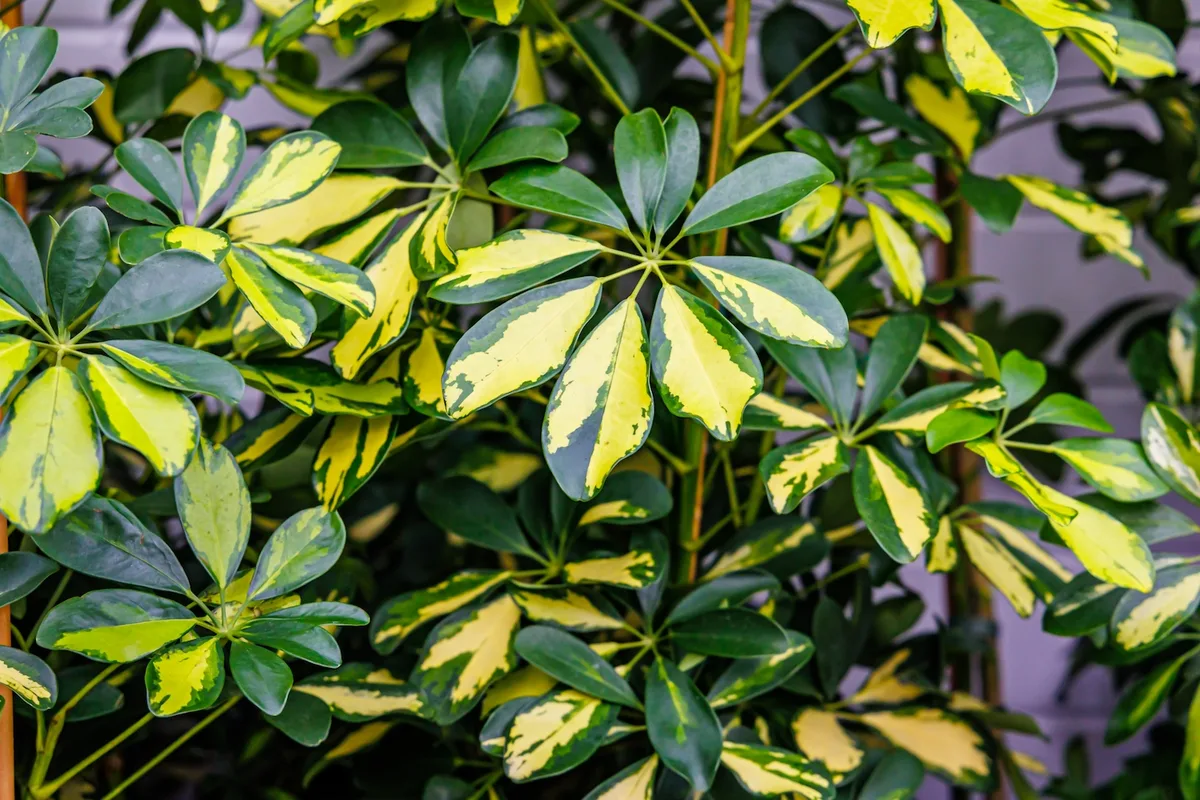
Schefflera arboricola, commonly known as the Dwarf Umbrella Tree, is an evergreen shrub native to Taiwan. It features palmate compound leaves typically composed of 7-9 leaflets, glossy and leathery. The plant has a compact, bushy habit with good branching, making it ideal as a houseplant. Mature plants can reach 2-3 meters in height, but potted specimens remain smaller. Its unique leaf shape and adaptability make it a popular indoor plant.
Scientific classification
- Species
- Dwarf Umbrella Tree (Schefflera arboricola)
- Genus
- Schefflera
- Family
- Araliaceae
- Order
- Apiales
- Class
- Magnoliopsida
- Phylum
- Magnoliophyta
- Toxic to humans and pets if ingested, causing oral irritation and vomiting due to calcium oxalate crystals.
- Toxicity
- Houseplants · Shrubs · Foliage
- Plant type
- 1.5 - 3 metres
- Height
- 0.5 - 1.5 metres
- Spread
- Evergreen
- Foliage
- Upright · Bushy
- Habit
- Spring · Summer · Autumn
- Season of interest
- Bright indirect light
- Sunlight
- 18 – 27 °C
- Ideal temperature









Dwarf Umbrella Tree pictures
Distribution of Dwarf Umbrella Tree
Distribution map
- Native
- Introduced
- Cultivated
Source:WCVP v16 · Royal Botanic Gardens, Kew · CC BY 3.0 · Boundaries:WGSRPD / TDWG
Toxicity
Toxic to humans and pets if ingested, causing oral irritation and vomiting due to calcium oxalate crystals.
Dwarf Umbrella Tree care guide
- Water when the top inch of soil is dry; reduce watering in winter.
- Watering
- Bright indirect light
- Sunlight
- 18 – 27 °C
- Ideal temperature

Watering
Water when the top inch of soil is dry; reduce watering in winter.
Fertilizing
 Fertilizing
Monthly during the growing season with a balanced fertilizer.
Pruning
 Pruning
Prune in spring to maintain shape and remove leggy stems; trim back to encourage bushier growth.
Propagation
 Propagation
Propagate by stem cuttings in spring or summer; take 10-15 cm semi-ripe cuttings, remove lower leaves, insert into moist perlite or vermiculite, keep warm and humid, roots form in 4-6 weeks. Air layering is also possible.
Growing
 Growing
Prefers bright indirect light, avoid direct sunlight. Use well-drained, fertile loam-based compost. Water moderately, keeping the soil slightly moist but never waterlogged; reduce watering in winter. Apply a balanced liquid fertilizer monthly during the growing season. Keep minimum temperature above 10°C, protect from cold drafts.
Common pests and diseases
Diseases
Susceptible to leaf spot and root rot, especially when overwatered; good air circulation and proper watering prevent issues.
Pests
Common pests include scale insects, spider mites, and aphids. Inspect leaf undersides regularly; treat with insecticidal soap or neem oil.
Explore the plant health library →




