



Planting and Growing African Violet

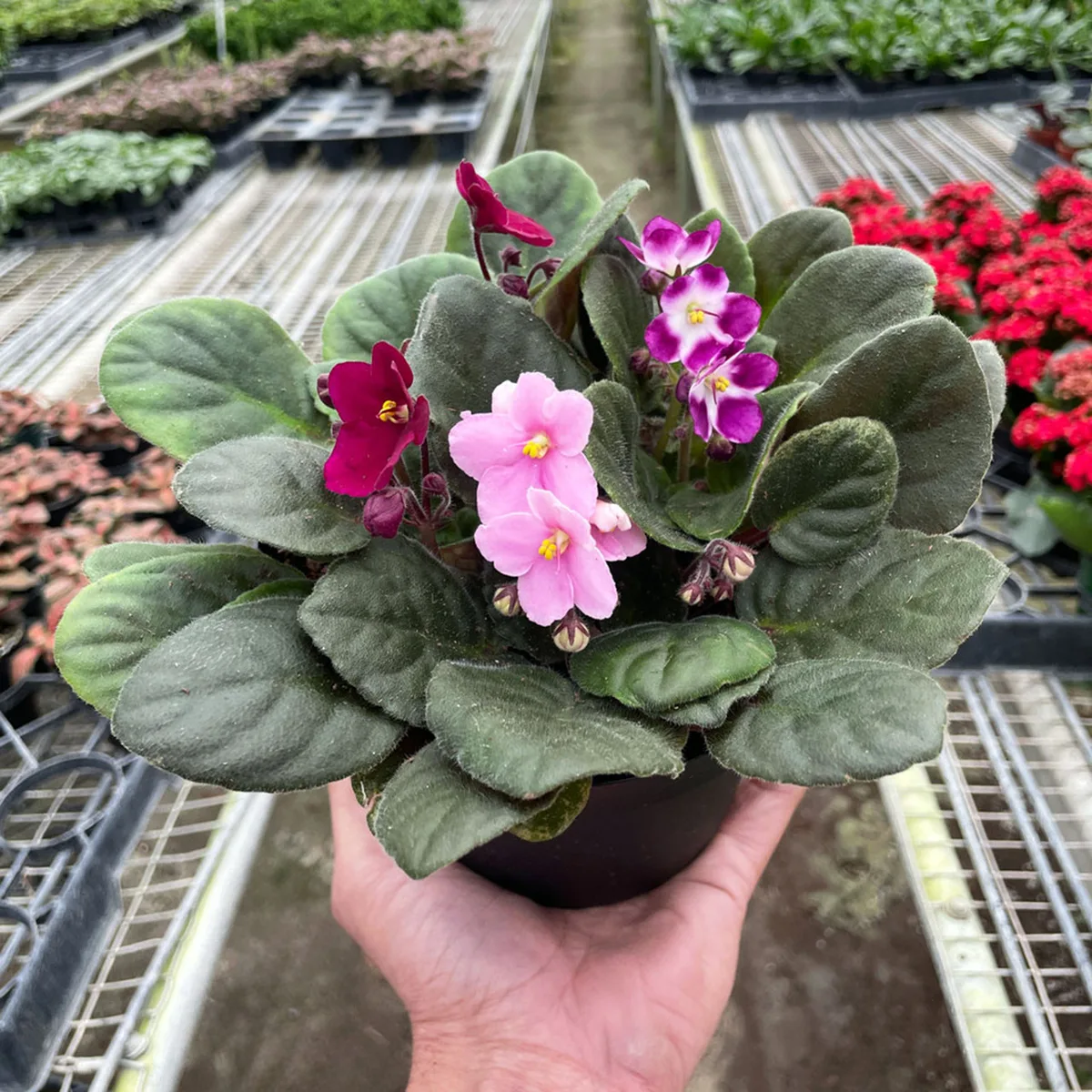
| Care difficulty | 3 / 5 |
|---|---|
| Watering schedule | Water from bottom or use room-temperature water on soil; avoid leaves |
| Sunlight requirements | Bright indirect light |
| Ideal temperature | 18 – 27 °C |
| Soil type | Peat |
| Soil pH | Acid |
| Soil moisture | Moist but well drained |
| Fertilizing | Every two weeks with African violet specific fertilizer year-round |
| Toxicity | Non-toxic |
How to Water African Violet?
Thriving in the consistent moisture of its native tropical habitat, african violet has adapted to prefer evenly moist soil without becoming waterlogged. This species exhibits a preference for high humidity and is moderately drought-tolerant. For optimal health, african violet should be watered every week, ensuring that the topsoil slightly dries out between watering sessions. As an indoor plant often adorning windowsills, african violet's vibrant blooms are best supported by maintaining ambient humidity levels, which can be bolstered during dry indoor climates with regular misting or a pebble tray.
Learn more →What Are the Sunlight Requirements for African Violet?
African violet thrives in conditions with partial sunlight, which includes bright, indirect light or filtered light for the majority of the day, equating to about 10-14 hours of light exposure. It tolerates full shade, yet excessive low light can diminish african violet's ability to flower and might lead to leggy growth. Inside, east or north-facing windows are ideal locations because they offer the soft luminosity african violet prefers. Conversely, intense direct light can scorch its leaves, prompting a defensive response where the leaves may curl to reduce exposure. Minor color changes in foliage could indicate a need for lighting adjustment. For outdoor cultivation, african violet should be positioned where it will receive morning light but be sheltered from harsh afternoon sun.
Learn more →What Is the Ideal Temperature Range for African Violet?

African violet shows moderate sensitivity to temperature fluctuations. It can tolerate temperatures as low as 5℃ (41℉) and as high as 43℃ (110℉), but extremes can stress the plant. In cooler conditions, african violet may exhibit slowed growth, curling leaves, or darkened foliage. Conversely, excessive heat can cause wilting, browning leaf edges, or sunburn. For optimal care, protective measures such as using frost cloths in cold temperatures or providing shade and humidity in intense heat are recommended. These strategies help maintain african violet's health and prevent damage, ensuring its suitability in various environments.
Learn more →What Soil Is Best for African Violet?
African violet's roots require well-aerated soil for optimal health. A suitable soil mix is a blend of equal parts potting mix, perlite, and peat moss to enhance aeration and drainage. If peat moss is unavailable, coconut coir is an acceptable substitute. Ensure pots have drainage holes. Periodic addition of a balanced, slow-release fertilizer will promote vigorous growth. Avoid over-fertilizing, as this can damage african violet.
- Soil type
- Peat
- Soil pH
- Acid
What Are the Moisture Requirements for African Violet?
Moist but well drained
Learn more →How to Fertilize African Violet?

For african violet, fertilize with high phosphorus fertilizer every 4-6 weeks during active growth. This boosts bloom production and fortifies root systems. Use quarter strength for safety; over-fertilizing risks leaf burn. In winter, reduce to once every 8-10 weeks, matching the plant's dormant phase. Always water african violet before applying fertilizer to avoid root damage. With correct fertilization, african violet will display vigorous growth and vibrant flowers, reflecting a well-nourished state.
Learn more →How to Prune African Violet?

Featuring lush, velvety leaves and vibrant blooms, african violet benefits from regular pruning. Remove spent blooms and dead or yellowing leaves to promote healthier growth. Pruning should be done in early spring or late winter, coinciding with the plant's dormancy period. Consistent pruning encourages a fuller, more vigorous plant and prevents disease. Ensure tools are sanitized to avoid infections, and avoid heavy pruning, which can stress the plant.
Learn more →How to Propagate African Violet?

African violet is a popular houseplant favored for its striking foliage and flowers. Propagating african violet primarily involves using leaf cuttings. Snip a healthy leaf along with its stem from the mother plant using a sterile cutting tool. The base of the stem should be inserted into moist potting soil formulated for african violet. Environments with consistent humidity are advantageous for root development. Adequate indirect light and careful watering encourage successful propagation. Rooting hormone can streamline the rooting process, although it's not essential for african violet.
Learn more →How to Transplant African Violet?
Transplanting african violet is best done during the sweet spot of late spring to early summer, as warmer temperatures promote root growth. Opt for a well-lit location with indirect sunlight, and always employ care when handling the delicate roots of african violet.
Learn more →How to Care for African Violet in Winter?

African violet originates from the tropical regions of Tanzania and thrives in warm, humid climates. Over winter, it enters a rest phase, reducing its need for watering and halting flower growth. To mimic these natural adaptations, gardeners should lower the watering frequency in winter. Keeping african violet in a warm location away from drafts will ensure it bounces back in growth when spring arrives.
Learn more →How to Plant African Violet?
Indoors-potted: Ensure your african violet has ample space to grow indoors; crowding can lead to poor bloom quality. Outdoors-potted: African violet might struggle outdoors in pots if temperatures dip; consider seasonal relocation indoors. Outdoors-in the ground: Outdoor soil cultivation for african violet is risky; they prefer stable conditions often disrupted by weather.
Learn more →How to Repot African Violet?
African violet is a petite, rosette-forming houseplant, not a climber or bush. Repot during the growing season, every 2-3 years, to prevent root crowding. Choose shallow pots to match african violet's root system. After repotting, keep soil moist, avoid water on leaves, and provide bright, indirect light for successful recovery. Friendly reminder: african violet thrives on consistency!
Learn more →Common Pests & Diseases

Diseases
Susceptible to Botrytis blight (gray mold) and root rot caused by overwatering or poor air circulation. Crown rot may also occur if water sits on the crown.
Pests
Common pests include aphids, spider mites, whiteflies, and thrips. Mealybugs may also infest leaves and stems.
Explore the plant health library →Troubleshooting
Rings or Spots on Fuzzy Leaves and Crown Rot
Saintpaulia ionantha (African violet, classified botanically within Streptocarpus sect. Saintpaulia) has velvety, hairy leaves that develop pale rings if splashed with cold water and rot easily if water collects in the center crown.
| What you notice | Possible explanation | What to check next |
|---|---|---|
| Tan, yellow, or pale rings and blotches appear on upper leaf surfaces after overhead watering | Cold or warm water drops sitting on fuzzy leaves in light (temperature shock to leaf cells) | Water from below or use a narrow-spout watering can with room-temperature water beneath the leaves. |
| Center crown leaves turn dark brown/black and mushy, and outer petioles collapse at the soil line | Crown or root rot from overwatering, deep potting, or water trapped in the crown | Stop watering immediately, check drainage, and propagate healthy outer leaves via petiole cuttings if the crown has rotted. |
- Water with room-temperature water either from the bottom (letting the pot soak for 20 to 30 minutes, then draining completely) or directly onto the soil beneath the foliage.
- Allow the top half-inch to inch of potting mix to feel slightly dry before watering again, and never leave the pot standing in water.
- Use a light, porous African violet potting mix (peat or coir blended heavily with perlite/vermiculite) in a shallow pot.
Saintpaulia ionantha is listed as non-toxic to cats and dogs by the ASPCA.
Tight, Deformed Center Leaves or Failure to Bloom
Lack of flowers usually reflects insufficient bright indirect light, whereas distorted, brittle center leaves signal either light/fertilizer stress or cyclamen mites.
| What you notice | Possible explanation | What to check next |
|---|---|---|
| Plant grows lush green leaves on long upright petioles with no flowers | Insufficient light | Move closer to a bright east- or north-facing window (or place 12 to 18 inches under fluorescent/LED grow lights for 10 to 12 hours daily). |
| Center crown leaves become unusually small, hard, twisted, and overly hairy | Cyclamen mites, excessive light intensity, or fertilizer salt buildup | Isolate the plant immediately, check light distance, flush soil salts, and inspect closely before deciding whether to discard or treat. |
- Provide bright, indirect light without harsh midday direct sun, and rotate the pot weekly for a symmetrical rosette.
- Remove spent flower stalks and old outer leaves cleanly near the main stem.
- Feed lightly during active growth with a diluted balanced or African violet fertilizer (quarter to half strength), and flush the potting mix occasionally with plain room-temperature water.
African violets bloom best when slightly snug in a shallow pot roughly one-third the diameter of the leaf span.
The Toxicity of African Violet
Non-toxic