



Planting and Growing Cannonball tree

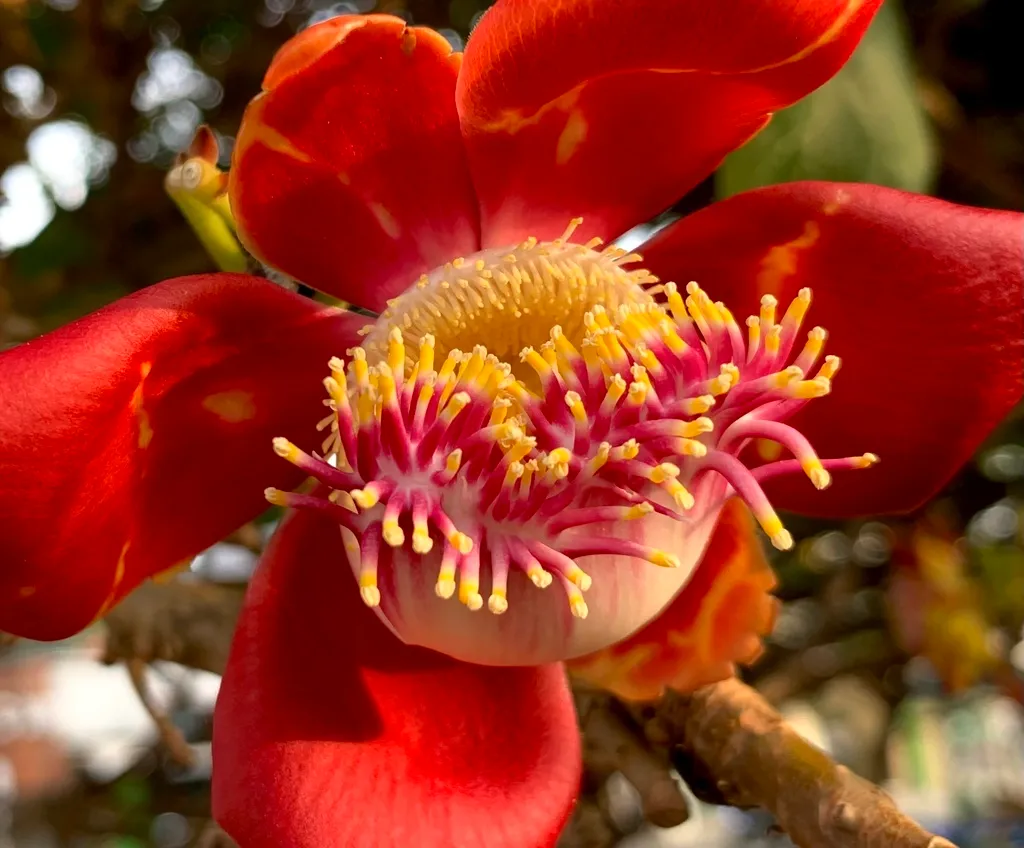
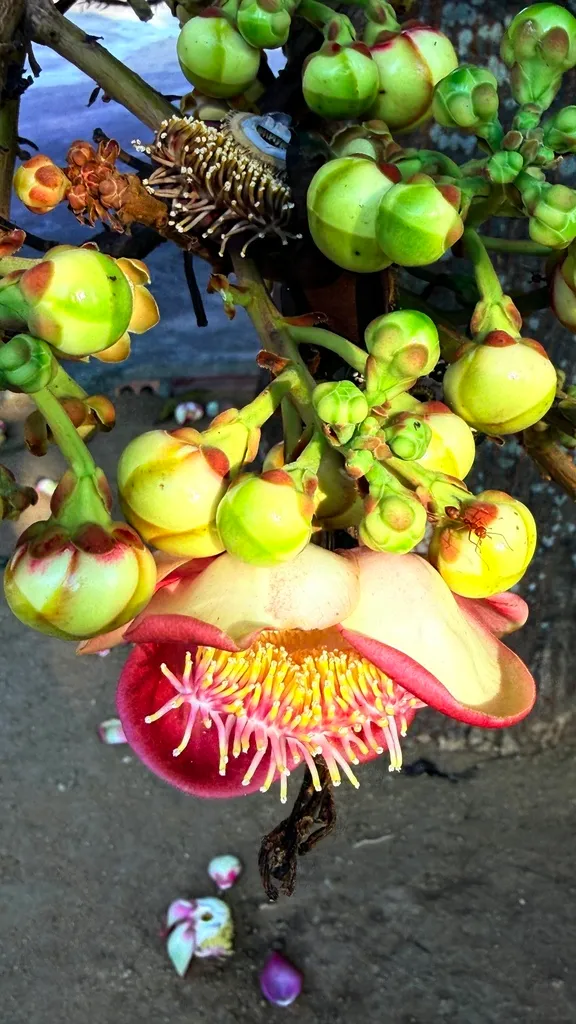
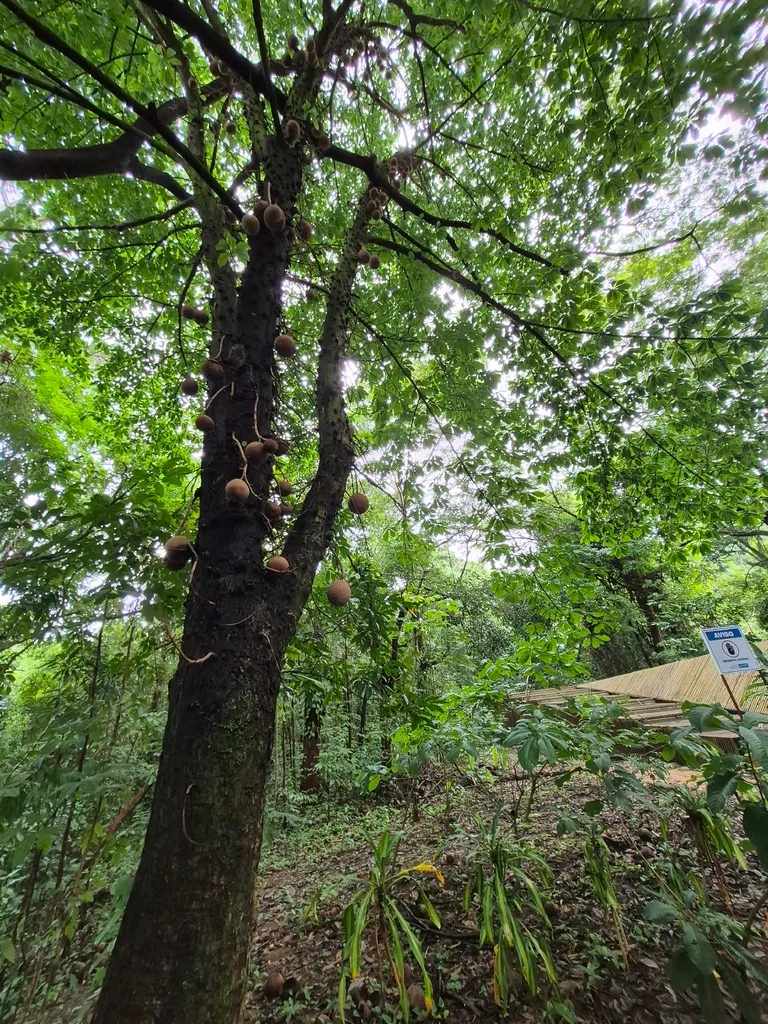
| Care difficulty | 3 / 5 |
|---|---|
| Watering schedule | Keep soil consistently moist, high humidity required |
| Sunlight requirements | Full sun · Partial shade |
| Ideal temperature | 20 – 30 °C |
| Soil type | Loam · Sand |
| Soil pH | Acid · Neutral |
| Soil moisture | Moist but well drained |
| Fertilizing | Every 2 weeks during growing season with balanced fertilizer |
| Toxicity | Non-toxic to humans and pets. |
How to Water Cannonball tree?
Native to the tropical rainforests, cannonball tree thrives in high humidity environments and has adapted to withstand heavy rainfall. This species is characterized by its moderate drought tolerance, indicating a preference for consistent moisture without being waterlogged. In cultivation, it requires watering once every three weeks to maintain its hydration needs. As an evergreen plant commonly grown outdoors, cannonball tree benefits from a thick layer of mulch to retain soil moisture and mimic the forest floor of its native habitat.
Learn more →What Are the Sunlight Requirements for Cannonball tree?
Full sun · Partial shade
Learn more →What Is the Ideal Temperature Range for Cannonball tree?

Cannonball tree exhibits some resilience to temperature fluctuations but leans towards being more sensitive. It can tolerate temperatures as low as 5℃ (41℉) and as high as 43℃ (109℉). In colder conditions, cannonball tree may show signs of stress such as leaf drop or slowed growth. In hot conditions, it can exhibit wilting and leaf burn. Therefore, protective measures like frost cloths or shading may be needed during extreme weather. Understanding these tolerance ranges helps in ensuring cannonball tree thrives, especially in regions with significant temperature variations.
Learn more →What Soil Is Best for Cannonball tree?
- Soil type
- Loam · Sand
- Soil pH
- Acid · Neutral
What Are the Moisture Requirements for Cannonball tree?
Moist but well drained
Learn more →How to Fertilize Cannonball tree?

For cannonball tree, use balanced nutrition fertilizers to encourage robust growth and prolific flowering. Apply a 10-10-10 or 8-8-8 NPK ratio quarterly, adjusting to a lighter dose if growth is adequate. The benefits include improved plant vigor and fruit production. Fertilize sparingly during dormant periods. Overfeeding can harm, so follow instructions on fertilizer packaging and reduce application during the cooler season. Practical tip: incorporate into soil around the drip line for optimal uptake.
Learn more →How to Prune Cannonball tree?

Cannonball tree is a tropical tree known for its large, fragrant flowers and woody fruit. Prune in early spring to remove dead or diseased wood, improve air circulation, and shape the tree. Focus on thinning crowded branches, cutting back to an outward-facing bud. Pruning helps manage its dense crown and promotes healthier growth. Ensure tools are sterilized to prevent disease transmission. Regular pruning aids in maintaining the tree’s structural integrity and aesthetic appeal.
Learn more →How to Propagate Cannonball tree?

Cannonball tree is a tropical tree renowned for its large spherical fruits and fragrant flowers. For successful propagation, semi-hardwood cuttings should be selected from healthy and vigorous parts of the tree. The cuttings must be treated with a rooting hormone to enhance root development before being placed in well-draining soil. Maintaining a consistently warm and humid environment will support rooting. Also, minimal but regular watering will encourage growth without causing rot. Patience is required as cannonball tree may take several weeks to establish a robust root system.
Learn more →How to Transplant Cannonball tree?
The best time to transplant cannonball tree is during the warm, vibrant days of mid to late spring, when the plant can recover well in mild conditions. Choose a sunny location with well-drained soil. When moving cannonball tree, minimize root disturbance to encourage successful re-establishment.
Learn more →How to Plant Cannonball tree?
Grow in rich, well-drained loam or sandy soil with consistent moisture. Provide full sun to partial shade, with a position protected from strong winds. In temperate regions, it requires a heated greenhouse or conservatory with minimum winter temperatures of 10-15°C. Water freely during the growing season and reduce watering in winter. Apply a balanced liquid fertilizer monthly during growth. Mature trees are heavy feeders and benefit from a top-dressing of organic mulch.
Learn more →Common Pests & Diseases

Diseases
Generally healthy, but may suffer from root rot in poorly drained soils. Leaf spot and sooty mold can occur in humid conditions.
Pests
Susceptible to scale insects, mealybugs, and spider mites, especially when grown under glass.
Explore the plant health library →Troubleshooting
Leggy Stems, Sparse Flowering, or Root Rot
Cannonball tree (Couroupita guianensis) performs best in well-drained soil with appropriate sunlight and regular deadheading; soggy soil rots roots, while low light or skipped pinching causes leggy growth.
| What you notice | Possible explanation | What to check next |
|---|---|---|
| Stems stretch tall and floppy with sparse blooms | Insufficient direct sunlight, lack of early-season pinching/deadheading, or excess high-nitrogen fertilizer | Assess daily sun hours and check whether spent flowers are left to set seed |
| Lower leaves turn yellow and plant wilts while soil stays wet and heavy | Root or stem rot from overwatering or poor drainage (Generally healthy, but may suffer from root rot in poorly drained soils. Leaf spot and sooty mold can occur in humid conditions.) | Check soil drainage and ensure containers have open drainage holes |
- Grow in fertile, well-drained soil in full sun or partial shade, spacing plants for good airflow.
- Water consistently without waterlogging: Keep soil consistently moist, high humidity required.
- Maintain compact flowering growth: Prune only to remove dead or damaged branches, ideally in late winter while the tree is still dormant. Avoid heavy pruning as flowers are produced on old wood..
Stop watering waterlogged containers immediately and improve drainage before fungal root or stem rot spreads.
Powdery Mildew, Rust, or Aphids and Slugs
Crowded foliage, dry root stress, or damp stagnant air can trigger mildew or rust on Cannonball tree (Couroupita guianensis), while tender shoots attract pests.
| What you notice | Possible explanation | What to check next |
|---|---|---|
| White powdery coating or rusty/dark spots on leaves in humid or drought-stressed beds | Fungal disease (Generally healthy, but may suffer from root rot in poorly drained soils. Leaf spot and sooty mold can occur in humid conditions.) | Inspect lower leaves and spent blooms and check plant spacing |
| Distorted shoot tips with aphids, or ragged holes chewed in young leaves | Common pests (Susceptible to scale insects, mealybugs, and spider mites, especially when grown under glass.) | Check shoot tips, leaf undersides, and damp ground around the crown |
- Water at the base of the plant early in the day rather than overhead, and divide congested clumps in spring or autumn every 2–3 years.
- Remove diseased leaves and faded flowers promptly, and clear plant debris at season's end.
- Manage aphids with a firm water spray or insecticidal soap per label directions, and protect young shoots from slugs.
Protect frost-tender tubers or half-hardy bedding indoors or under glass before autumn frosts.
The Toxicity of Cannonball tree
Non-toxic to humans and pets.