



Planting and Growing Banana

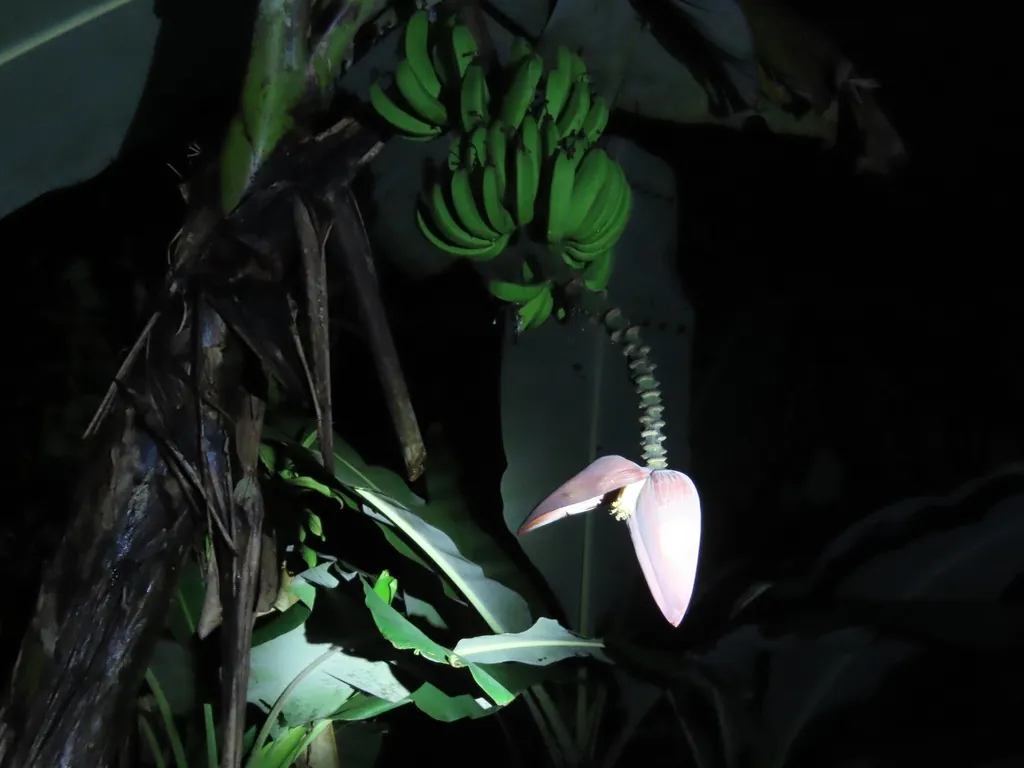
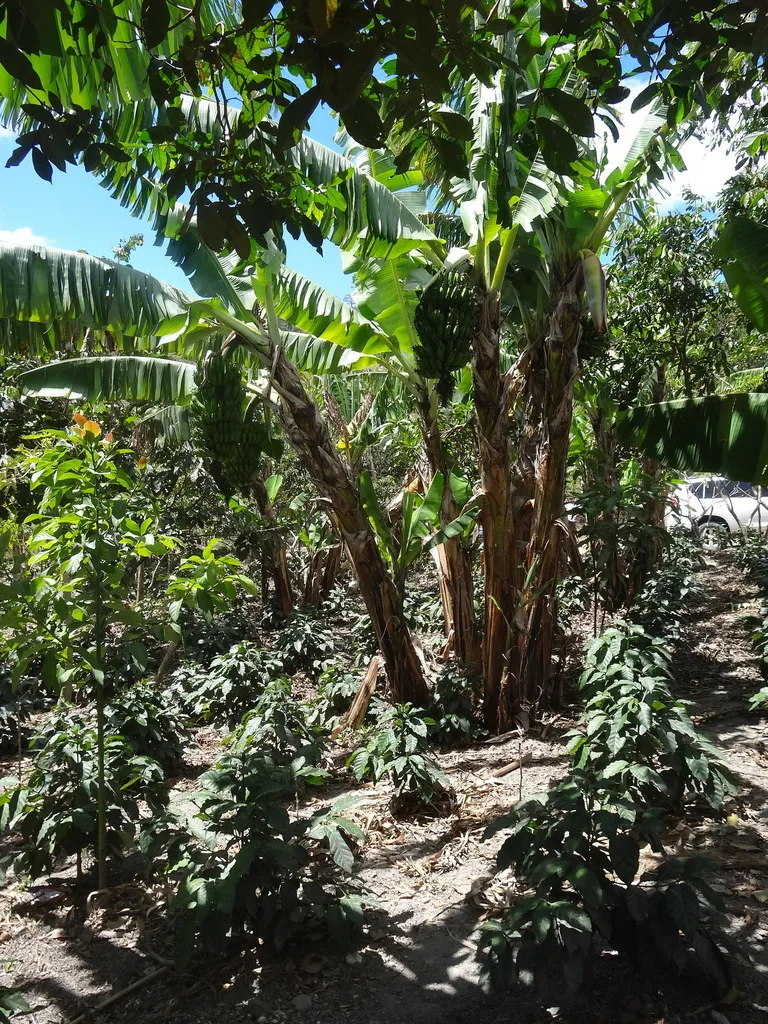
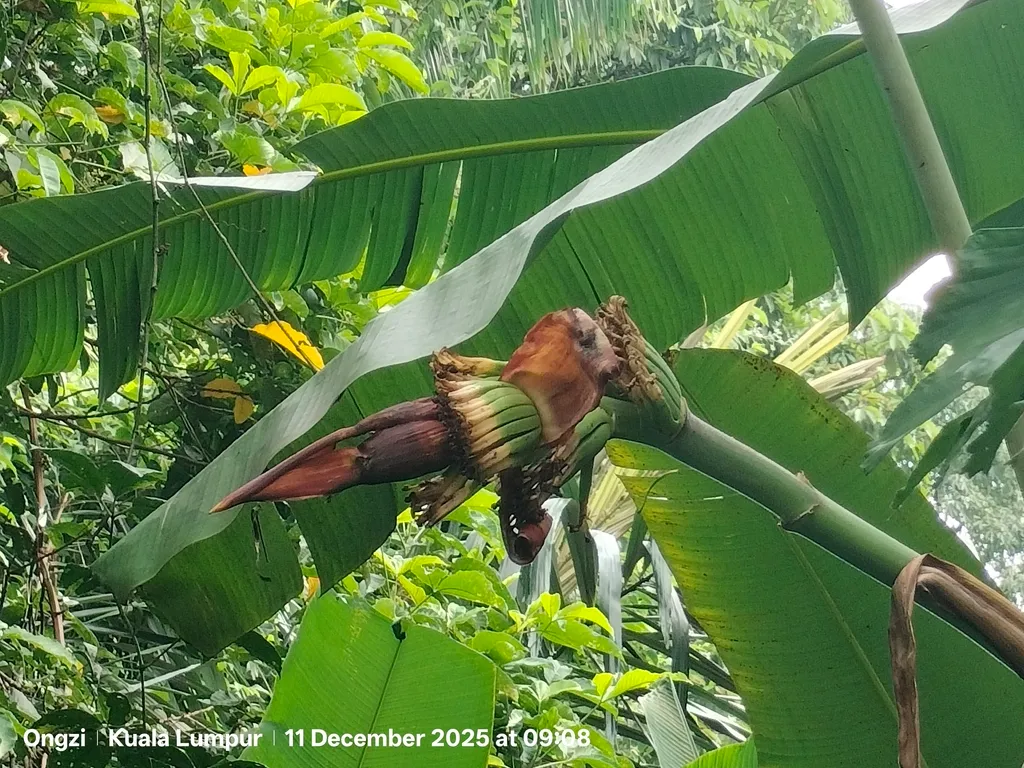
| Care difficulty | 2 / 5 |
|---|---|
| Watering schedule | Keep soil consistently moist, but not waterlogged |
| Sunlight requirements | Full sun |
| Ideal temperature | 20 – 30 °C |
| Soil type | Loam |
| Soil pH | Acid · Neutral |
| Soil moisture | Moist but well drained |
| Fertilizing | Every 2 weeks during the growing season (spring to late summer) |
| Toxicity | Non-toxic |
How to Water Banana?
Originating from the lush, humid tropics, edible banana thrives in environments that mimic its native high moisture levels. This species has adapted to regular rainfall and thus prefers consistently moist soil without being waterlogged. Watering should be done every week to maintain this balance. As an evergreen plant, edible banana benefits greatly from a consistent watering schedule throughout the year, ensuring it remains hydrated whether grown indoors or outdoors. This is crucial for sustaining its perennial foliage and promoting healthy growth.
Learn more →What Are the Sunlight Requirements for Banana?
Edible banana thrives best in full sunlight, receiving at least 6 to 8 hours of direct sun daily, which is crucial for optimal growth, health, and flowering. While edible banana can tolerate partial sun, lesser light exposure can lead to reduced vigor and sparse flowering. Adaptively, its leaves may become larger in shadier conditions to maximize light capture. This plant is predominantly an outdoor species, favoring areas that provide protection from strong winds but ample sunlight. Incorrect light conditions can lead to stunted growth and poor fruit development.
Learn more →What Is the Ideal Temperature Range for Banana?

Edible banana demonstrates notable resilience to heat, enduring temperatures up to approximately 43°C (110°F). However, its cold tolerance is limited, with potential survival down to around 0°C (32°F). Such temperature ranges necessitate protective measures against frost in colder climates and adequate water and shading strategies during extreme heat. Symptoms of stress from cold include browning leaves and slowed growth, while overheating may cause leaf scorching and dehydration. In the event of overcooling, utilize coverings or move potted plants indoors; for overheating, increase watering and provide shade. Understanding these tolerances ensures optimal care and thriving edible banana plants.
Learn more →What Soil Is Best for Banana?
The edible banana does best in a loamy, sandy soil - anything that retains too much water will quickly kill your plant. The ideal soil pH would be slightly acidic, around 5.5 to 6.5. Soil with a pH higher than 7.5 can be fatal to your plant.
- Soil type
- Loam
- Soil pH
- Acid · Neutral
What Are the Moisture Requirements for Banana?
Moist but well drained
Learn more →How to Fertilize Banana?

For edible banana, applying high phosphorus fertilizers encourages robust root development and flowering, critical for fruit production. Use balanced nutrition fertilizers for overall vigor, promoting leaf and shoot growth. Administer edible banana's fertilization every two months during the growing season, reducing to quarterly in cooler months. Employ roughly 1-2 lbs of fertilizer per plant, considering size and growth stage. Always water edible banana thoroughly post-fertilization to prevent root burn and ensure nutrient uptake. Adjust quantities and frequency as edible banana matures; young plants require less, mature fruiting plants more. Avoid over-fertilization to prevent growth issues and environmental harm.
Learn more →How to Prune Banana?

Edible banana, commonly known for its large leaves and edible fruit, requires pruning primarily in early summer. Remove dead or damaged leaves to promote airflow and reduce disease risk. Cut off spent flower stalks after fruiting to channel energy towards new growth. Maintain a single trunk and manage suckers by removing all but one strong shoot. Proper pruning enhances fruit quality and overall plant health, making edible banana more manageable in size and appearance.
Learn more →How to Propagate Banana?

A widely cultivated tropical fruit, edible banana is predominantly propagated through division, which involves separating the suckers or pups that arise from the parent plant's base. These offshoots have their own roots and can be planted directly into the soil. To ensure successful growth, choose healthy and vigorous suckers, and plant them at the appropriate depth in well-drained soil enriched with organic matter. Consistent moisture and protection from wind will foster robust development in the early stages.
Learn more →How to Transplant Banana?
The best time to transplant edible banana is during the balmy days of late spring to mid-summer, when conditions favor root establishment. Choose a sunny location with well-draining soil. Gentle handling of the root system aids in a smoother transition.
Learn more →How to Care for Banana in Winter?

Edible banana hails from tropical, rainforest conditions, naturally defying the cold. As winter looms, it relies on its robust, evergreen characteristics to survive. However, gardeners must consider over-wintering indoors to dodge frosty onslaughts. Steady warmth and high humidity are indispensable, modelling edible banana's native climate. Ensuring a well-drained soil helps to simulate its natural environment for optimal health. Remember: edible banana's winter wellbeing rests on diligent care!
Learn more →How to Plant Banana?
Indoors-potted: Ensure edible banana in a spacious pot to accommodate its rapid growth; rotate regularly for even foliage development. Outdoors-potted: Edible banana thrives outdoors but requires protection from high winds that can tear its large leaves. Outdoors-in the ground: Planting edible banana in well-draining soil helps prevent root rot, crucial for its health and fruit production.
Learn more →How to Repot Banana?
Repot edible banana every 2-3 years in spring, accommodating its fast growth and large root system. Choose a pot slightly larger than the previous to prevent constriction. Ensure ample drainage and space for the pseudostem's development. After repotting, provide a bright location and maintain consistent watering to support recovery and ongoing health.
Learn more →How to Harvest Banana?

After your edible banana has flowered, it usually takes between 10-13 weeks for the fruit to be ready for harvesting. Once the fruit is plump and its skin has turned from a dark green to a light green/yellow, it is ready to be picked. Cut off the "hands" using a sharp knife, leaving a few inches of stalk on each hand to make the bunches easier to carry.
Learn more →Common Pests & Diseases

Diseases
Susceptible to Fusarium wilt (Panama disease) and black leaf streak (Black Sigatoka). Ensure good air circulation and avoid overwatering to reduce risk.
Pests
Common pests include aphids, red spider mites, and banana weevils. Inspect regularly and treat with appropriate organic or chemical controls as needed.
Explore the plant health library →Troubleshooting
Browning Leaf Margins, Tattered Leaves, and Spider Mites
Musa acuminata (dwarf/edible banana) is a fast-growing tropical herbaceous perennial whose broad leaves shred naturally in wind and crisp along the edges when indoor air is dry or soil dries out.
| What you notice | Possible explanation | What to check next |
|---|---|---|
| Leaf edges turn brown and crispy while indoor air is dry or near heating vents | Low indoor humidity or underwatering during active growth | Feel 2 inches into the potting mix; water thoroughly if dry and move away from dry heating vents. |
| Fine webbing, pale stippling, and yellowing patches develop on leaf undersides indoors | Two-spotted spider mites | Isolate the plant and wipe or shower both leaf surfaces thoroughly with room-temperature water. |
| Lower outer leaves yellow and brown gradually as new leaves unroll from the center | Normal leaf turnover as the pseudostem grows taller | Trim fully yellowed lower leaves cleanly near the pseudostem. |
- Keep the potting mix evenly moist during warm spring and summer growth (watering thoroughly when the top 1 to 2 inches feel dry) without letting the container stand in water.
- Provide bright, direct or strong filtered sunlight (at least 6 hours of bright light daily) and warm temperatures between 20°C and 30°C (68°F to 86°F).
- Raise ambient humidity in dry rooms with a humidifier or grouping plants, and wipe dust from the large leaves periodically.
Musa acuminata is listed as non-toxic to cats and dogs by the ASPCA.
Slow Growth, Cold Injury, or Pseudostem Rot
Bananas are heavy feeders in warm weather but enter a slow-growth rest in cool winter temperatures where wet soil can rot the corm.
| What you notice | Possible explanation | What to check next |
|---|---|---|
| Leaves turn black or water-soaked and collapse after chilly temperatures below 10°C (50°F) | Frost or chilling injury | Move potted bananas indoors before cold weather; trim damaged foliage and keep the root ball barely damp until spring warmth returns. |
| Base of the pseudostem softens and smells foul in wet, heavy soil | Corm or root rot from cold, waterlogged soil | Stop watering immediately, check drainage holes, and inspect whether any firm healthy offsets (pups) can be separated. |
- Grow in a fertile, well-draining loamy potting mix in a large, sturdy pot with open drainage holes.
- Feed every 2 to 3 weeks during warm active growth with a balanced liquid fertilizer, and pause feeding in winter.
- Separate rooted basal suckers (pups) in spring if you wish to propagate new plants or keep the main stem vigorous.
In cool climates, potted dwarf cultivars such as 'Dwarf Cavendish' are much easier to maintain indoors than full-sized fruiting bananas.
The Toxicity of Banana
Non-toxic