



Planting and Growing Dense-flowered Pachypodium

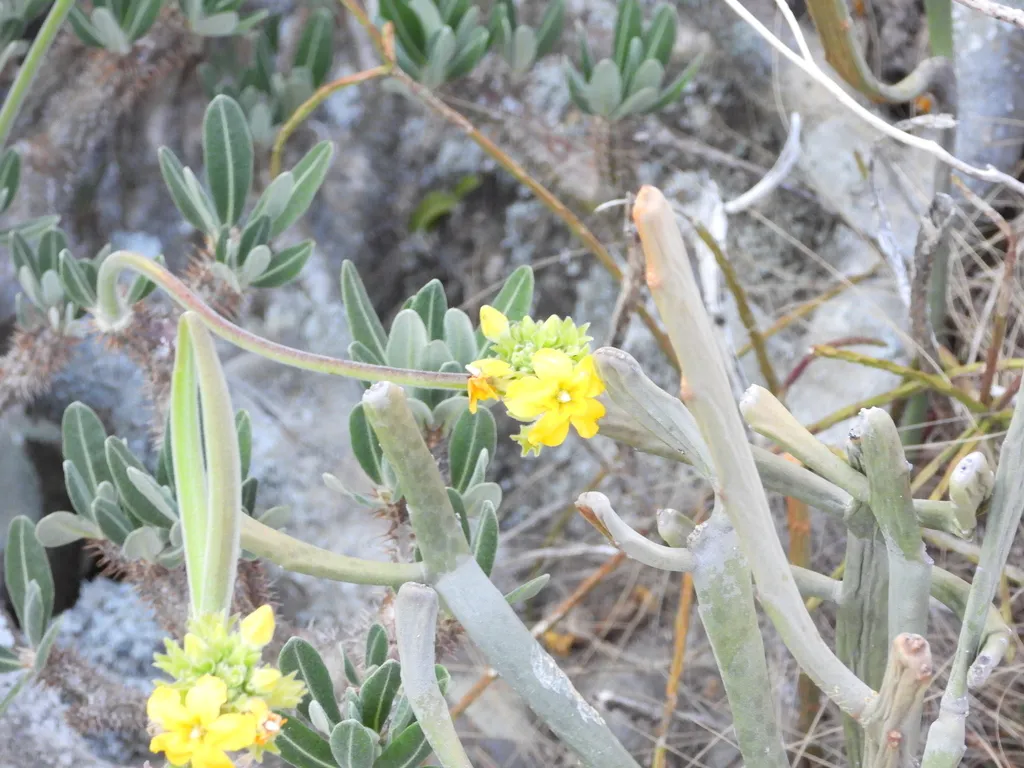
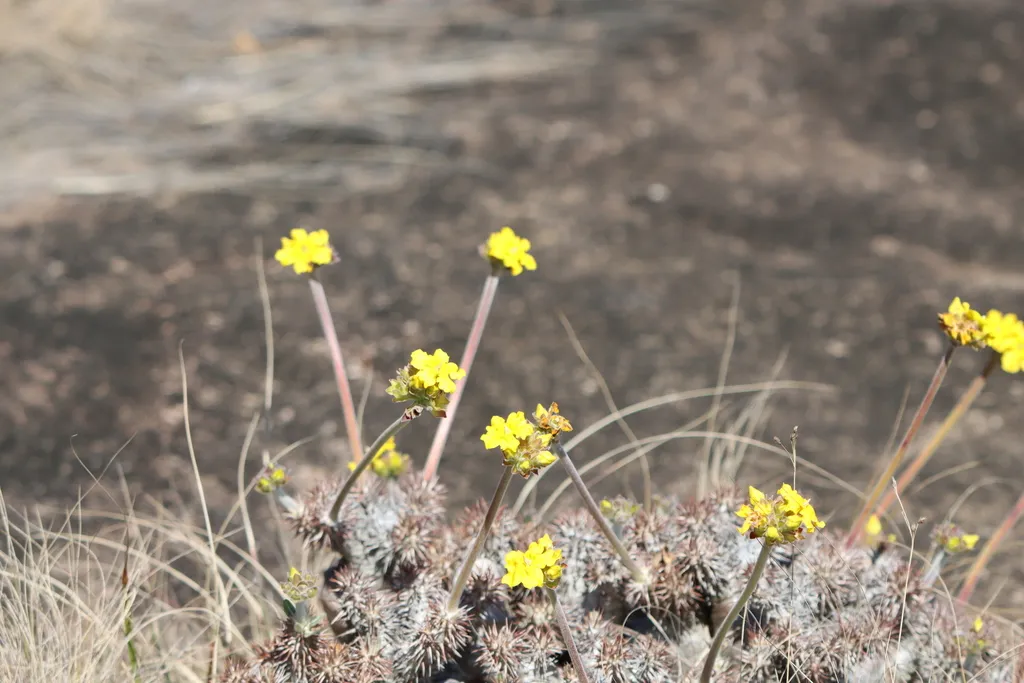
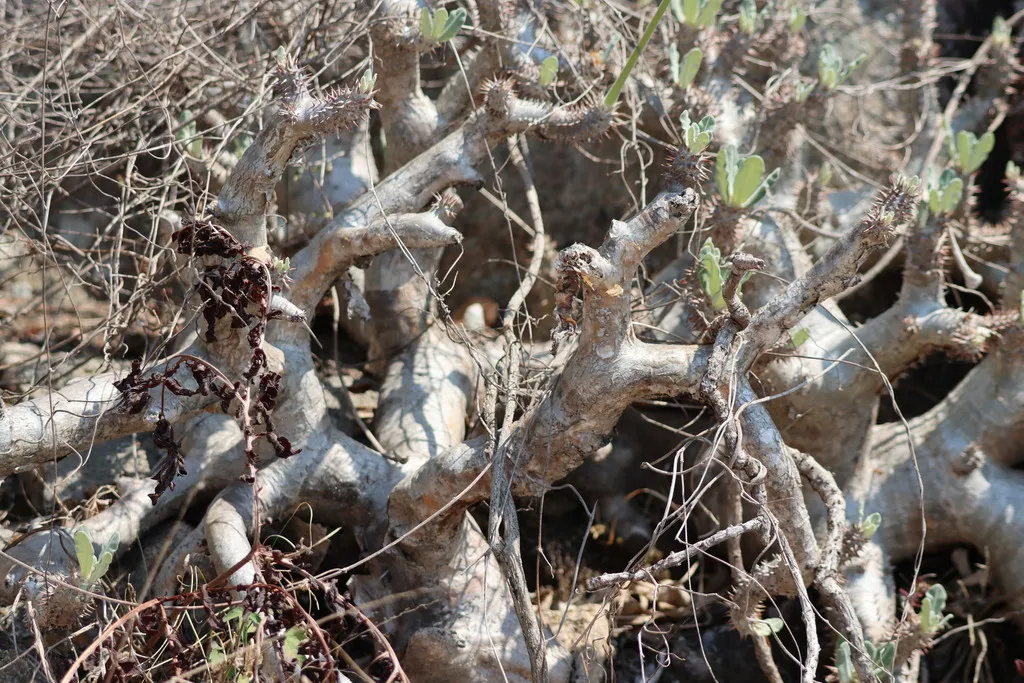
| Care difficulty | 4 / 5 |
|---|---|
| Watering schedule | Water thoroughly when soil is dry, allow to dry out between waterings |
| Sunlight requirements | Full sun |
| Ideal temperature | 18 – 28 °C |
| Soil type | Sand · Loam |
| Soil pH | Neutral |
| Soil moisture | Well-drained |
| Fertilizing | Monthly during growing season |
| Toxicity | Toxic if ingested; sap may cause skin irritation or allergic reaction. |
How to Water Dense-flowered Pachypodium?
Originating from arid regions, pachypodium densiflorum has adapted to survive with minimal moisture, exhibiting remarkable drought tolerance. Its water habits are defined by a preference for dry conditions, with a watering schedule of once every three weeks reflecting its native environment's infrequent rainfall. This sparse watering regimen helps mimic the natural climate that pachypodium densiflorum thrives in. Typically grown outdoors due to its size and structural form, pachypodium densiflorum is well-suited for xeriscaping, leveraging its ability to store water efficiently during prolonged dry periods.
Learn more →What Are the Sunlight Requirements for Dense-flowered Pachypodium?
Full sun
Learn more →What Is the Ideal Temperature Range for Dense-flowered Pachypodium?

The plant pachypodium densiflorum is known for its resilience to temperature fluctuations, enduring a vast range from cold tolerances of 0°C (32°F) to heat tolerances up to 43°C (109°F). This adaptability implies that 'pachypodium densiflorum' can thrive in various environments. However, during extreme cold, it may exhibit symptoms like leaf dropping or stem damage, while extreme heat could lead to sunburn or dehydration. Care involves protective measures such as frost covers in cold weather or ensuring adequate shade and water during heat waves. The plant’s robust temperature tolerance makes it suitable for various climates, but attention to weather extremes is paramount for optimal care.
Learn more →What Soil Is Best for Dense-flowered Pachypodium?
- Soil type
- Sand · Loam
- Soil pH
- Neutral
What Are the Moisture Requirements for Dense-flowered Pachypodium?
Well-drained
Learn more →How to Fertilize Dense-flowered Pachypodium?

Monthly during growing season
Learn more →How to Prune Dense-flowered Pachypodium?

Pachypodium densiflorum, known for its distinctive swollen stem and vibrant yellow flowers, thrives with specific pruning techniques. Optimal pruning is performed in early spring, aligning with its growth cycle. Focus on removing dead or damaged branches, encouraging robust growth and better airflow. Minimal pruning preserves its unique form. Consistent pruning enhances health and flower production.
Learn more →How to Propagate Dense-flowered Pachypodium?

Propagate by seeds sown in spring at 20°C (68°F). Stem cuttings can be taken in summer; allow the cut end to dry and callus for a few days before inserting into dry, gritty compost. Keep the cutting barely moist until roots develop.
Learn more →How to Transplant Dense-flowered Pachypodium?
Pachypodium densiflorum, being a perennial plant, thrives best when transplanted from early to late spring due to optimal growth conditions. Ensure a well-drained, sunny location to facilitate successful adjustment.
Learn more →How to Plant Dense-flowered Pachypodium?
Grow in a very well-drained, sandy or loamy soil with a neutral pH. Provide full sun or bright indirect light; a south-facing window is ideal indoors. Water thoroughly during the growing season (spring to summer) but allow the soil to dry completely between waterings. Reduce watering in winter to almost nil, keeping the plant dry to prevent rot. Fertilize monthly with a half-strength cactus fertilizer in summer. Protect from temperatures below 10°C; bring indoors or keep in a heated greenhouse in cooler climates.
Learn more →Common Pests & Diseases

Diseases
Susceptible to root rot and stem rot if overwatered or kept in poorly drained soil.
Pests
May be attacked by scale insects and spider mites, especially in dry indoor air.
Explore the plant health library →The Toxicity of Dense-flowered Pachypodium
Toxic if ingested; sap may cause skin irritation or allergic reaction.