
Dense-flowered Pachypodium
Also known as: Dense-flowered Pachypodium
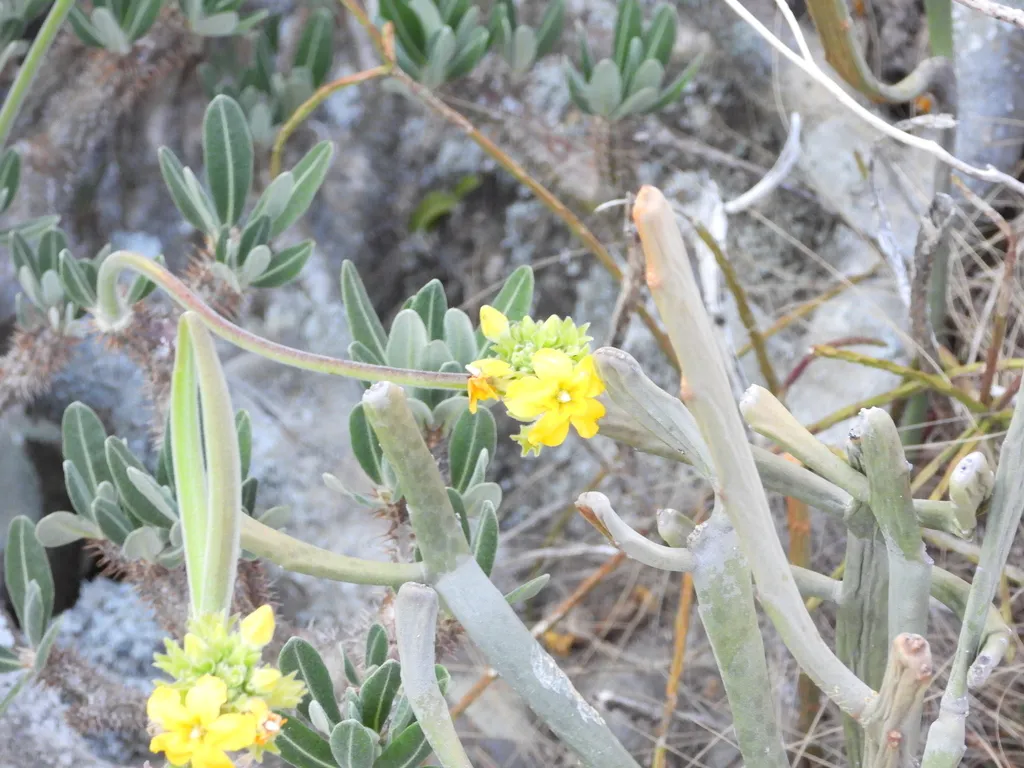
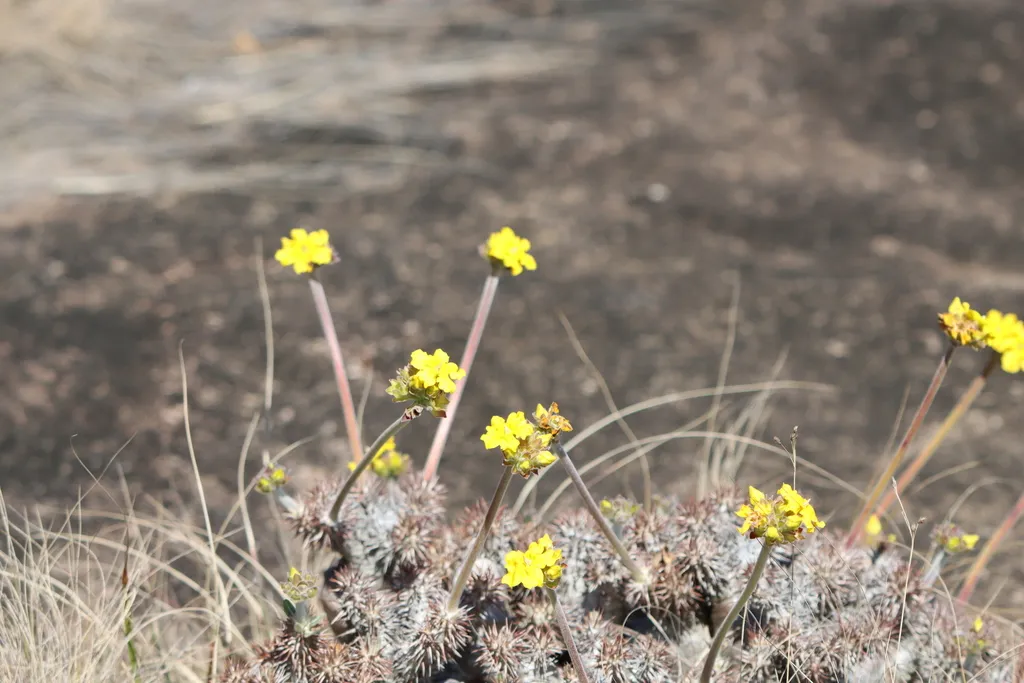
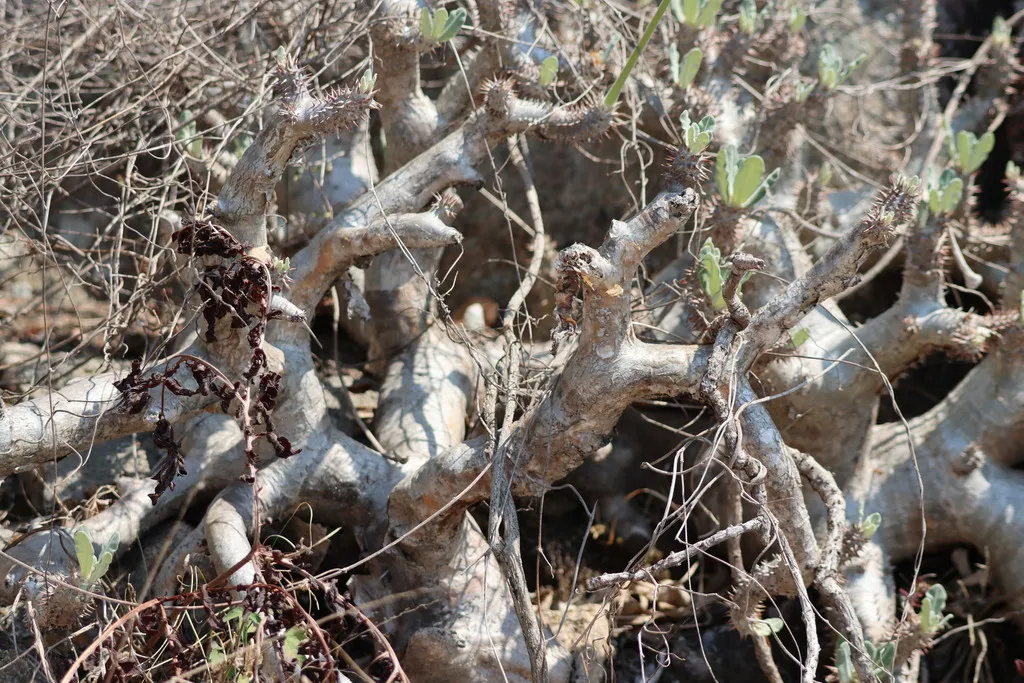
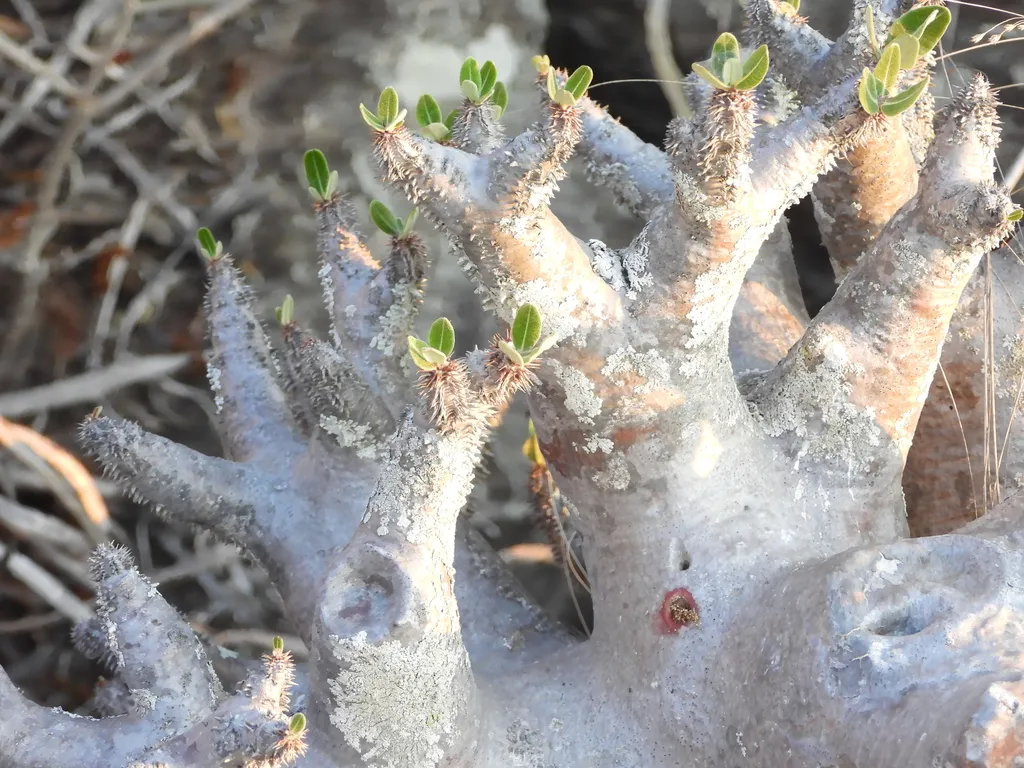
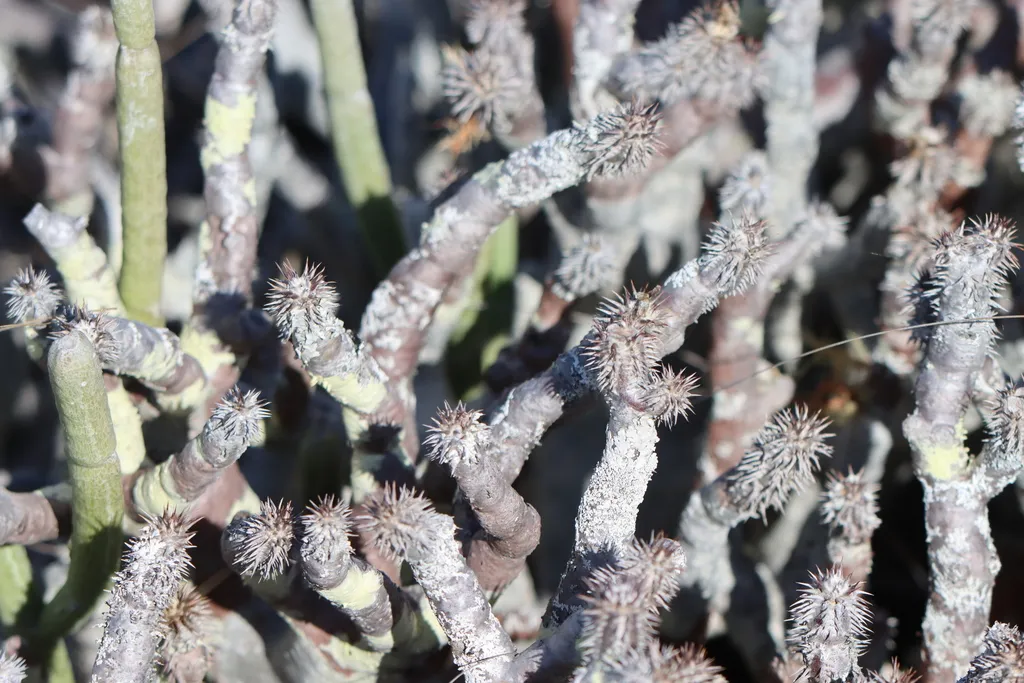
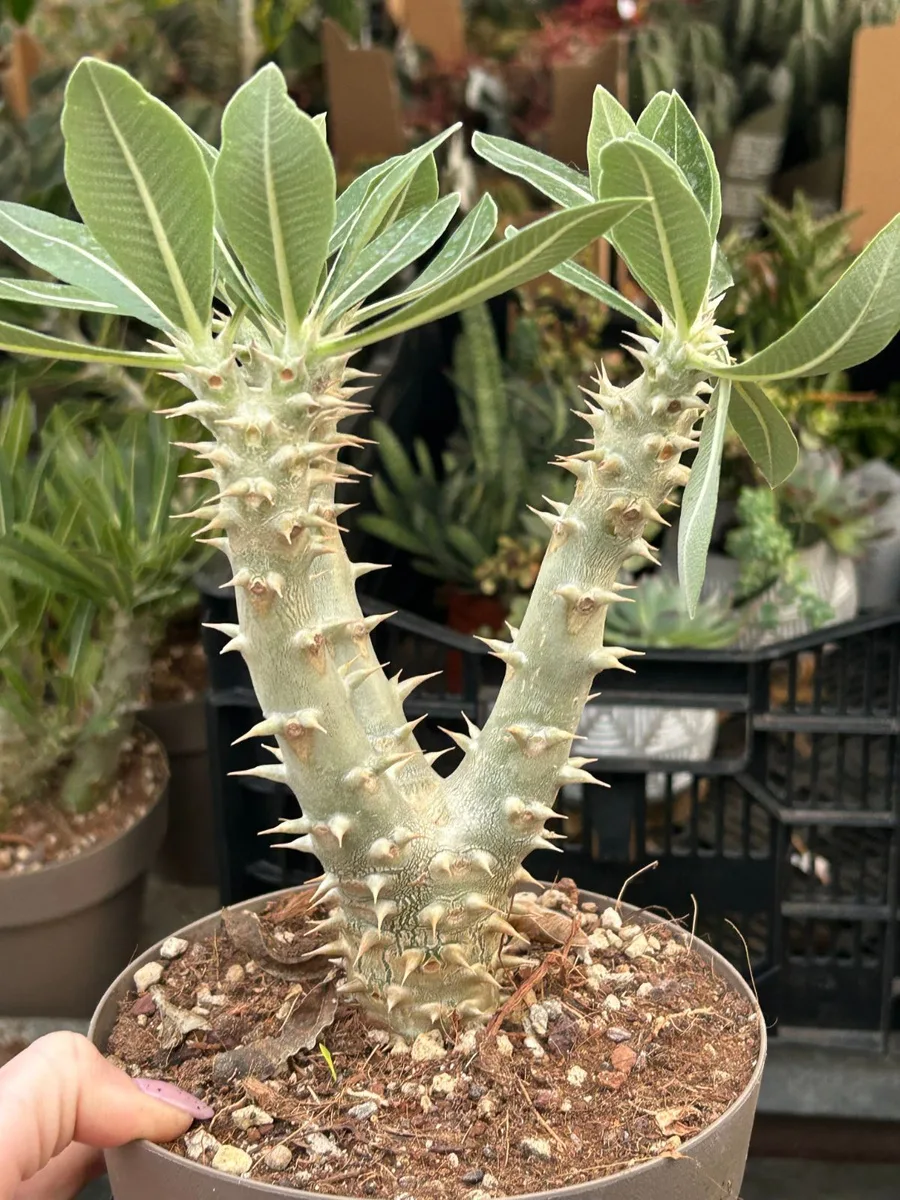
Pachypodium densiflorum is a slow-growing succulent shrub with a thick, fleshy, bottle-shaped trunk covered in sharp spines. The leaves are narrow, dark green, and clustered at the tips of the branches. In summer, it produces dense clusters of bright yellow, trumpet-shaped flowers that contrast beautifully with the spiny stems. This plant is highly prized for its unusual caudiciform habit and striking floral display.
Scientific classification
- Species
- Dense-flowered Pachypodium (Pachypodium densiflorum)
- Genus
- Information to be completed
- Family
- Apocynaceae
- Toxic if ingested; sap may cause skin irritation or allergic reaction.
- Toxicity
- Cactus Succulent · Houseplants
- Plant type
- 0.5 - 1 metres
- Height
- 0.3 - 0.6 metres
- Spread
- Evergreen
- Foliage
- Upright
- Habit
- Summer
- Season of interest
- Full sun
- Sunlight
- 18 – 28 °C
- Ideal temperature









Dense-flowered Pachypodium pictures
Distribution of Dense-flowered Pachypodium
Distribution map
- Native
- Introduced
- Cultivated
Source:WCVP v16 · Royal Botanic Gardens, Kew · CC BY 3.0 · Boundaries:WGSRPD / TDWG
Toxicity
Toxic if ingested; sap may cause skin irritation or allergic reaction.
Dense-flowered Pachypodium care guide
- Water thoroughly when soil is dry, allow to dry out between waterings
- Watering
- Full sun
- Sunlight
- 18 – 28 °C
- Ideal temperature

Watering
Water thoroughly when soil is dry, allow to dry out between waterings
Fertilizing
 Fertilizing
Monthly during growing season
Pruning
 Pruning
No regular pruning needed; remove any dead or damaged leaves as they appear.
Propagation
 Propagation
Propagate by seeds sown in spring at 20°C (68°F). Stem cuttings can be taken in summer; allow the cut end to dry and callus for a few days before inserting into dry, gritty compost. Keep the cutting barely moist until roots develop.
Growing
 Growing
Grow in a very well-drained, sandy or loamy soil with a neutral pH. Provide full sun or bright indirect light; a south-facing window is ideal indoors. Water thoroughly during the growing season (spring to summer) but allow the soil to dry completely between waterings. Reduce watering in winter to almost nil, keeping the plant dry to prevent rot. Fertilize monthly with a half-strength cactus fertilizer in summer. Protect from temperatures below 10°C; bring indoors or keep in a heated greenhouse in cooler climates.
Common pests and diseases
Diseases
Susceptible to root rot and stem rot if overwatered or kept in poorly drained soil.
Pests
May be attacked by scale insects and spider mites, especially in dry indoor air.
Explore the plant health library →




