



Planting and Growing Indian borage

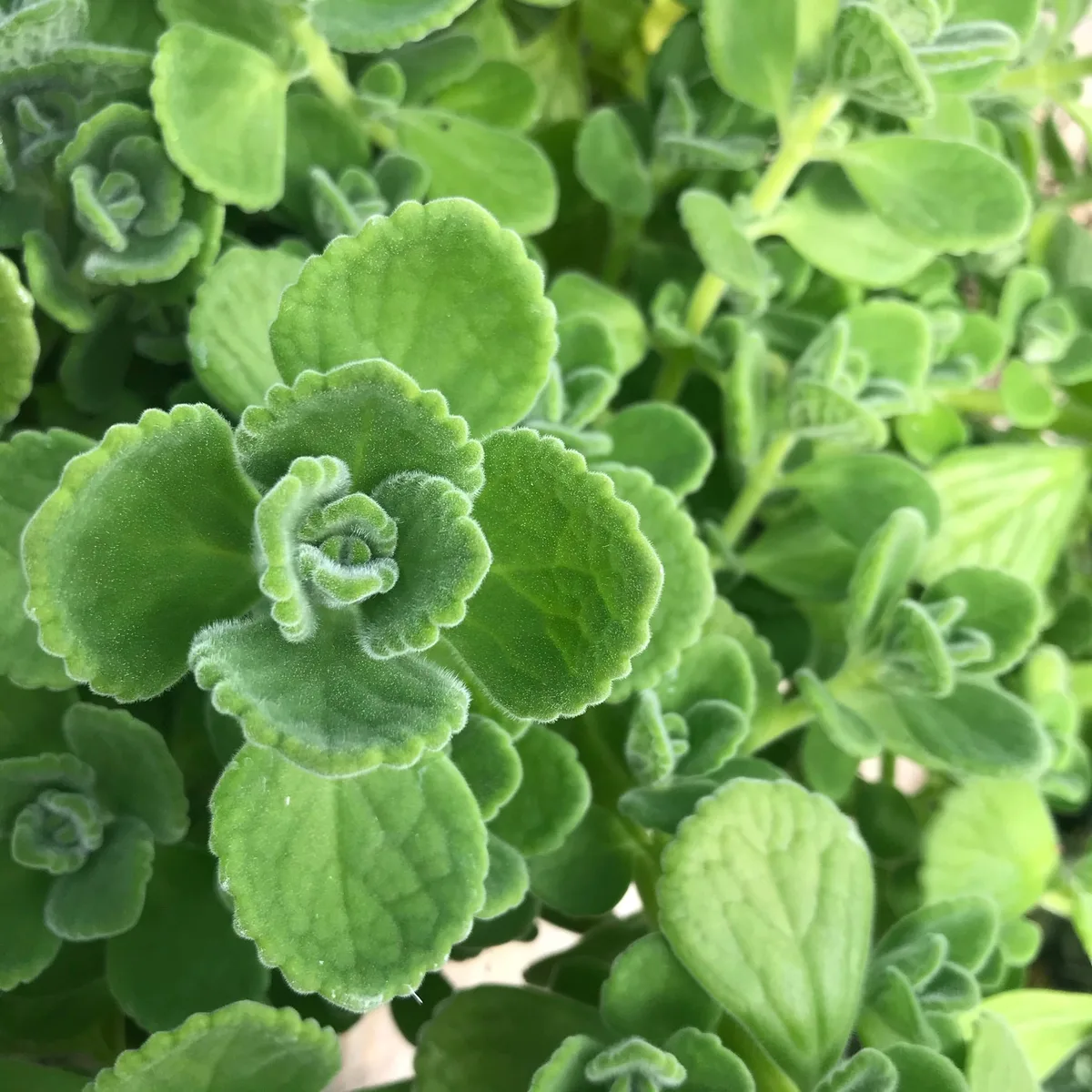
| Care difficulty | 1 / 5 |
|---|---|
| Watering schedule | Water moderately, allow top inch of soil to dry before rewatering |
| Sunlight requirements | Full sun · Partial shade |
| Ideal temperature | 15 – 25 °C |
| Soil type | Loam · Sand |
| Soil pH | Neutral |
| Soil moisture | Moist but well drained |
| Fertilizing | Monthly during growing season (spring to autumn) |
| Toxicity | Non-toxic to humans and pets. |
How to Water Indian borage?
Water moderately, allow top inch of soil to dry before rewatering
Learn more →What Are the Sunlight Requirements for Indian borage?
Full sun · Partial shade
Learn more →What Is the Ideal Temperature Range for Indian borage?

15 – 25 °C
Learn more →What Soil Is Best for Indian borage?
- Soil type
- Loam · Sand
- Soil pH
- Neutral
What Are the Moisture Requirements for Indian borage?
Moist but well drained
Learn more →How to Fertilize Indian borage?

Monthly during growing season (spring to autumn)
Learn more →How to Prune Indian borage?

Pinch out growing tips regularly to encourage bushy growth; remove faded flower spikes after blooming.
Learn more →How to Propagate Indian borage?

Propagate by stem cuttings taken in spring or summer. Insert cuttings into moist, well-drained compost and keep at temperatures of 18-24°C. Roots develop quickly within 2-3 weeks.
Learn more →How to Plant Indian borage?
Grow in well-drained, fertile loamy or sandy soil in a sheltered, sunny or lightly shaded position. Water moderately, allowing the soil to dry slightly between waterings, and reduce watering in winter. Fertilize monthly during the growing season with a balanced liquid feed. In cold climates, bring containers indoors before frost; the plant is not frost-hardy.
Learn more →Common Pests & Diseases

Diseases
Generally resistant to diseases but may suffer from root rot if overwatered or in poorly drained soil.
Pests
Susceptible to mealybugs and whiteflies, especially when grown indoors or under glass.
Explore the plant health library →Troubleshooting
Leggy Stems, Moisture or Light Stress
Indian borage (Plectranthus amboinicus) grows vigorously in warm, bright conditions; pinching growing tips prevents woody leggy stems and preserves foliage quality.
| What you notice | Possible explanation | What to check next |
|---|---|---|
| Stems elongate with sparse lower leaves and flower spikes forming at tips | Delayed harvesting/pinching or insufficient sunlight | Check stem length and whether flower buds have started forming |
| Fleshy lower stems turn dark and mushy while soil stays wet | Overwatering or poorly drained potting soil causing stem and root rot | Check pot drainage holes and feel soil moisture two inches deep |
- Pinch or harvest stem tips regularly just above a pair of leaves, and remove flower buds promptly to maintain bushy growth.
- Provide bright light or morning sun in sharply drained soil, letting the top inch dry slightly between waterings.
- Bring frost-tender Indian borage (Plectranthus amboinicus) indoors before temperatures drop below 10°C (50°F).
Do not let succulent-stemmed Plectranthus amboinicus sit in soggy soil, as fleshy stems rot quickly when overwatered.
Powdery Mildew or Sap-Sucking Pests
Crowded foliage and damp stagnant air promote foliar fungi, while dry indoor air favors spider mites, whiteflies, and aphids.
| What you notice | Possible explanation | What to check next |
|---|---|---|
| White powdery coating on upper leaves | Powdery mildew favored by humid nights and poor airflow | Inspect leaf surfaces and lower stems closely |
| Curled shoot tips, sticky honeydew, or fine webbing on leaf undersides | Aphids, whiteflies, mealybugs, or spider mites | Examine young leaves and undersides closely |
- Thin out crowded stems and avoid overhead watering late in the day to keep leaves dry.
- Remove and discard any leaves showing fungal pustules or white mildew immediately (do not compost infected foliage).
- Rinse culinary leaves thoroughly with water before kitchen use, and treat persistent pests only with appropriately labeled insecticidal soap.
Ensure good airflow around indoor pots to discourage mealybugs and whiteflies.
The Toxicity of Indian borage
Non-toxic to humans and pets.