
Indian borage
Also known as: Indian borage, Cuban oregano, Mexican mint, Spanish thyme
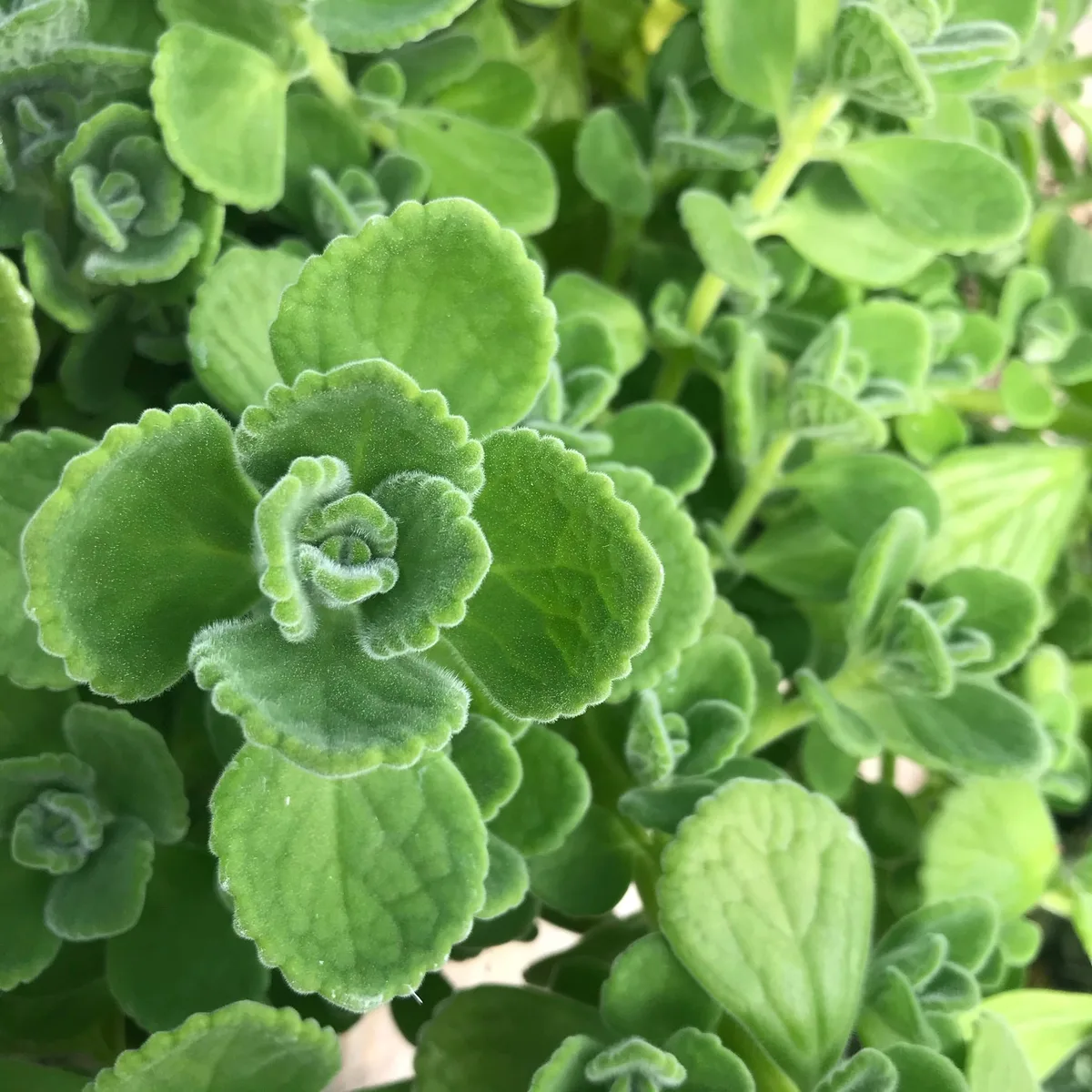
Plectranthus amboinicus is a succulent, aromatic perennial with thick, fleshy, scalloped leaves that are velvety to the touch. It bears small, tubular, pale lavender or pink flowers in spikes during summer. The plant has a bushy, spreading habit and is highly ornamental for its foliage and scent.
Scientific classification
- Species
- Indian borage (Plectranthus amboinicus)
- Genus
- Information to be completed
- Family
- Lamiaceae
- Non-toxic to humans and pets.
- Toxicity
- Herbs - Culinary · Perennial
- Plant type
- 0.3 - 0.6 metres
- Height
- 0.3 - 0.6 metres
- Spread
- Evergreen
- Foliage
- Bushy · Spreading
- Habit
- Summer
- Season of interest
- Full sun · Partial shade
- Sunlight
- 15 – 25 °C
- Ideal temperature









Indian borage pictures
Distribution of Indian borage
Distribution map
- Native
- Introduced
- Cultivated
Source:WCVP v16 · Royal Botanic Gardens, Kew · CC BY 3.0 · Boundaries:WGSRPD / TDWG
Culture
Information to be completed
Toxicity
Non-toxic to humans and pets.
Quick identification of Indian borage
Information to be completed
Indian borage care guide
- Water moderately, allow top inch of soil to dry before rewatering
- Watering
- Full sun · Partial shade
- Sunlight
- 15 – 25 °C
- Ideal temperature

Watering
Water moderately, allow top inch of soil to dry before rewatering
Fertilizing
 Fertilizing
Monthly during growing season (spring to autumn)
Pruning
 Pruning
Pinch out growing tips regularly to encourage bushy growth; remove faded flower spikes after blooming.
Propagation
 Propagation
Propagate by stem cuttings taken in spring or summer. Insert cuttings into moist, well-drained compost and keep at temperatures of 18-24°C. Roots develop quickly within 2-3 weeks.
Growing
 Growing
Grow in well-drained, fertile loamy or sandy soil in a sheltered, sunny or lightly shaded position. Water moderately, allowing the soil to dry slightly between waterings, and reduce watering in winter. Fertilize monthly during the growing season with a balanced liquid feed. In cold climates, bring containers indoors before frost; the plant is not frost-hardy.
People also ask
Information to be completed
Common pests and diseases
Diseases
Generally resistant to diseases but may suffer from root rot if overwatered or in poorly drained soil.
Pests
Susceptible to mealybugs and whiteflies, especially when grown indoors or under glass.
Explore the plant health library →




