



Planting and Growing Aloe vera

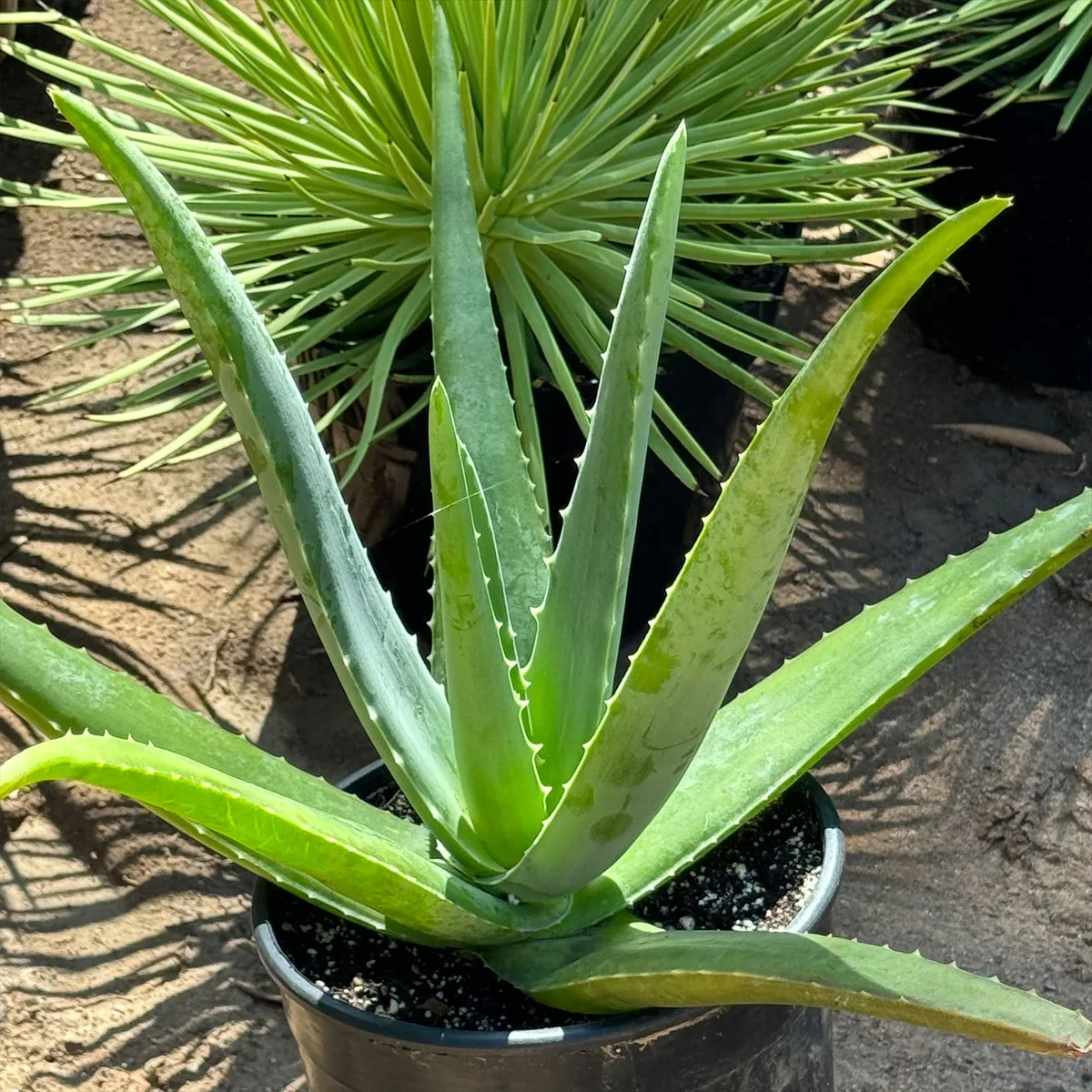
| Care difficulty | 1 / 5 |
|---|---|
| Watering schedule | Allow soil to dry completely between waterings, then water thoroughly. Reduce watering in winter. |
| Sunlight requirements | Full sun |
| Ideal temperature | 18 – 28 °C |
| Soil type | Sand · Loam |
| Soil pH | Neutral |
| Soil moisture | Well-drained |
| Fertilizing | Every 4 weeks during spring and summer with balanced liquid fertilizer diluted to half strength |
| Toxicity | Toxic if ingested (especially the latex layer just beneath the skin); can cause digestive upset in humans and pets. |
How to Water Aloe vera?
Allow soil to dry completely between waterings, then water thoroughly. Reduce watering in winter.
Learn more →What Are the Sunlight Requirements for Aloe vera?
Full sun
Learn more →What Is the Ideal Temperature Range for Aloe vera?

18 – 28 °C
Learn more →What Soil Is Best for Aloe vera?
- Soil type
- Sand · Loam
- Soil pH
- Neutral
What Are the Moisture Requirements for Aloe vera?
Well-drained
Learn more →How to Fertilize Aloe vera?

Every 4 weeks during spring and summer with balanced liquid fertilizer diluted to half strength
Learn more →How to Prune Aloe vera?

Remove dead or damaged leaves at the base as needed. Cut flower stalks after blooming.
Learn more →How to Propagate Aloe vera?

Propagate by offsets (pups) removed in spring or summer. Allow offsets to dry for a day before potting in well-draining soil. Keep at 20-25°C until rooted. Seeds can also be sown in spring at 21°C.
Learn more →How to Plant Aloe vera?
Grow in a well-drained, sandy or loamy soil mix. Place in full sun to bright indirect light; a south- or west-facing window is ideal indoors. Water sparingly, allowing the soil to dry out completely between waterings, and reduce watering in winter. It is not frost-hardy, so bring plants indoors or into a greenhouse when temperatures drop below 10°C. Feed with a balanced liquid fertilizer diluted to half strength every four weeks during spring and summer.
Learn more →Common Pests & Diseases

Diseases
Generally disease-resistant, but prone to root rot and leaf spot if overwatered or grown in poor drainage.
Pests
May be susceptible to mealybugs, scale insects, and occasionally spider mites.
Explore the plant health library →Troubleshooting
Soft, Mushy, or Yellowing Leaves at the Base
Aloe vera stores water in thick succulent leaves and is highly susceptible to root and crown rot if grown in moisture-retentive soil or watered too frequently.
| What you notice | Possible explanation | What to check next |
|---|---|---|
| Lower leaves turn yellow, brown, or water-soaked and mushy near the base | Overwatering, poorly draining potting mix, or root and crown rot | Stop watering immediately, empty standing water, and unpot to inspect the roots and stem base. |
| Leaves turn soft and collapsed after exposure to freezing or near-freezing temperatures | Frost or cold injury | Move the plant to a warm, frost-free indoor location and trim away damaged mushy leaves. |
- Remove the plant from its pot and shake off damp soil to inspect the roots; trim any dark, mushy roots with clean tools.
- Repot into a terracotta or well-drained pot with open drainage holes using a gritty cactus/succulent mix (such as potting mix blended with coarse sand, perlite, or pumice).
- Do not water immediately after repotting; wait several days for roots to settle, then water deeply only when the mix has dried out completely.
- Avoid pouring water directly into the center of the leaf rosette.
Always allow the soil to dry out completely between waterings, and water very sparingly in winter.
Thin, Curled Leaves or Reddish-Brown Leaf Tint
Inward-curling leaves signal dehydration, whereas reddish-brown coloration is usually a reversible response to strong sun or temperature shifts.
| What you notice | Possible explanation | What to check next |
|---|---|---|
| Leaves look thin, deflated, and curl inward along their length in dry soil | Underwatering / depletion of leaf gel moisture | Confirm the potting mix is completely dry throughout before giving a thorough soak. |
| Leaves turn reddish-brown or tan without becoming soft when moved into strong sunlight | Sun stress or sudden exposure to direct afternoon sun | Move the plant to bright, indirect light or morning sun and watch whether green color returns. |
| Rosette stretches tall with pale, floppy leaves | Insufficient light | Move gradually closer to a bright, sunny window. |
- When the potting mix is completely dry and leaves thin slightly, water deeply until water drains from the bottom holes, then empty the saucer.
- Place in bright, indirect light or gentle morning sun; acclimate gradually when moving to brighter locations.
- Remove rooted offsets (pups) in spring or summer if the pot becomes overcrowded.
Aloe latex (the yellow sap just beneath the green leaf rind) is toxic to cats and dogs and can cause digestive upset in humans if ingested.
The Toxicity of Aloe vera
Toxic if ingested (especially the latex layer just beneath the skin); can cause digestive upset in humans and pets.