
Aloe vera
Also known as: Aloe vera, Barbados aloe, Medicinal aloe
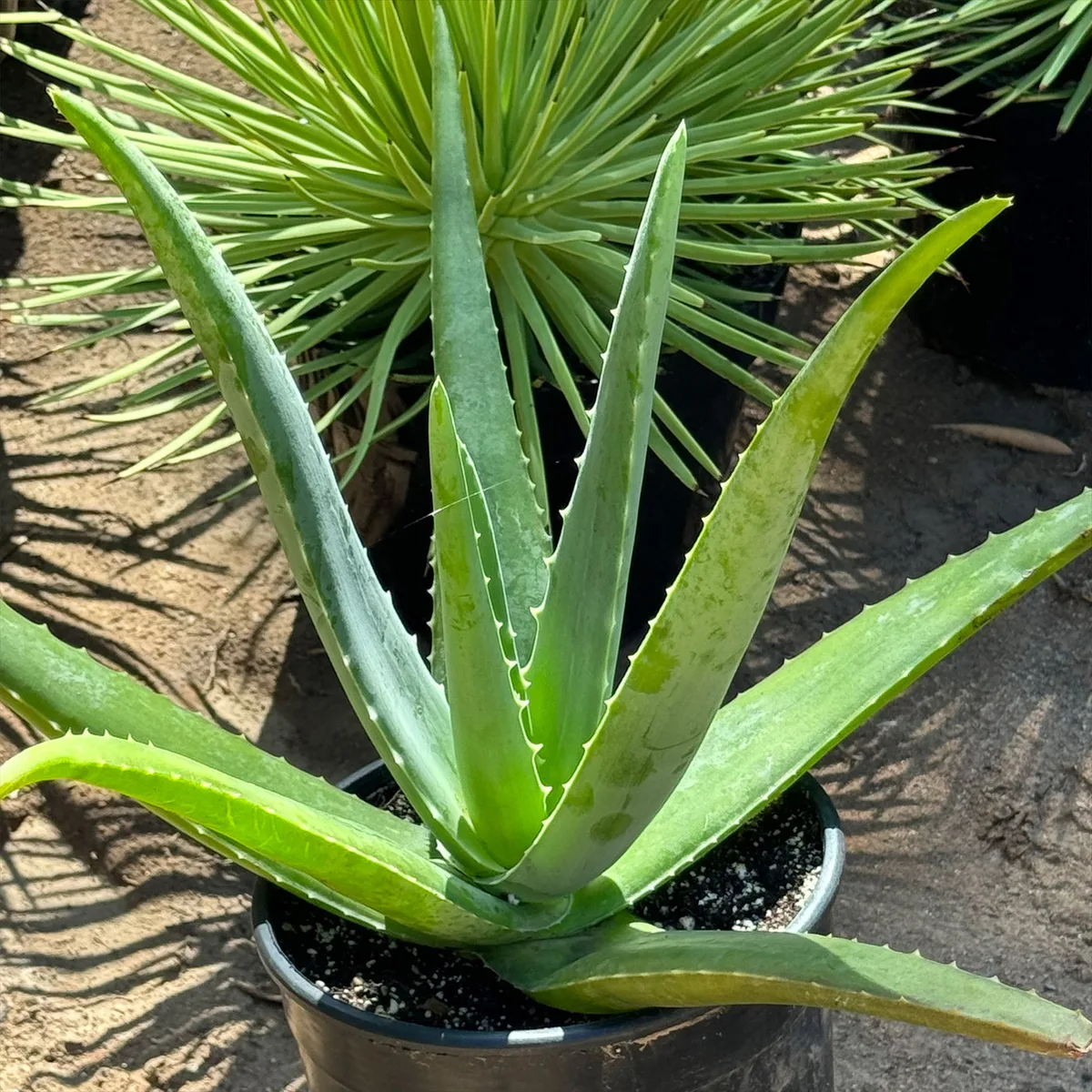
Aloe barbadensis is a stemless succulent with thick, fleshy, lance-shaped leaves arranged in a rosette. The leaves are grey-green with white spots and have toothed margins. Mature plants produce tall racemes of tubular yellow flowers in summer. Its architectural form and medicinal gel make it a highly valued ornamental and practical houseplant.
Scientific classification
- Species
- Aloe vera (Aloe barbadensis)
- Genus
- Information to be completed
- Family
- Asphodelaceae
- Toxic if ingested (especially the latex layer just beneath the skin); can cause digestive upset in humans and pets.
- Toxicity
- Succulent · Houseplants · Perennial
- Plant type
- 0.5 - 1 metres
- Height
- 0.5 - 1 metres
- Spread
- Evergreen
- Foliage
- Upright · Clump forming
- Habit
- Spring · Summer
- Season of interest
- Full sun
- Sunlight
- 18 – 28 °C
- Ideal temperature









Aloe vera pictures
Distribution of Aloe vera
Distribution map
Arabian Peninsula, but widely naturalized in tropical and subtropical regions
Information to be completed
Culture
Information to be completed
Toxicity
Toxic if ingested (especially the latex layer just beneath the skin); can cause digestive upset in humans and pets.
Quick identification of Aloe vera
Information to be completed
Aloe vera care guide
- Allow soil to dry completely between waterings, then water thoroughly. Reduce watering in winter.
- Watering
- Full sun
- Sunlight
- 18 – 28 °C
- Ideal temperature

Watering
Allow soil to dry completely between waterings, then water thoroughly. Reduce watering in winter.
Fertilizing
 Fertilizing
Every 4 weeks during spring and summer with balanced liquid fertilizer diluted to half strength
Pruning
 Pruning
Remove dead or damaged leaves at the base as needed. Cut flower stalks after blooming.
Propagation
 Propagation
Propagate by offsets (pups) removed in spring or summer. Allow offsets to dry for a day before potting in well-draining soil. Keep at 20-25°C until rooted. Seeds can also be sown in spring at 21°C.
Growing
 Growing
Grow in a well-drained, sandy or loamy soil mix. Place in full sun to bright indirect light; a south- or west-facing window is ideal indoors. Water sparingly, allowing the soil to dry out completely between waterings, and reduce watering in winter. It is not frost-hardy, so bring plants indoors or into a greenhouse when temperatures drop below 10°C. Feed with a balanced liquid fertilizer diluted to half strength every four weeks during spring and summer.
People also ask
Information to be completed
Common pests and diseases
Diseases
Generally disease-resistant, but prone to root rot and leaf spot if overwatered or grown in poor drainage.
Pests
May be susceptible to mealybugs, scale insects, and occasionally spider mites.
Explore the plant health library →




