



Planting and Growing Queen Anthurium

| Care difficulty | 5 / 5 |
|---|---|
| Watering schedule | Keep soil evenly moist; allow top inch to dry slightly between waterings |
| Sunlight requirements | Bright indirect light |
| Ideal temperature | 18 – 27 °C |
| Soil type | Peat · Loam |
| Soil pH | Acid |
| Soil moisture | Moist but well drained |
| Fertilizing | Every 2-3 weeks during growing season |
| Toxicity | Toxic if ingested, containing calcium oxalate crystals which cause irritation to mouth and digestive tract; keep away from pets and children. |
How to Water Queen Anthurium?
Thriving in the high humidity of its native tropical rainforest, queen anthurium has adapted to consistent moisture and shows a preference for environments that mimic this natural setting. Its water habits are characterized by a need for regular hydration without being waterlogged, balancing well with its environment. The plant should be watered every week to maintain its lush appearance. Given its origins, queen anthurium is typically grown indoors where humidity can be more easily regulated. This evergreen plant benefits from increased air moisture, especially during its active growing season, which supports both foliage health and vibrant flowering.
Learn more →What Are the Sunlight Requirements for Queen Anthurium?
Queen anthurium flourishes in bright, indirect light conditions that mimic its native understory habitat in tropical rainforests. The optimal lighting should be diffused, safeguarding queen anthurium from direct sunlight that can scorch its foliage. While it is quite adjustable to lower light conditions, too little light can lead to slower growth and may reduce the plant's vibrant leaf coloration. Queen anthurium's ability to endure partial sun does not translate to long periods of intense light, which can damage its leaves. For outdoor cultivation, positioning queen anthurium in dappled shade, such as under a canopy of taller plants, is recommended. Indoors, placement near east or north-facing windows typically provides ideal light exposure, promoting its health and growth.
Learn more →What Is the Ideal Temperature Range for Queen Anthurium?

Queen anthurium exhibits some resilience to temperature variations. It can withstand temperatures as low as 5℃ (41℉) and as high as 45℃ (113℉). However, cold temperatures may cause leaf discoloration or drop, while excessive heat can result in wilting or scorched leaves. Care for queen anthurium includes safeguarding it from extreme weather by moving it indoors during cold snaps and ensuring adequate humidity in hot conditions. Using frost cloths or shade can mitigate temperature-induced stress. Monitoring and adjusting the environment accordingly is crucial for maintaining the health of queen anthurium.
Learn more →What Soil Is Best for Queen Anthurium?
Queen anthurium thrives in a well-draining, airy soil mix, critical to prevent root rot. A suitable mix includes equal parts of orchid bark, peat, and perlite. In absence of orchid bark, coconut coir is an alternative. Drainage can be improved with a bottom layer of activated charcoal or coarse gravel. Monthly, apply a balanced, water-soluble fertilizer diluted to half-strength, avoiding over-fertilization to prevent root damage.
- Soil type
- Peat · Loam
- Soil pH
- Acid
What Are the Moisture Requirements for Queen Anthurium?
Moist but well drained
Learn more →How to Fertilize Queen Anthurium?

To maintain queen anthurium's lush foliage, apply a high nitrogen fertilizer every 4-6 weeks during active growth in spring and summer, reducing to every 8-10 weeks in fall and winter. Use one-quarter strength of recommended dosage to avoid root burn. Fertilization supports robust growth and rejuvenates the soil. Special care includes ensuring the soil is moist before application to prevent harm to queen anthurium's roots. Tailoring fertilization to growth cycles and seasonal changes maximizes plant health and appearance for all gardening levels.
Learn more →How to Prune Queen Anthurium?

Queen anthurium, known for its dramatic, elongated leaves, benefits from pruning early to later spring. Trim old, yellow, or damaged leaves at the base to promote healthy growth and airflow. This timing aligns with the plant's active growth phase, facilitating quicker recovery and stronger new growth. Regular pruning enhances aesthetic appeal and prevents disease, making the plant more robust and vibrant. Prioritize sterilizing tools to prevent infections.
Learn more →How to Propagate Queen Anthurium?

Hailing from the tropical rainforests, queen anthurium is cherished for its magnificent foliage. To propagate queen anthurium, division is the method of choice, focusing on its offsets. Carefully separate them from the parent during repotting, ensuring each section has ample roots. Plant these segments in appropriate potting mix, which should be well-draining yet moisture-retentive, mimicking queen anthurium's native habitat. Keep the humidity high and provide indirect light to encourage the offsets to establish themselves and thrive, recreating the lush undercanopy environment these plants adore.
Learn more →How to Transplant Queen Anthurium?
For queen anthurium, the prime transplanting time is during the crest of growth in late spring to early summer, ensuring a smooth transition. Select a bright, indirect lit spot with high humidity and provide essential transplant care only if needed.
Learn more →How to Plant Queen Anthurium?
Indoors-potted: Ensure queen anthurium has ample space to unfurl its majestic leaves, which add a regal touch to indoor settings. Outdoors-potted: Queen anthurium thrives outdoors in pots with enough room for growth; protect from strong winds that can damage its delicate foliage. Outdoors-in the ground: In the ground, queen anthurium requires well-drained spots as standing water can lead to root issues, diminishing its royal presence.
Learn more →How to Repot Queen Anthurium?
Repot queen anthurium annually, preferably in spring to support its new growth phase. As a magnificent, large-leafed climber, queen anthurium thrives in a spacious pot that allows its roots to spread. Choose a container one size larger with ample drainage. Post-repotting, maintain high humidity and avoid direct sunlight for successful recovery. This careful approach will ensure queen anthurium's vibrant, tropical allure continues to grace your space.
Learn more →How to Harvest Queen Anthurium?

Given a suitable environment, queen anthurium can bloom all year round, every three months. Flowering may decrease during the winter due to the reduction in light. However, as the light levels gradually increase in the spring, queen anthurium will wake up from its dormancy and the dark green leaves will appear, followed by another flowering period. The ornamental period of the flowers is relatively long. Each flower/spathe can be appreciated for one or two months before being cut. They then have a vase life of between 20 and 40 days. When picking the flowers, use sharp garden secateurs and cut the entire stalk. Prune the bottom of the stem at a 45° angle to increase the area for water absorption. Then, to avoid water loss, promptly put it in a vase with clean water.
Learn more →Common Pests & Diseases

Diseases
Susceptible to root rot if overwatered or poorly drained. Leaf spot diseases may occur in low air circulation.
Pests
Common pests include spider mites, aphids, mealybugs, and thrips. Regular inspection and prompt treatment are recommended.
Explore the plant health library →Troubleshooting
Crispy Leaf Edges and Torn or Stunted Emerging Leaves
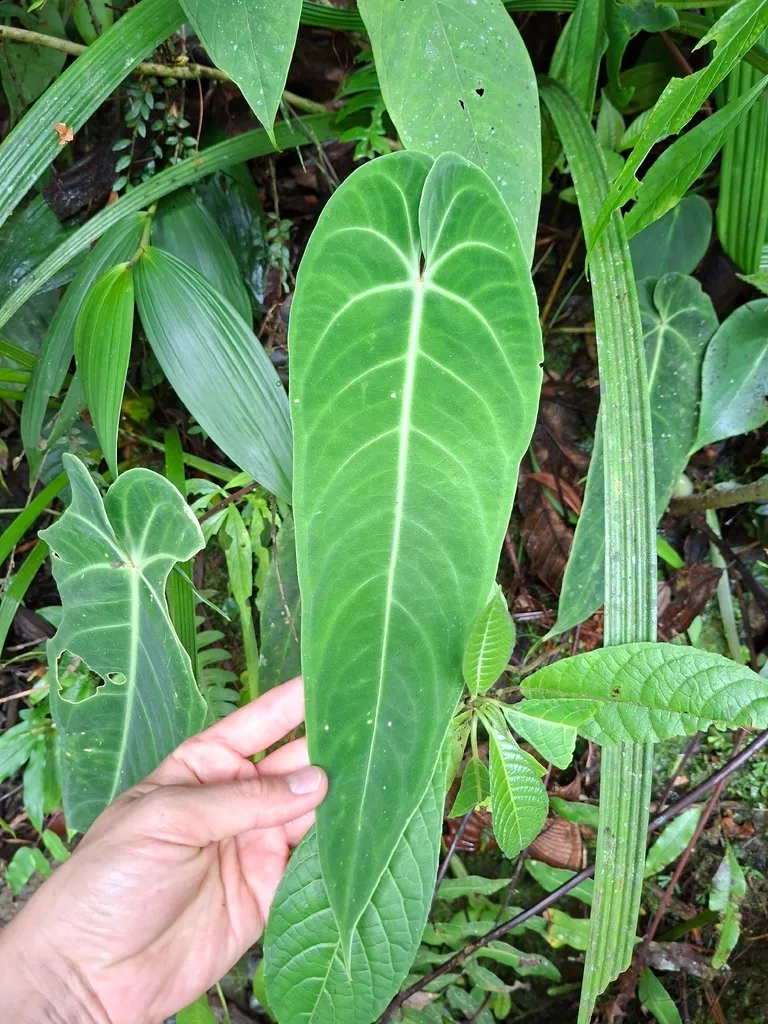
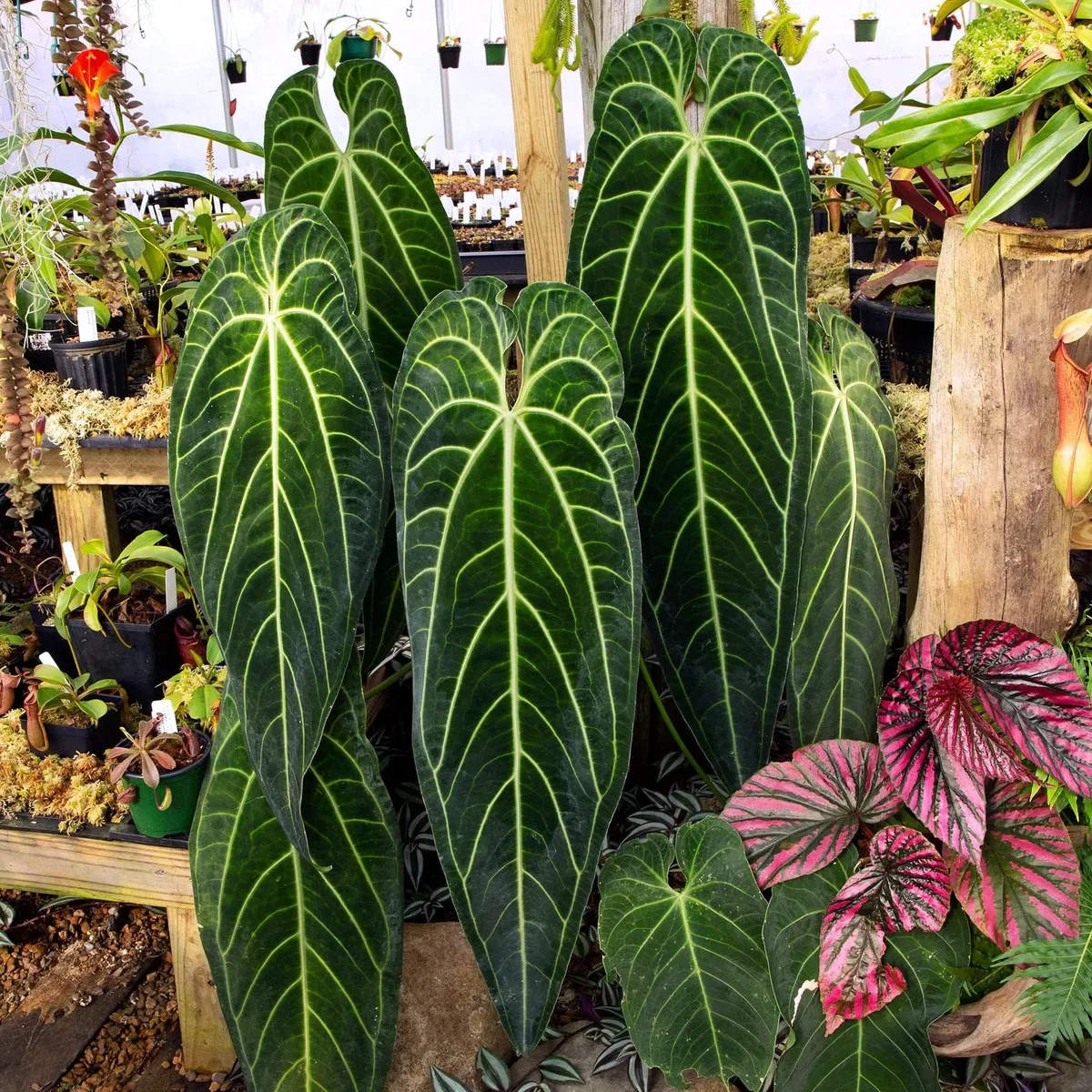
Anthurium warocqueanum (queen anthurium) is a cloud-forest epiphyte from Colombia with long, velvety, silver-veined leaves that demand higher humidity and steadier air/root conditions than common flowering anthuriums.
| What you notice | Possible explanation | What to check next |
|---|---|---|
| Margins and tips of the elongated velvety leaves turn brown and crispy | Low ambient humidity (below 60%), dry heating/AC drafts, or mineral/fertilizer salt buildup | Check room humidity, proximity to air vents, and whether tap water is hard. |
| Newly emerging leaves tear, crinkle, or abort before reaching full length | Dry air or moisture swings during leaf expansion, or root stress | Raise humidity around the plant and never pry stuck emerging leaves open by hand. |
- Maintain high ambient humidity (ideally 65% to 80%) using a humidifier or cabinet/terrarium setup alongside gentle airflow, avoiding water droplets sitting on velvety leaves in stagnant air.
- Water with room-temperature rainwater, distilled water, or filtered water when the top inch of chunky mix approaches dryness, and flush salts occasionally.
- Provide bright, indirect light (such as near an east-facing window) out of direct sun.
- Keep warm between 18°C and 27°C (65°F to 80°F) away from cold drafts.
Queen anthuriums are slow to acclimate after shipping or repotting; judge recovery by healthy new root and leaf growth rather than old travel-damaged leaves.
Yellowing Leaves and Epiphytic Root Rot
Thick, velamen-covered epiphytic roots suffocate rapidly in dense soil, leading to root rot and yellowing leaves.
| What you notice | Possible explanation | What to check next |
|---|---|---|
| Lower or multiple leaves turn yellow while potting media stays wet or compacted | Overwatering, decomposed/dense potting mix, or root rot | Empty standing water and inspect the thick white/tan roots for brown, mushy decay. |
- Grow in an ultra-chunky, fast-draining epiphytic mix (coarse orchid bark, perlite, tree fern fiber or coco husk chunks, and a small portion of sphagnum moss) in a pot with ample drainage and side aeration.
- If roots have rotted, trim mushy roots with sterilized scissors and repot into fresh, airy mix with damp sphagnum moss lightly covering exposed crown roots.
- Wear gloves when pruning or repotting, as all parts contain irritating calcium oxalate crystals and are toxic to pets and humans.
Feed very lightly during warm active growth using a heavily diluted balanced fertilizer (quarter strength) to avoid burning sensitive epiphytic roots.
The Toxicity of Queen Anthurium
Toxic if ingested, containing calcium oxalate crystals which cause irritation to mouth and digestive tract; keep away from pets and children.