
Queen Anthurium
Also known as: Queen Anthurium, Velvet Anthurium, Warocqueanum Anthurium
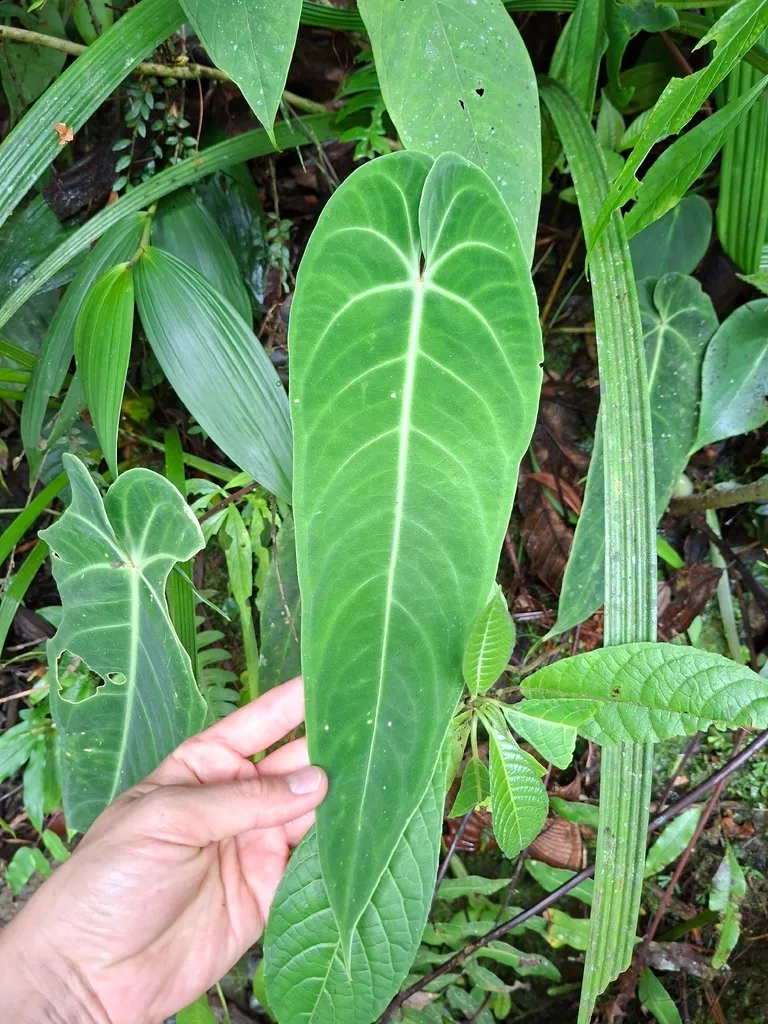
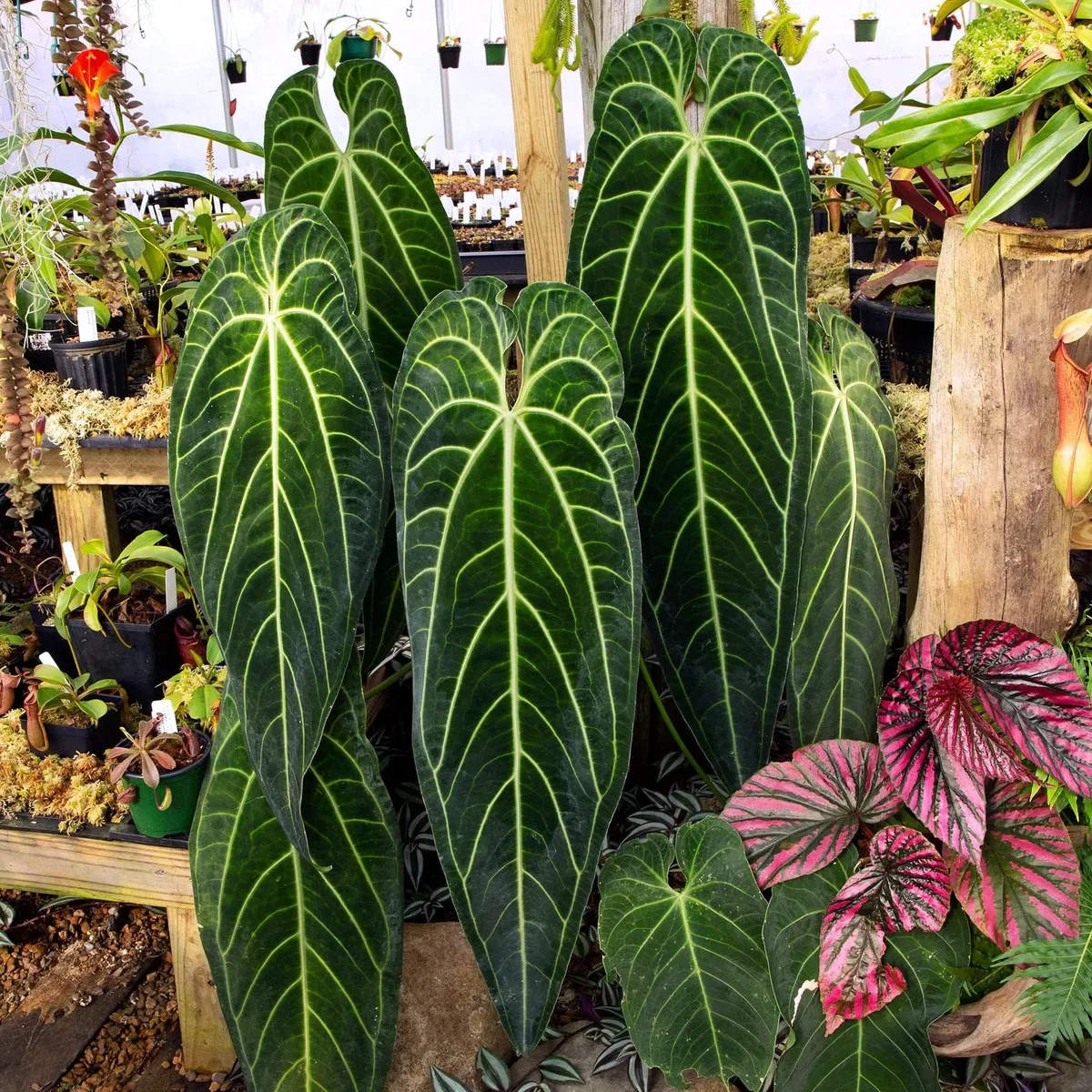
Anthurium warocqueanum, commonly known as the Queen Anthurium, is a stunning tropical foliage plant featuring large, velvety, deep green leaves with prominent silver veins. The leaves can grow up to 1 meter in length, giving the plant a majestic, architectural presence. It produces a typical anthurium inflorescence with a cream to greenish spathe and spadix, but is primarily grown for its magnificent foliage. This species is a slow-growing, epiphytic or terrestrial perennial that thrives in warm, humid environments.
Scientific classification
- Species
- Queen Anthurium (Anthurium warocqueanum)
- Genus
- Information to be completed
- Family
- Araceae
- Toxic if ingested, containing calcium oxalate crystals which cause irritation to mouth and digestive tract; keep away from pets and children.
- Toxicity
- Houseplants · Conservatory Greenhouse · Foliage
- Plant type
- 0.5 - 1 metres
- Height
- 0.5 - 1 metres
- Spread
- Evergreen
- Foliage
- Upright
- Habit
- Spring · Summer · Autumn
- Season of interest
- Bright indirect light
- Sunlight
- 18 – 27 °C
- Ideal temperature









Queen Anthurium pictures
Distribution of Queen Anthurium
Distribution map
- Native
- Introduced
- Cultivated
Source:WCVP v16 · Royal Botanic Gardens, Kew · CC BY 3.0 · Boundaries:WGSRPD / TDWG
Toxicity
Toxic if ingested, containing calcium oxalate crystals which cause irritation to mouth and digestive tract; keep away from pets and children.
Queen Anthurium care guide
- Keep soil evenly moist; allow top inch to dry slightly between waterings
- Watering
- Bright indirect light
- Sunlight
- 18 – 27 °C
- Ideal temperature

Watering
Keep soil evenly moist; allow top inch to dry slightly between waterings
Fertilizing
 Fertilizing
Every 2-3 weeks during growing season
Pruning
 Pruning
Remove yellow or damaged leaves at the base as needed. Prune spent flower stems to encourage new growth.
Propagation
 Propagation
Propagate by division of the main clump in spring, ensuring each division has several roots and shoots. Alternatively, stem cuttings with a node can be rooted in damp sphagnum moss or water in warm conditions (22-28°C). Seeds are rarely produced in cultivation.
Growing
 Growing
Grow in a well-drained, airy potting mix based on peat and perlite or orchid bark. Provide bright, indirect light and maintain high humidity (60-80%) by misting or using a humidity tray. Water regularly to keep the soil evenly moist but not waterlogged; reduce watering slightly in winter. Feed with a balanced liquid fertilizer diluted to half strength every 2-3 weeks during the growing season. Protect from temperatures below 15°C and avoid cold drafts.
Common pests and diseases
Diseases
Susceptible to root rot if overwatered or poorly drained. Leaf spot diseases may occur in low air circulation.
Pests
Common pests include spider mites, aphids, mealybugs, and thrips. Regular inspection and prompt treatment are recommended.
Explore the plant health library →




