



Planting and Growing Clarinerved Anthurium

| Care difficulty | 3 / 5 |
|---|---|
| Watering schedule | Water when the top inch of soil feels dry, keep slightly moist but not waterlogged. |
| Sunlight requirements | Bright indirect light |
| Ideal temperature | 18 – 27 °C |
| Soil type | Loam · Peat |
| Soil pH | Acid |
| Soil moisture | Moist but well drained |
| Fertilizing | Every 2-4 weeks during growing season (spring to summer) with balanced liquid fertilizer. |
| Toxicity | Toxic to humans and pets if ingested, due to calcium oxalate crystals. |
How to Water Clarinerved Anthurium?
Velvet cardboard anthurium is a tropical plant, native to rainforests where it thrives in high humidity. It has a relative balance when it comes to water intake, neither too dry nor overly wet. This species needs watering once every 1-2 weeks to maintain its optimal health. Velvet cardboard anthurium is typically grown indoors due to its preference for controlled environments. Being an evergreen plant, it retains water well throughout the year and requires consistent moisture in the soil.
Learn more →What Are the Sunlight Requirements for Clarinerved Anthurium?
Velvet cardboard anthurium thrives under partial sun conditions, ideally receiving bright, indirect sunlight for most of the day. Direct sunlight should be avoided as it can scorch its leaves, while too little light may lead to diminished vibrancy and slower growth. Despite a preference for partial sun, velvet cardboard anthurium shows a good tolerance for full shade, adapting by altering leaf color and orientation to maximize light absorption. When grown indoors, north or east-facing windows are prime locations, ensuring that velvet cardboard anthurium receives the adequate amount of filtered light critical for its flourishing.
Learn more →What Is the Ideal Temperature Range for Clarinerved Anthurium?

Velvet cardboard anthurium exhibits moderate resilience to temperature fluctuations, tolerating cold temperatures as low as 0℃ (32℉) and heat up to 43℃ (109℉). It prefers stable conditions, making sudden changes challenging. When temperatures are too low, symptoms include leaf wilting and discoloration. Excessive heat may cause leaf browning and curling. During extreme cold, position velvet cardboard anthurium away from drafts and cold windows, and use insulating covers. In heat, ensure adequate hydration and shade from direct sunlight. This tolerance range signifies velvet cardboard anthurium's need for careful environmental control, making it well-suited for indoor cultivation or regions with mild climates.
Learn more →What Soil Is Best for Clarinerved Anthurium?
Velvet cardboard anthurium requires well-drained but moist culture media that is rich in organic matter, with a pH of 5.5 to 6.5. Velvet cardboard anthurium has semi-fleshy aerial roots that are prone to rot in standing water, so it is recommended that permeable and loose culture media is used to plant them in, such as sphagnum moss or coco coir. Appropriate garden soil and organic matter can be added to improve the water retention of this culture media. An appropriate mixture would be 1/2 sphagnum moss plus 1/4 coco coir plus 1/4 garden soil, for example. Compost that is suitable for anthurium or orchids can also be purchased. It is recommended to repot once a year and replace the soil at least every two years to prevent water accumulation in the pot affecting plant growth.
- Soil type
- Loam · Peat
- Soil pH
- Acid
What Are the Moisture Requirements for Clarinerved Anthurium?
Moist but well drained
Learn more →How to Fertilize Clarinerved Anthurium?

For velvet cardboard anthurium, use a balanced, water-soluble fertilizer every 4 weeks during active growth in spring and summer. This encourages healthy foliage and root development. Halve the frequency in autumn and withhold in winter to match velvet cardboard anthurium's rest period. Apply quarter-strength doses to avoid fertilizer burn and ensure the soil is moist beforehand to maximize uptake. Seasonal adjustments in fertilization address velvet cardboard anthurium's varying nutritional requirements, promoting year-round vigor without overfeeding.
Learn more →How to Prune Clarinerved Anthurium?

Known for its distinctively veined leaves, velvet cardboard anthurium benefits from strategic pruning. Focus on removing dead or yellowing leaves in early to later spring to encourage healthy growth. Trim any leggy or overgrown stems to maintain shape, and enhance airflow. Regular pruning prevents disease, promotes new growth, and keeps velvet cardboard anthurium looking its best. Ensure sterilized tools to avoid infections. Always consider the plant's natural growth cycle for optimal results.
Learn more →How to Propagate Clarinerved Anthurium?

Velvet cardboard anthurium is best propagated through stem cuttings, which should include a part of the stem and at least one healthy leaf. Cuttings thrive in high-humidity environments, so covering them with a clear plastic bag can help. The medium used for rooting should be well-drained and fertile, ideally a mix of perlite and peat. Patience is key, as roots may take several weeks to develop. Once established, young plants need consistent but moderate watering and dappled light to grow.
Learn more →How to Transplant Clarinerved Anthurium?
The prime time to transplant velvet cardboard anthurium is from the heart of spring into its waning weeks, providing a symphony of growth and resilience. Ensure velvet cardboard anthurium's new location mimics its humid, well-lit native habitat minus the direct sun. Choose a spot with rich, loamy soil and good drainage to maintain its lush, velvety appearance.
Learn more →How to Plant Clarinerved Anthurium?
Velvet cardboard anthurium should generally be repotted in the spring, because the differentiation of flower buds can be promoted during early spring due to the increased light and rising temperatures. It is recommended they are repotted into a pot that is 20% larger than their previous one. Soil and a little slow-release fertilizer, specialized for velvet cardboard anthurium, should be added if possible. The plant will then grow better. Phosphorus fertilizers can be added to encourage the production of more flowers.
Learn more →How to Harvest Clarinerved Anthurium?

Given a suitable environment, velvet cardboard anthurium can bloom all year round, every three months. Flowering may decrease during the winter due to the reduction in light. However, as the light levels gradually increase in the spring, velvet cardboard anthurium will wake up from its dormancy and the dark green leaves will appear, followed by another flowering period. The ornamental period of the flowers is relatively long. Each flower/spathe can be appreciated for one or two months before being cut. They then have a vase life of between 20 and 40 days. When picking the flowers, use sharp garden secateurs and cut the entire stalk. Prune the bottom of the stem at a 45° angle to increase the area for water absorption. Then, to avoid water loss, promptly put it in a vase with clean water.
Learn more →Common Pests & Diseases

Diseases
Susceptible to root rot if overwatered; may suffer from leaf spot and bacterial blight in poor air circulation.
Pests
Common pests include spider mites, mealybugs, and scale insects.
Explore the plant health library →Troubleshooting
Crispy Leaf Edges and Torn or Stunted Emerging Leaves
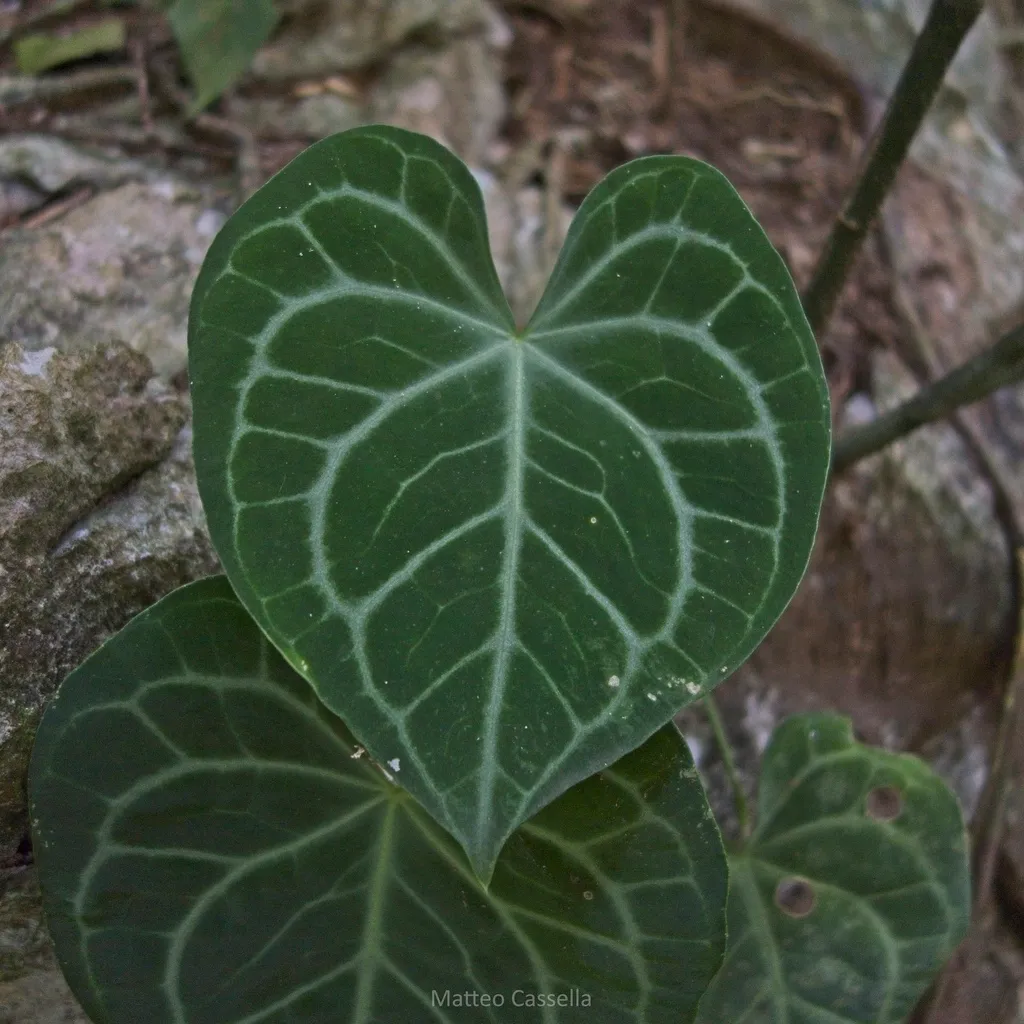
Anthurium clarinervium is a Mexican epiphytic/lithophytic aroid prized for its thick, heart-shaped dark velvety leaves with bold silver veins; low humidity or dry drafts cause brown margins and torn emerging leaves.
| What you notice | Possible explanation | What to check next |
|---|---|---|
| Velvety leaf margins turn brown and dry while the thick heart-shaped blade stays deep green | Low indoor humidity, dry heating/AC drafts, or mineral/fertilizer salt buildup | Check ambient humidity, proximity to air vents, and tap water hardness. |
| Newly emerging leaves get stuck in the cataphyll, tear, or unfurl smaller than older leaves | Dry air or inconsistent moisture during leaf expansion | Raise humidity around the plant and never pry stuck leaves open by hand. |
- Maintain moderate-to-high ambient humidity (ideally 55% to 75%) using a humidifier or sheltered plant grouping alongside gentle airflow.
- Water with room-temperature rainwater, distilled water, or filtered water when the top 1 to 2 inches of chunky mix dry, flushing salts occasionally.
- Place in bright, indirect light (such as near an east-facing window) out of direct midday sun, and keep warm between 18°C and 27°C (65°F to 80°F).
Anthurium clarinervium has noticeably thicker, stiffer heart-shaped leaves than Anthurium crystallinum, making it slightly more forgiving of average home humidity once acclimated.
Yellowing Leaves and Epiphytic Root Rot
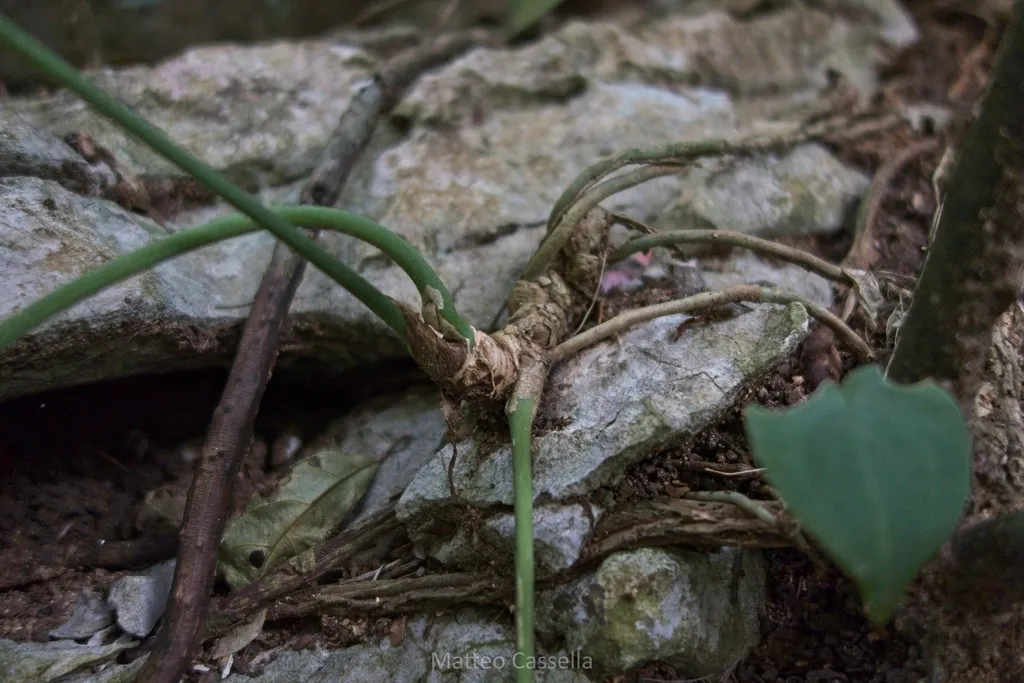
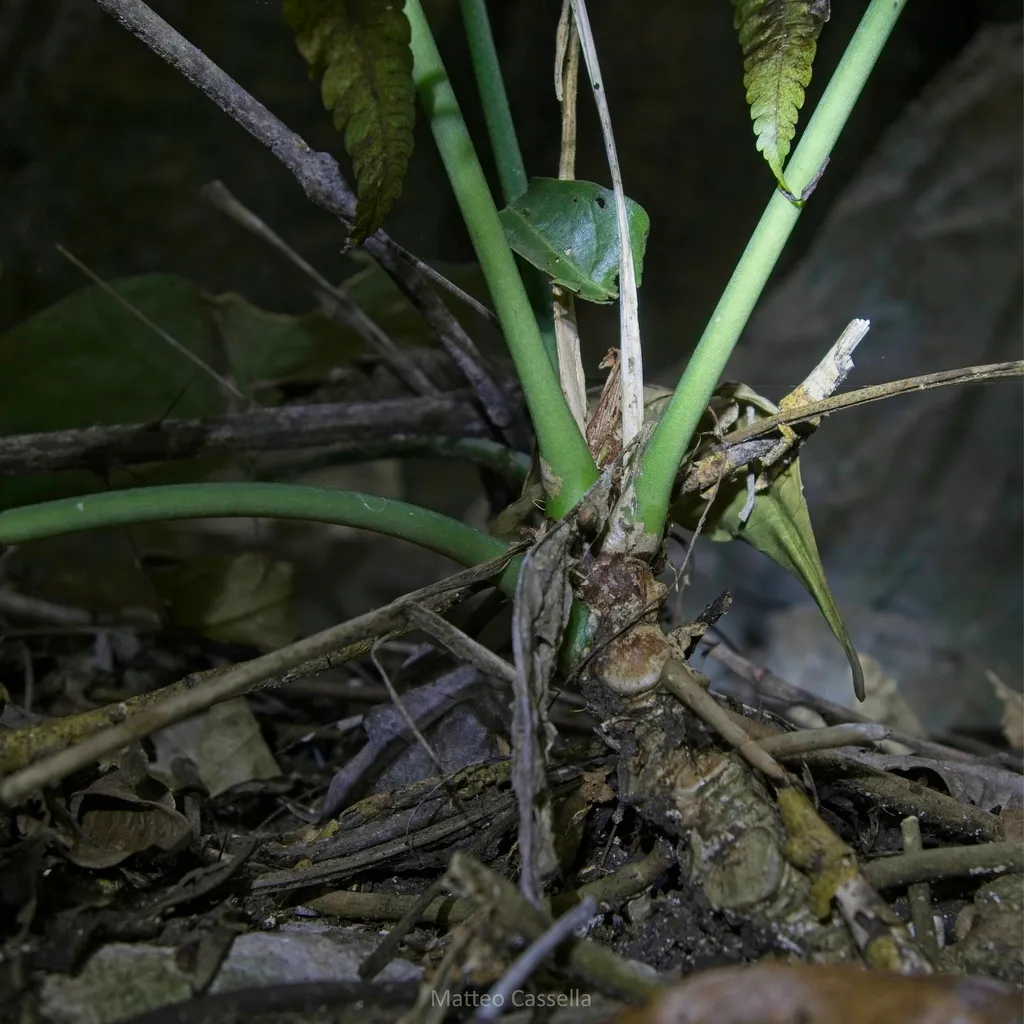
Thick, velamen-covered roots suffocate in dense soil, leading to root rot and yellowing foliage.
| What you notice | Possible explanation | What to check next |
|---|---|---|
| Lower or multiple leaves turn yellow while potting media stays wet or compacted | Overwatering, decomposed/dense potting mix, or root rot | Empty standing water and inspect the thick roots for brown, mushy decay. |
- Grow in a chunky, fast-draining epiphytic mix (coarse orchid bark, perlite, coco husk chunks, and a little sphagnum moss) in a pot with open drainage holes.
- If roots have rotted, trim mushy roots with sterilized scissors and repot into fresh, airy mix.
- Wear gloves when pruning or repotting, as all parts contain insoluble calcium oxalate crystals and are toxic to cats and dogs.
Feed lightly once a month during spring and summer with a balanced liquid fertilizer diluted to quarter or half strength.
The Toxicity of Clarinerved Anthurium
Toxic to humans and pets if ingested, due to calcium oxalate crystals.