



Planting and Growing Bougainvillea

| Care difficulty | 2 / 5 |
|---|---|
| Watering schedule | Allow soil to dry between waterings |
| Sunlight requirements | Full sun |
| Ideal temperature | 20 – 30 °C |
| Soil type | Loam · Sand |
| Soil pH | Acid · Neutral |
| Soil moisture | Well-drained |
| Fertilizing | Every 2 weeks during growing season with a high-potash fertilizer |
| Toxicity | Non-toxic to humans and pets, but the sap may cause mild skin irritation in sensitive individuals. |
How to Water Bougainvillea?
Originating from South America's tropical regions, great bougainvillea thrives in environments with high humidity and ample warmth. This species exhibits a preference for moderate moisture levels and can endure brief periods of dryness. Its watering regimen should reflect its native climate, thus requiring watering once every 1-2 weeks to maintain optimal hydration without oversaturation. As an evergreen plant, great bougainvillea retains its leaves year-round, necessitating consistent soil moisture to support its foliage, especially when grown outdoors where it can bask in full sunlight.
Learn more →What Are the Sunlight Requirements for Bougainvillea?
Great bougainvillea thrives in full sun conditions, which bolsters its vigorous growth and optimizes its bloom production. Receiving at least six hours of direct sunlight daily, the plant flourishes and presents vibrant flowers. While great bougainvillea can endure partial sun, reduced light may lead to diminished flowering and potential legginess as it reaches for more light. In outdoor settings, great bougainvillea should be positioned where sunlight is abundant; for indoor growing, a south-facing window is ideal to simulate its natural preference. Despite its resilience, consistent light conditions aligning with its tropical origins ensure the best display of health and color.
Learn more →What Is the Ideal Temperature Range for Bougainvillea?

Great bougainvillea is notably resilient to temperature variations, enduring down to 0℃ (32℉) and up to 43℃ (109℉). This broad tolerance affects its care by necessitating protective measures in extreme cold, such as frost blankets, and ensuring adequate hydration and shade during intense heat. Symptoms of stress under cold conditions include leaf drop and stunted growth, while overheating may cause wilting and burnt leaves. Countermeasures include relocating to a warmer environment in cold weather or providing shade and increased watering in heat. Such adaptability makes great bougainvillea suitable for diverse climates, though care must be taken during temperature extremes.
Learn more →What Soil Is Best for Bougainvillea?
The great bougainvillea needs well-drained and rich soil - adding some organic compost to your planting mixture can provide this. It also loves slightly acidic soil, so try to keep your soil pH between 5.0-6.0.
- Soil type
- Loam · Sand
- Soil pH
- Acid · Neutral
What Are the Moisture Requirements for Bougainvillea?
Well-drained
Learn more →How to Fertilize Bougainvillea?

For optimal growth, great bougainvillea thrives with monthly fertilization, using balanced nutrition fertilizers high in phosphorus to promote vibrant blooms. During active growth in spring and summer, a half-strength solution is ideal, while in fall and winter, reduce frequency to prevent overfertilization. Always water great bougainvillea thoroughly before and after applying fertilizer to protect roots. Adjust feeding to great bougainvillea's lifecycle, more for young, actively growing plants and less for mature, established ones. Observe great bougainvillea closely for signs of overfertilization, such as salt buildup or leaf burn, and flush the soil periodically.
Learn more →How to Prune Bougainvillea?

Renowned for vibrant bracts and thorny stems, great bougainvillea benefits from strategic pruning in late spring, after blooming. Focus on removing dead or weak branches to enhance air circulation and overall health. Topping helps manage size and promotes bushier growth. Rejuvenation pruning is advised every few years to maintain vigor. Pruning at the right time encourages more flowers and reduces the risk of disease, making the plant more manageable and aesthetically pleasing.
Learn more →How to Propagate Bougainvillea?

Great bougainvillea can be successfully propagated through stem cuttings, best taken in spring or summer. The process is moderately easy, with visible roots and new leaves indicating successful propagation. Roots can form in water before transplanting into soil.
Learn more →How to Transplant Bougainvillea?
The perfect time to transplant your great bougainvillea is during the warmth of late spring to early summer. Find a sunny location with well-draining soil to ensure healthy growth. Gently loosen the root ball during transplant and provide ample water to minimize stress on the plant.
Learn more →How to Care for Bougainvillea in Winter?

Great bougainvillea hails from tropical South America, thriving in year-round warmth. In natural settings, winter is non-existent for great bougainvillea, no frosty encounters or snow dustings. Yet, careful winter care can allow successful cultivation in cooler climates. Ensure great bougainvillea is brought indoors before first frost. Maintain bright light, occasional watering and temperatures above 10°C (50°F). Giving great bougainvillea a faux summer for its winter is key!
Learn more →How to Plant Bougainvillea?
Indoors-potted: Ensure great bougainvillea has ample room to climb indoors; a sturdy support can encourage lush growth. Outdoors-potted: Great bougainvillea thrives in pots outdoors with adequate drainage, which prevents root rot and promotes vibrant blooms. Outdoors-in the ground: In the garden, great bougainvillea requires space to spread its vigorous vines for an impressive floral display.
Learn more →How to Repot Bougainvillea?
Repot great bougainvillea every 2-3 years to accommodate its growth as a climbing shrub. Best done in spring or early summer to align with its active growth period. Choose a container one size larger with drainage holes. Post-repot, provide bright indirect light and avoid over-watering to prevent root rot, ensuring great bougainvillea's vibrant bloom recovery.
Learn more →Common Pests & Diseases

Diseases
Susceptible to leaf spot, powdery mildew, and grey mould, especially in humid conditions. Ensure good air circulation and avoid overhead watering.
Pests
Common pests include aphids, red spider mites, scale insects, and mealybugs. Inspect regularly and treat with insecticidal soap or horticultural oil if necessary.
Explore the plant health library →Troubleshooting
Vigorous Green Growth with No Colorful Bracts
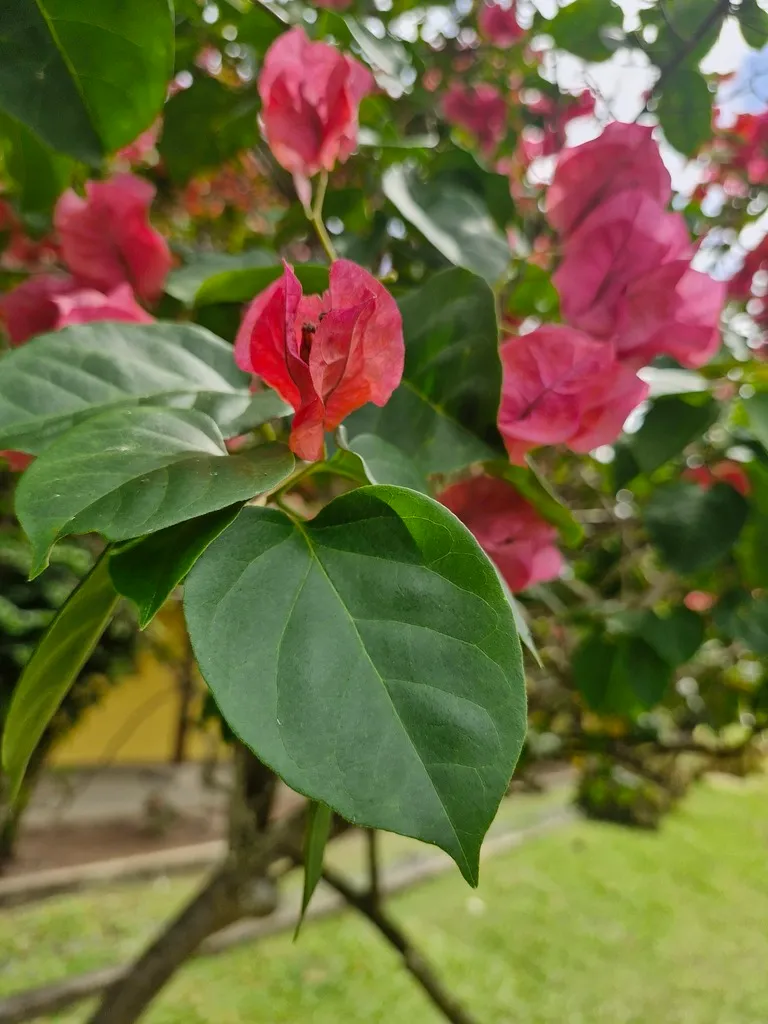
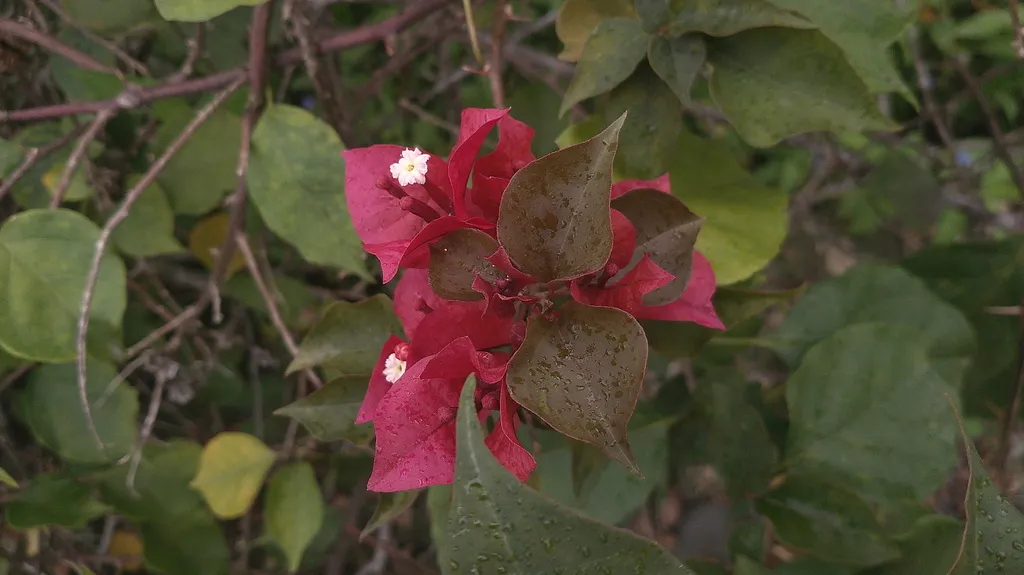
Bougainvillea spectabilis (great bougainvillea) produces its showy magenta, purple, or orange petal-like bracts only on new shoots in intense sunlight—excess water, heavy nitrogen, or shade produces leafy vines without blooms.
| What you notice | Possible explanation | What to check next |
|---|---|---|
| Long thorny green shoots grow rapidly with no flower bracts | Insufficient direct sunlight, excess nitrogen fertilizer, or overly wet soil | Check whether the plant receives at least 6 hours of direct sun daily and review fertilizer nitrogen content. |
| Plant was pruned heavily right before its expected bloom cycle | Pruning away new flowering wood | Prune right after a flush of blooms finishes rather than continuously cutting back new tips. |
- Place in full, unobstructed sun (at least 6 hours of direct sunlight daily outdoors, or a very bright south-facing conservatory/window).
- Allow the top layer of potting mix to dry out between deep waterings; mild drying between waterings encourages blooming once roots are established.
- Feed during active spring and summer growth with a balanced or higher-potassium fertilizer, avoiding high-nitrogen lawn/foliage feeds.
- Prune right after flowering finishes to shape the vine and stimulate the next flush of flowering shoots.
Bougainvillea has fragile, hair-like roots that resent disturbance; handle the root ball gently when repotting and avoid oversized containers.
Sudden Leaf and Bract Drop
Bougainvillea frequently drops leaves and bracts after transplanting, moving indoors for winter, or experiencing root rot in wet soil.
| What you notice | Possible explanation | What to check next |
|---|---|---|
| Leaves and colorful bracts drop rapidly after repotting or bringing a container plant indoors for winter | Root disturbance shock or sudden drop in light and temperature | Place in the sunniest spot available above 10°C (50°F), reduce watering while leafless, and wait for new shoots. |
| Lower leaves yellow and drop while soil stays soggy | Overwatering or poor drainage | Empty standing water and allow the soil to dry out before watering again. |
- Grow in fast-draining loamy soil or potting mix in a container with open drainage holes.
- In frost-prone climates, overwinter indoors in a bright, cool-to-moderate room above 5°C to 10°C (41°F to 50°F) and water sparingly until spring growth resumes.
- Wear thick gloves when pruning, as stems carry sharp woody thorns and sap can cause mild skin irritation.
Bougainvillea spectabilis is listed as non-toxic to cats and dogs by the ASPCA, though its sharp thorns can cause physical injury.
The Toxicity of Bougainvillea
Non-toxic to humans and pets, but the sap may cause mild skin irritation in sensitive individuals.