
Bougainvillea
Also known as: Paper flower, Great bougainvillea, Showy bougainvillea
Bougainvillea spectabilis is a vigorous, evergreen woody climber with ovate leaves and clusters of small white flowers, each surrounded by three large, colorful bracts in shades of magenta, purple, pink, or orange. It can reach 3-8 meters in height if supported, with a sprawling or climbing habit. The showy bracts provide long-lasting color from spring through autumn, making it a popular ornamental in warm climates.
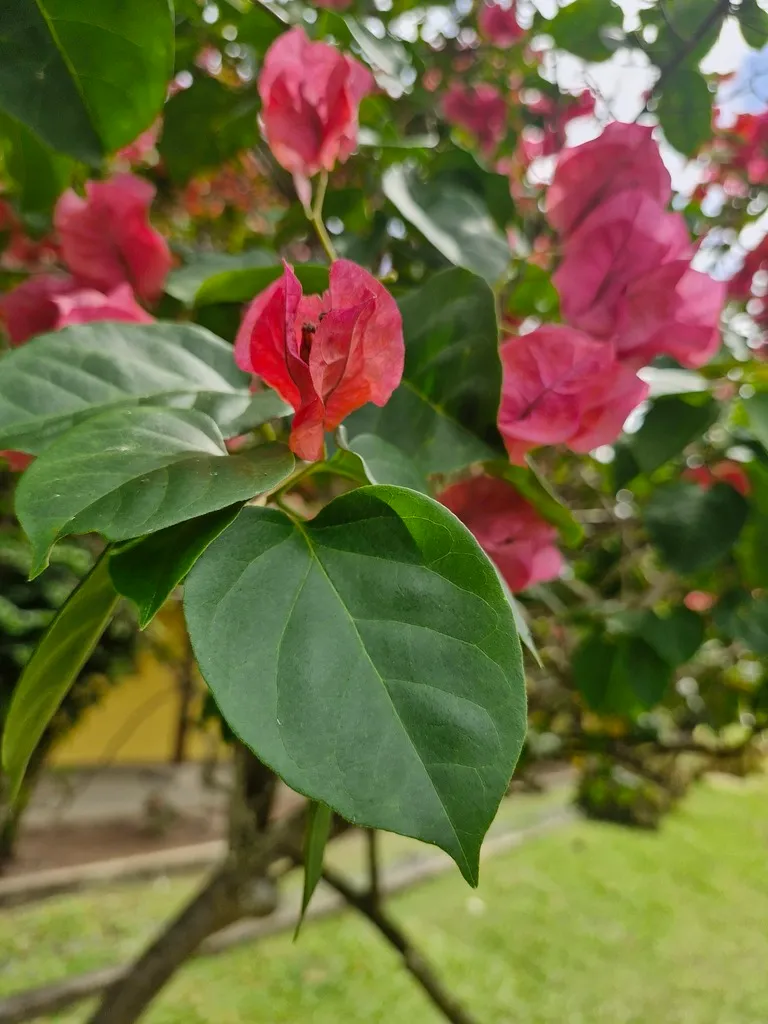
Scientific classification
- Species
- Bougainvillea (Bougainvillea spectabilis)
- Genus
- Information to be completed
- Family
- Nyctaginaceae
- Non-toxic to humans and pets, but the sap may cause mild skin irritation in sensitive individuals.
- Toxicity
- Climber Wall Shrub · Shrubs
- Plant type
- 3 - 8 metres
- Height
- 2 - 4 metres
- Spread
- Evergreen
- Foliage
- Climbing · Spreading
- Habit
- Spring · Summer · Autumn
- Season of interest
- Full sun
- Sunlight
- 20 – 30 °C
- Ideal temperature









Bougainvillea pictures
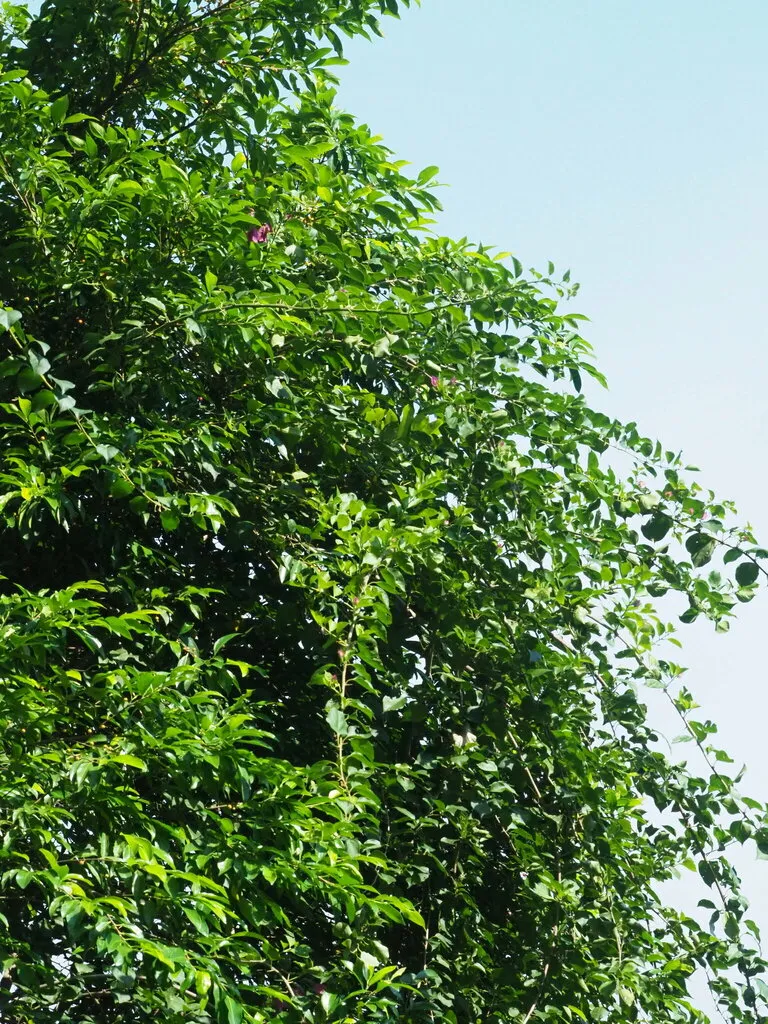
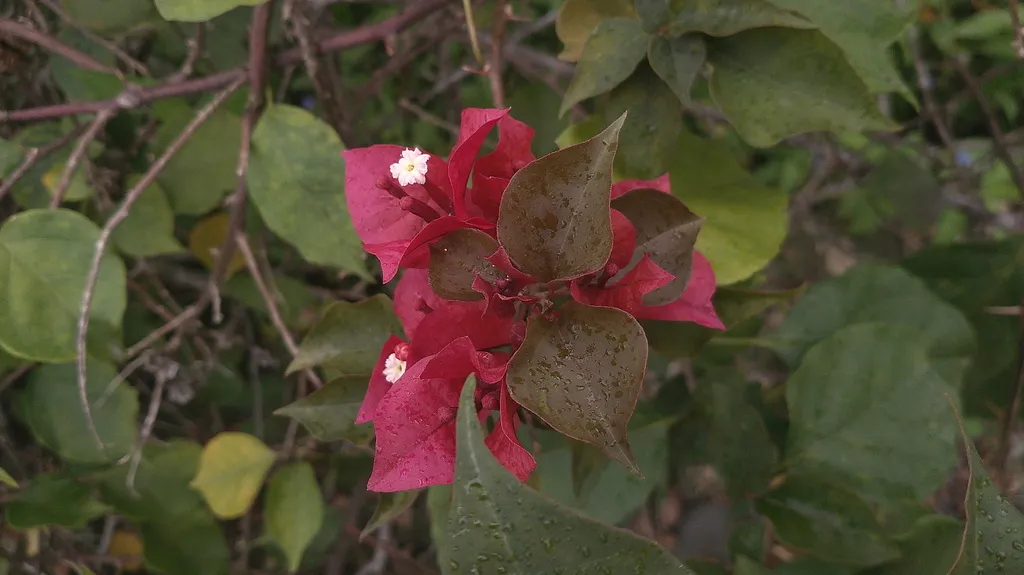
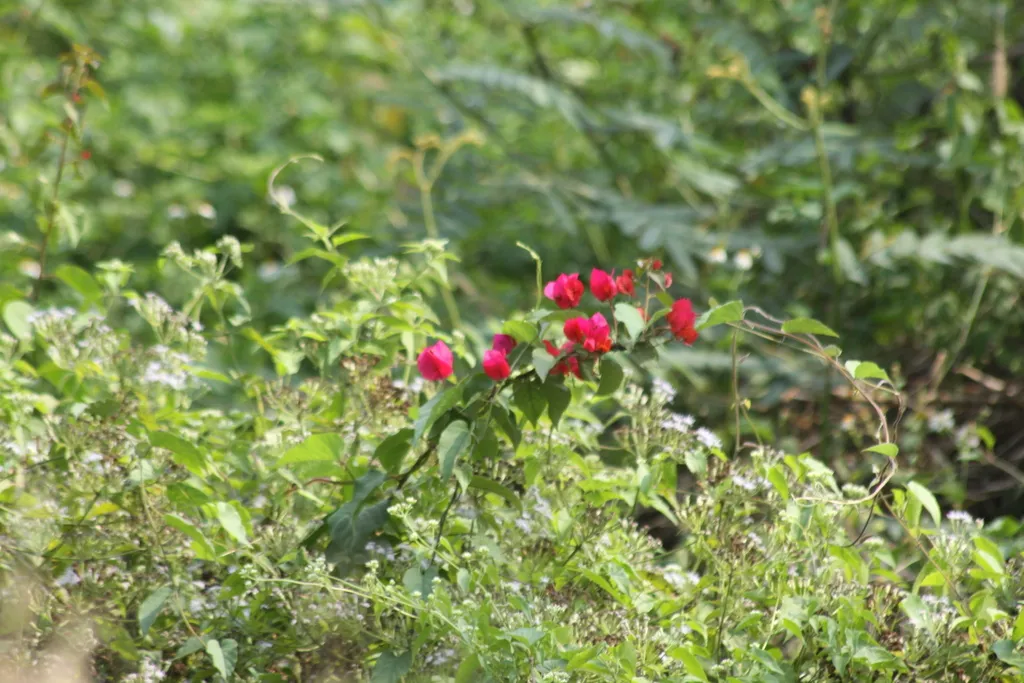
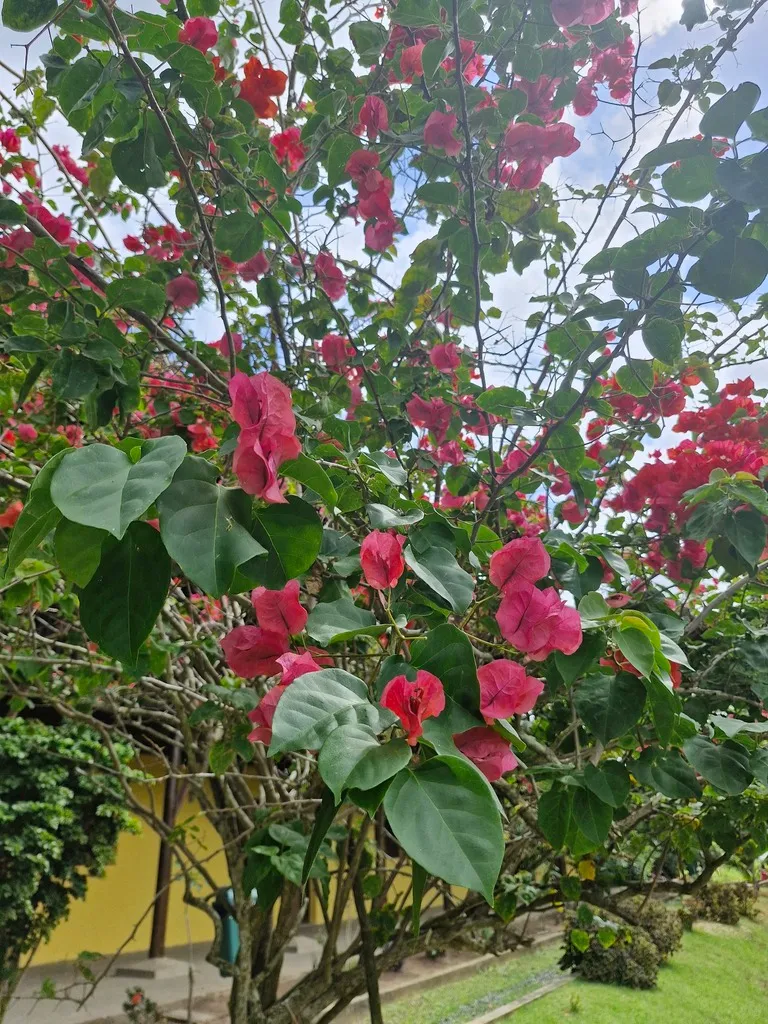
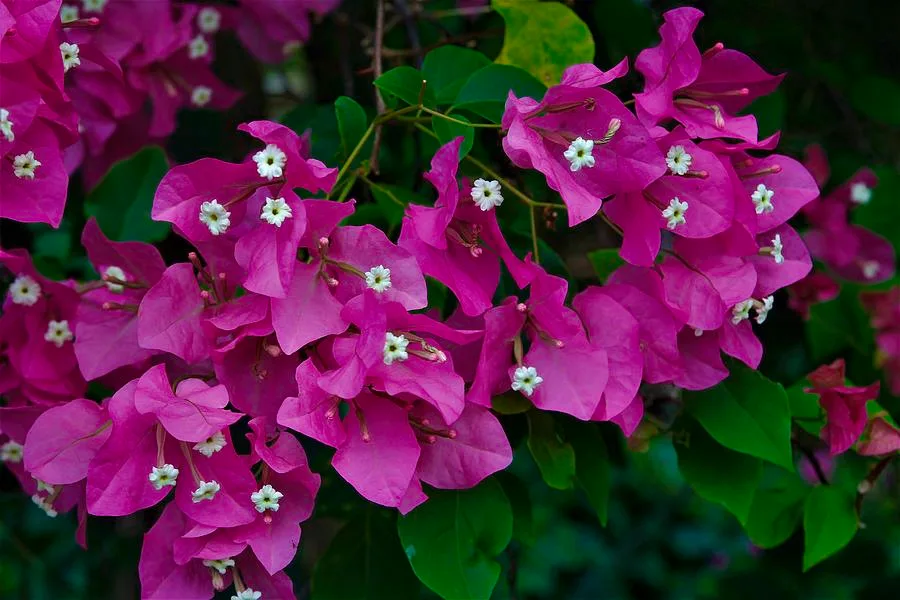
Distribution of Bougainvillea
Distribution map
- Native
- Introduced
- Cultivated
Source:WCVP v16 · Royal Botanic Gardens, Kew · CC BY 3.0 · Boundaries:WGSRPD / TDWG
Toxicity
Non-toxic to humans and pets, but the sap may cause mild skin irritation in sensitive individuals.
Bougainvillea care guide
- Allow soil to dry between waterings
- Watering
- Full sun
- Sunlight
- 20 – 30 °C
- Ideal temperature

Watering
Allow soil to dry between waterings
Fertilizing
 Fertilizing
Every 2 weeks during growing season with a high-potash fertilizer
Pruning
 Pruning
Prune after flowering, cutting back to a strong bud or node to shape and encourage branching. Hard pruning in early spring can rejuvenate old plants.
Propagation
 Propagation
Take semi-ripe cuttings of 10-15 cm length in summer, remove lower leaves, and insert into a well-drained rooting medium. Keep at 20-25°C with high humidity. Rooting usually occurs within 4-6 weeks. Alternatively, layering can be done in spring.
Growing
 Growing
Grow in full sun in well-drained soil; tolerates poor soil but thrives in fertile loam. Water freely during the growing season, allowing the soil to dry slightly between waterings. Reduce watering in winter. Apply a high-potash liquid fertilizer every two weeks during the growing season to encourage blooming. In cooler climates, grow in a container and overwinter indoors at a minimum of 5-10°C. Prune after flowering to maintain shape and promote branching.
Common pests and diseases
Diseases
Susceptible to leaf spot, powdery mildew, and grey mould, especially in humid conditions. Ensure good air circulation and avoid overhead watering.
Pests
Common pests include aphids, red spider mites, scale insects, and mealybugs. Inspect regularly and treat with insecticidal soap or horticultural oil if necessary.
Explore the plant health library →




