



Planting and Growing Tiger Aloe

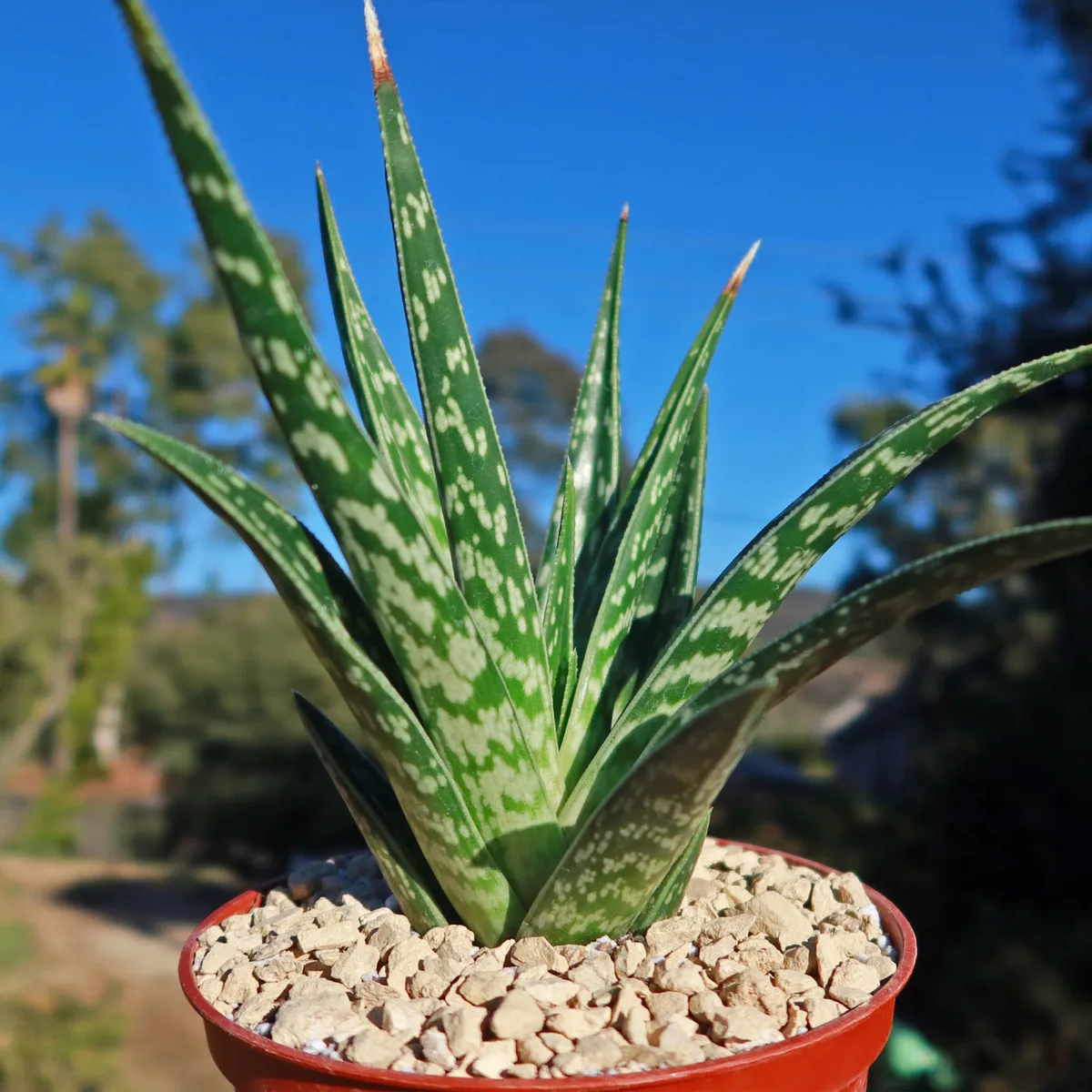
| Care difficulty | 2 / 5 |
|---|---|
| Watering schedule | Water thoroughly when soil is dry, allow to dry completely between waterings |
| Sunlight requirements | Bright indirect light |
| Ideal temperature | 18 – 28 °C |
| Soil type | Sand · Loam |
| Soil pH | Neutral |
| Soil moisture | Dry between watering |
| Fertilizing | Every 4 weeks during growing season (spring-summer) |
| Toxicity | Toxic to pets if ingested; sap may cause skin irritation. |
How to Water Tiger Aloe?
Originating from arid regions, tiger aloe has adapted to survive with minimal moisture, exhibiting a high drought tolerance. It thrives in conditions that mimic its native dry habitat, requiring less frequent watering compared to other species. The appropriate watering schedule for tiger aloe is once every two weeks, ensuring the soil dries out between sessions. As an indoor plant, tiger aloe benefits from occasional misting to replicate the sparse rainfall of its natural environment, promoting healthy growth without over-saturation.
Learn more →What Are the Sunlight Requirements for Tiger Aloe?
Tiger aloe thrives in conditions of partial sun, where it receives bright, indirect light that bolsters healthy growth and vibrant flowering. While tiger aloe exhibits tolerance to both full sun and full shade, prolonged exposure to intense sunlight may result in leaf scorch, whereas inadequate lighting can lead to etiolation. Adaptive to its preferred light, tiger aloe's foliage may deepen or variegate in color as an adaptive response to light levels. Ideally placed in a well-lit room or in a garden spot that receives dappled sunlight, tiger aloe's location should be chosen to mimic its natural affinity for sun-dappled environs, ensuring it flourishes.
Learn more →What Is the Ideal Temperature Range for Tiger Aloe?

Tiger aloe is a remarkably resilient plant, enduring temperature fluctuations well. It can tolerate cold down to approximately 5℃ (41℉) and withstand heat up to around 43℃ (109℉). This adaptability affects its care requirements; during cold spells, tiger aloe may need additional protection like being moved indoors, while in extreme heat, it should be kept shaded and watered. Symptoms of overheating include wilting leaves and sunburn spots, while overcooling can cause leaf discoloration and soft spots. Countermeasures involve repositioning the plant to moderate conditions, adjusting watering care, and ensuring adequate ventilation or insulation to manage extreme temperatures.
Learn more →What Soil Is Best for Tiger Aloe?
Tiger aloe thrives in well-draining soil. A suitable mix can be made with equal parts of succulent & cactus soil, coarse sand, and pumice or perlite for aeration. Drainage is crucial; avoid water-logging by using pots with holes. Amend with a slow-release fertilizer in the growing season for optimal health. If pumice or perlite is unavailable, use crushed gravel or chicken grit as alternatives for drainage.
- Soil type
- Sand · Loam
- Soil pH
- Neutral
What Are the Moisture Requirements for Tiger Aloe?
Dry between watering
Learn more →How to Fertilize Tiger Aloe?

For tiger aloe, a low-nitrogen succulent fertilizer boosts health and flowering, applied every 7-8 weeks during the growing season (spring and summer). Use quarter-strength dosages to prevent root burn. Withhold fertilization in fall and winter to align with tiger aloe's dormancy period. Gradually introduce fertilizer to young tiger aloe as they mature. Always water tiger aloe before fertilizing to enhance absorption and reduce root stress.
Learn more →How to Prune Tiger Aloe?

Tiger aloe does not require pruning in the general sense; you need only remove spent flower stalks or dead leaves. Leaves that have turned orange or brown should be trimmed to deliver more nutrients to green plant parts, keeping the plant healthy. Smaller and medium-sized plants can be pruned with a knife, while larger plants require pruning shears. Remove any spent flower stalks or plant material, as well as parts of leaves that have changed their color or started drying.
Learn more →How to Propagate Tiger Aloe?

Tiger aloe can be effectively propagated through cuttings. Use healthy, non-flowering shoots and snip a segment at a slant, allowing for a greater surface area to encourage root growth. The cutting should include several leaves but remove the lower ones before planting. Before inserting the cutting into a cactus or succulent potting mix, allow the cut end to callous for a few days to prevent rot. Keep the soil slightly moist and provide bright, indirect light to support successful rooting without encouraging fungal growth.
Learn more →How to Transplant Tiger Aloe?
The best time to transplant tiger aloe is during early summer through mid-fall, when the plant experiences optimal growth. Ensure the new location offers well-draining soil and partial sun. Be gentle with the roots, and water adequately post-transplant.
Learn more →How to Care for Tiger Aloe in Winter?

Tiger aloe, originating from the South African desert, is an expert at enduring winter's chill. Its thick leaves store water, crucial for surviving the dry season. Gardeners should note to reduce watering drastically in winter, replicating its native climate. Placing tiger aloe in a well-lit, draught-free location will ensure it thrives throughout the chilly months. Always remember, tiger aloe's biggest enemy in winter is overwatering and excessive cold.
Learn more →How to Plant Tiger Aloe?
Indoors-potted: Ensure tiger aloe in indoor pots have ample drainage to prevent root rot, a common issue for this succulent when watered excessively. Outdoors-potted: For potted tiger aloe outdoors, rotate the container periodically to promote even growth and avoid one-sidedness due to light direction. Outdoors-in the ground: Tiger aloe thrives outdoor-ground with good air circulation; poor airflow can lead to pest issues, particularly mealybugs that target succulents.
Learn more →How to Repot Tiger Aloe?
For tiger aloe, repotting is ideal every 2 years to accommodate growth. This succulent forms a rosette shape and reaches moderate size. Spring repotting aligns with its active growth phase, ensuring quick recovery. Choose a container one size larger with ample drainage. Post-repotting, water sparingly and provide bright, indirect light to help tiger aloe thrive in its new home.
Learn more →Common Pests & Diseases

Diseases
Susceptible to root rot if overwatered; watch for fungal leaf spots.
Pests
Common pests include mealybugs and scale insects.
Explore the plant health library →Troubleshooting
Crown Rot, Soft Brown Base, or Mushy Leaves
Tiger Aloe (Aloe variegata) is a compact South/East African rosette succulent that rots easily if water collects inside leaf bases or if potting soil stays wet.
| What you notice | Possible explanation | What to check next |
|---|---|---|
| Inner rosette leaves turn brown-black and mushy at the base and pull loose easily | Crown or root rot caused by overwatering, dense soil, or water trapped in the rosette center | Check soil moisture and gently test whether center leaves are firmly attached |
| Leaf tips turn brown and curl inward while leaves feel thin and concave | Underwatering or excessive direct afternoon sun | Check potting mix dryness and evaluate sun exposure |
| Oldest bottom leaves dry out slowly while the central rosette stays plump and green | Normal lower leaf aging as the rosette grows | Verify that central leaves and offshoots are firm |
- Grow in a gritty, fast-draining cactus/succulent compost with extra horticultural grit or perlite in a pot with drainage holes.
- Water thoroughly only after the soil has dried completely, pouring water onto the soil rather than into the rosette crown, and keep very dry in winter.
- Provide bright, filtered light or gentle morning sun, shading from scorching midday summer sun.
Stop watering immediately and discard rotted crowns; salvage any firm, unaffected basal offsets (pups) by letting cut ends callus for a day before potting.
Stretched Pale Rosettes or Mealybugs in Leaf Axils
Low indoor light causes compact rosettes to stretch and lose white banding/spots, while mealybugs hide deep in leaf axils.
| What you notice | Possible explanation | What to check next |
|---|---|---|
| Rosette opens flat and stretches upward with pale green leaves | Insufficient bright light | Evaluate daily light intensity at the growing spot |
| White cottony insects or sticky residue tucked inside leaf axils | Mealybug or scale infestation | Inspect tight overlapping leaf bases closely with a bright light |
- Move to a brighter windowsill with strong indirect light or morning sun.
- Isolate pest-affected plants and dab visible mealybugs with a cotton swab dipped in rubbing alcohol.
- Separate crowded offsets in spring or early summer to improve airflow around the mother rosette.
Keep Tiger Aloe (Aloe variegata) away from pets, as ingestion can cause digestive upset.
The Toxicity of Tiger Aloe
Toxic to pets if ingested; sap may cause skin irritation.