



Planting and Growing Alocasia Dragon Scale

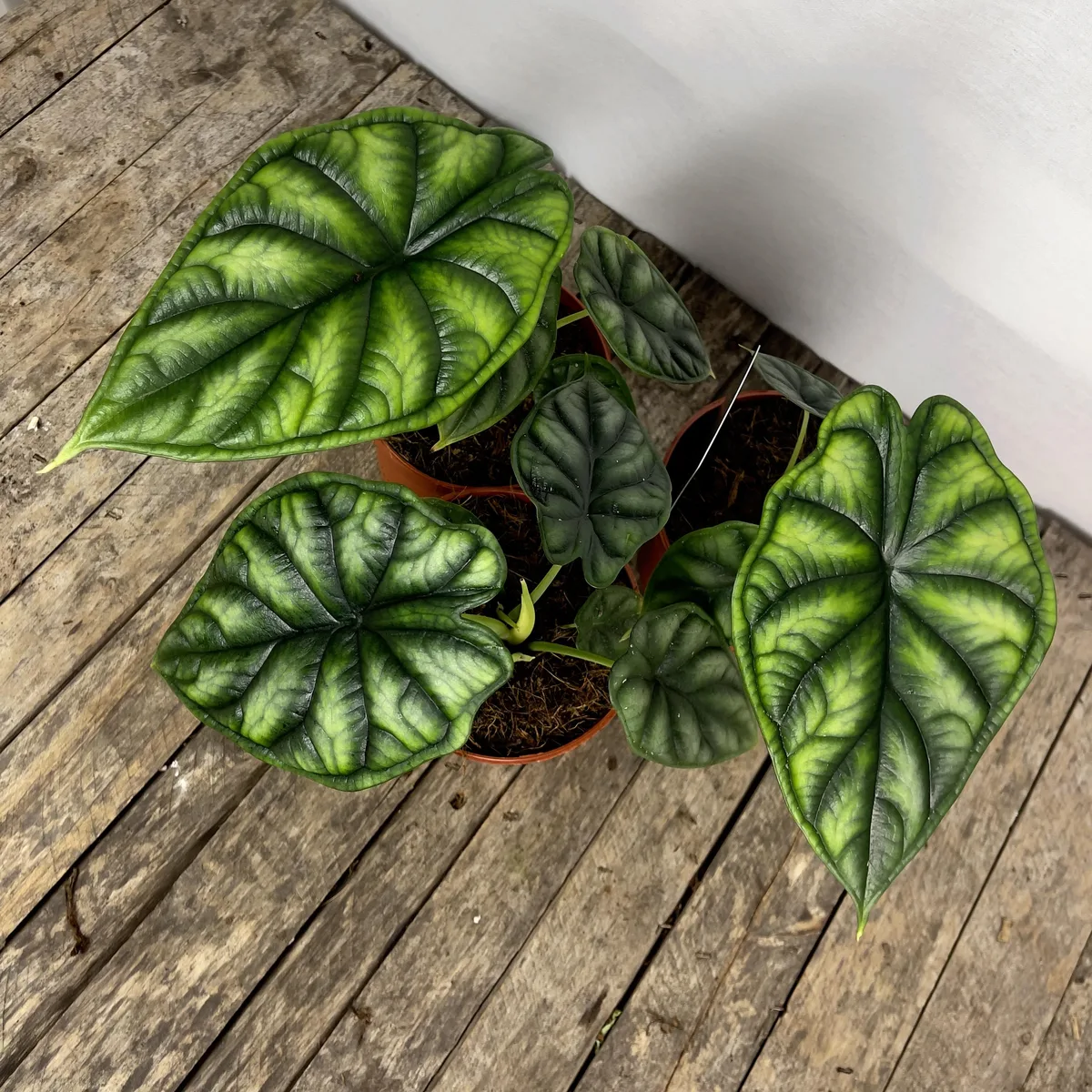
| Care difficulty | 4 / 5 |
|---|---|
| Watering schedule | Keep soil moist but not waterlogged; allow top 2 cm to dry slightly between waterings in winter. |
| Sunlight requirements | Bright indirect light |
| Ideal temperature | 20 – 30 °C |
| Soil type | Loam · Peat |
| Soil pH | Acid |
| Soil moisture | Moist but well drained |
| Fertilizing | Every 4 weeks during the growing season (spring to early autumn) with a balanced houseplant fertiliser. |
| Toxicity | Toxic if ingested; contains insoluble calcium oxalate crystals that can cause oral irritation, drooling, and difficulty swallowing. Keep away from pets and children. |
How to Water Alocasia Dragon Scale?
Originating from the humid understories of tropical forests, dragon scale thrives in environments that mimic these moisture-rich conditions. It exhibits a preference for consistent humidity and has moderate drought tolerance. To maintain its lush appearance, dragon scale benefits from watering every week. Cultivated primarily as an indoor ornamental, dragon scale excels in containers where water can be managed to avoid both over-saturation and drying out, ensuring a balance that supports its vibrant foliage throughout its active growing season.
Learn more →What Are the Sunlight Requirements for Alocasia Dragon Scale?
Dragon scale thrives in partial sunlight, ideally benefiting from bright, indirect light for much of the day. This lighting condition supports its lush, vibrant foliage and promotes healthy growth. While tolerating full shade, dragon scale's growth and the vividness of its leaf coloration may be compromised in these lower light conditions. Typically, the plant displays adaptability by adjusting leaf orientation to optimize light absorption. For outdoor cultivation, a position under dappled sunlight or light canopy is optimal, avoiding direct midday sun that could scorch its delicate leaves.
Learn more →What Is the Ideal Temperature Range for Alocasia Dragon Scale?

Dragon scale exhibits a moderate tolerance to temperature variations, enduring cold down to 5℃ (41℉) and heat up to 41℃ (106℉). Despite this range, dragon scale is sensitive to extreme fluctuations. Cold exposure may cause leaf discoloration and wilting, while excessive heat can lead to scorching and dehydration. Care measures include moving dragon scale indoors during frost or shielding it from intense sun. Regular monitoring and adjustments in placement are key to maintaining its health.
Learn more →What Soil Is Best for Alocasia Dragon Scale?
Dragon scale is not that picky when it comes to soil type, but it grows best in loose and well-drained soils. If planted outdoors, it can grow successfully in all except water-retaining soils. Even though it thrives in humid environments, soggy soil will make it more susceptible to various fungal diseases. If potted, it's best to use peat moss or sandy soil mixed with a small amount of organic fertilizer.
- Soil type
- Loam · Peat
- Soil pH
- Acid
What Are the Moisture Requirements for Alocasia Dragon Scale?
Moist but well drained
Learn more →How to Fertilize Alocasia Dragon Scale?

Demand for fertilization varies between Alocasia species. Some are not very demanding, while others, especially large species, are heavy feeders. Base fertilizer should be added to the soil before planting. Add a bit of liquid fertilizer with each watering during the growing season to keep it healthy and growing vigorously. Fertilization can be reduced gradually as the plants enter dormancy, or stopped entirely after the temperature drops below 16 ℃.
Learn more →How to Prune Alocasia Dragon Scale?

Dragon scale is known for its striking leaf patterns. Prune dead or yellowing leaves to promote growth and maintain appearance. Remove spent flower stalks to focus the plant's energy on foliage. Pruning is best done in early spring, aligning with the plant’s active growth period. Use clean, sharp scissors to avoid disease transmission. Regular pruning enhances air circulation and minimizes pest issues, ensuring a healthier plant overall. Consult reputable horticultural guides for detailed care instructions.
Learn more →How to Propagate Alocasia Dragon Scale?

Thriving in humid environments, dragon scale can multiply with the right approach to division, the most effective propagation method for this species. Gently separate the rhizomes during repotting, making sure each new section has at least one growth point. Soil should be kept consistently moist but not waterlogged to encourage root development in the offspring. A balance of indirect light and warmth will support steady growth after propagation.
Learn more →How to Transplant Alocasia Dragon Scale?
The best time to transplant dragon scale is from the warm embrace of late spring until the heights of mid-summer, when growth is vigorous. Choose a shady spot with moist, well-draining soil to help dragon scale thrive post-transplant.
Learn more →How to Plant Alocasia Dragon Scale?
Dragon scale can be grown from seeds or ramets. Propagating from seed is a very demanding, slow process, so the most common method is ramets. They can be acquired from a healthy mother plant 2-3 years old in the spring. The process starts by delicately removing the plant roots and rhizomes from the ground. When the plant is pulled out from the soil, gently rinse its root system with water using a garden hose. Rinse until the individual ramets become visible; then they can be easily pulled apart from the mother plant. It is important to separate them very carefully with a sharp knife, so the roots suffer as little damage as possible. Plant the separated ramets into individual pots filled with a mixture of a potting mix, a lot of sand, and some perlite. The substrate must drain well. Water the ramets after planting and keep the temperature of the soil between 18 to 25 ℃. After it grows into a new plant, it's better to repot it every year in spring to ensure better growth.
Learn more →Common Pests & Diseases

Diseases
Susceptible to root rot and crown rot if overwatered or kept in poorly-drained soil. Leaf spot diseases may occur in stagnant air.
Pests
Common pests include spider mites, mealybugs, and aphids, especially under low humidity. Scale insects may also infest the undersides of leaves.
Explore the plant health library →Troubleshooting
Yellowing Outer Leaves or Sudden Dormancy Leaf Drop
Alocasia Dragon Scale (Alocasia baginda) grows from an underground rhizome or corm and naturally cycles leaves, but rapid yellowing signals root moisture stress or seasonal chill.
| What you notice | Possible explanation | What to check next |
|---|---|---|
| One oldest outer leaf yellows and dies back right as a new leaf unfurls | Normal resource reallocation in compact Alocasias that sustain a limited number of leaves at once | Check that the emerging leaf and remaining foliage are firm and upright |
| Multiple leaves droop and turn yellow-brown while the potting mix stays wet | Overwatering, dense soil, or cool temperatures causing rhizome and root rot | Feel deep into the mix and inspect roots for mushy brown decay |
| All leaves yellow and die down in autumn or winter while the underground corm remains firm | Seasonal dormancy triggered by cooler temperatures and shorter daylength | Gently check the top of the rhizome/corm to confirm it is hard and healthy rather than soft |
- Use a chunky, fast-draining aroid mix (peat-free compost or coco coir blended with bark and perlite) and water when the top inch of mix feels dry.
- Keep temperatures warm and stable above 15–18°C (59–65°F) and shield from cold window drafts.
- If the plant enters winter dormancy with a firm corm, reduce watering dramatically so the mix stays barely damp until warm spring growth resumes.
- Trim fully yellowed leaves cleanly at the base once spent.
Stop watering immediately and unpot if the rhizome base feels soft, hollow, or foul-smelling.
Never force dormant corms with heavy watering or fertilizer, which causes rapid rot.
Spider Mites, Speckled Foliage, or Brown Leaf Margins
Textured and jewel Alocasia leaves are prime targets for spider mites in dry indoor air and also show crisp edges when humidity or salts fluctuate.
| What you notice | Possible explanation | What to check next |
|---|---|---|
| Tiny pale speckles, dull bronze sheen, or fine webbing on leaf undersides | Spider mite infestation encouraged by warm, dry indoor air | Inspect leaf undersides and petiole junctions closely, especially along raised veins |
| Dry brown leaf tips or edges without webbing | Low ambient humidity, underwatering, or fertilizer salt buildup | Check soil moisture and review recent feeding strength |
| Water-soaked dark spots with yellow halos spreading on leaves | Bacterial or fungal leaf spot favored by wet foliage and stagnant air | Check whether water sits on leaves overnight or airflow is poor |
- Isolate mite-suspected plants immediately and wipe both upper and lower leaf surfaces with a soft, damp cloth.
- Treat confirmed spider mites with insecticidal soap or horticultural oil following label instructions, covering leaf undersides thoroughly.
- Improve air circulation and maintain moderate-to-high humidity without leaving standing water droplets on foliage.
- Flush the potting mix periodically with plain water to prevent soluble salt accumulation.
Remove and discard leaves with spreading water-soaked bacterial lesions using sterilized shears to prevent spread.
The Toxicity of Alocasia Dragon Scale
Toxic if ingested; contains insoluble calcium oxalate crystals that can cause oral irritation, drooling, and difficulty swallowing. Keep away from pets and children.