
Alocasia Dragon Scale
Also known as: Dragon Scale Alocasia, Alocasia Dragon's Scale
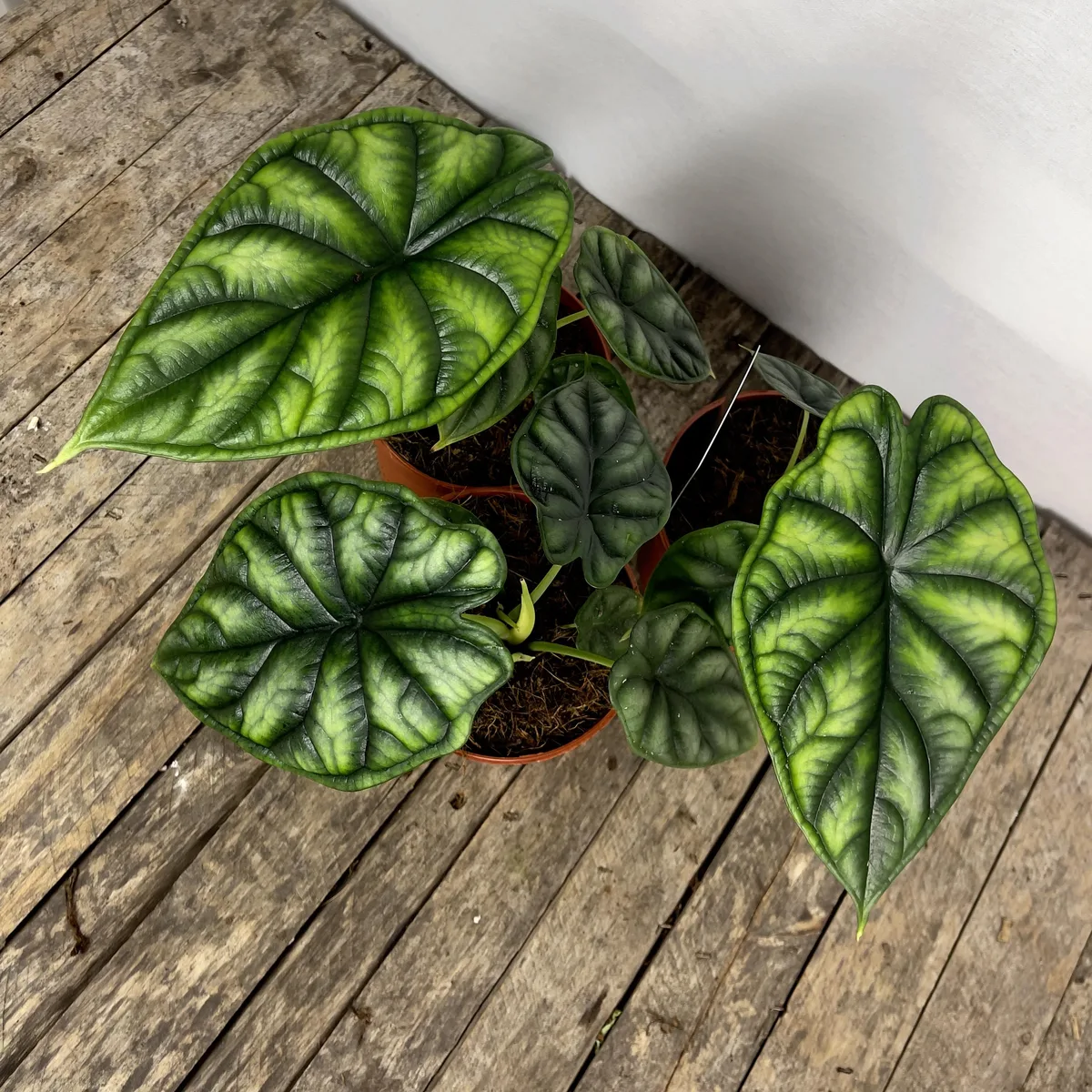
Alocasia baginda 'Dragon Scale' is a compact, evergreen perennial prized for its extraordinary foliage. The thick, shield-shaped leaves feature a deep green background with prominent silver veins and a metallic, scaly texture reminiscent of dragon scales. The plant grows from a rhizome, producing leaves on long petioles, and typically stays under 60 cm in height, making it an ideal tabletop specimen. Its unique ornamental value lies in the velvety, iridescent leaf surface that changes appearance under different light angles.
Scientific classification
- Species
- Alocasia Dragon Scale (Alocasia baginda)
- Genus
- Information to be completed
- Family
- Araceae
- Toxic if ingested; contains insoluble calcium oxalate crystals that can cause oral irritation, drooling, and difficulty swallowing. Keep away from pets and children.
- Toxicity
- Foliage · Houseplants · Conservatory Greenhouse
- Plant type
- 0.3 - 0.6 metres
- Height
- 0.3 - 0.6 metres
- Spread
- Evergreen
- Foliage
- Clump forming · Upright
- Habit
- Spring · Summer · Autumn
- Season of interest
- Bright indirect light
- Sunlight
- 20 – 30 °C
- Ideal temperature









Alocasia Dragon Scale pictures
Distribution of Alocasia Dragon Scale
Distribution map
- Native
- Introduced
- Cultivated
Source:WCVP v16 · Royal Botanic Gardens, Kew · CC BY 3.0 · Boundaries:WGSRPD / TDWG
Toxicity
Toxic if ingested; contains insoluble calcium oxalate crystals that can cause oral irritation, drooling, and difficulty swallowing. Keep away from pets and children.
Alocasia Dragon Scale care guide
- Keep soil moist but not waterlogged; allow top 2 cm to dry slightly between waterings in winter.
- Watering
- Bright indirect light
- Sunlight
- 20 – 30 °C
- Ideal temperature

Watering
Keep soil moist but not waterlogged; allow top 2 cm to dry slightly between waterings in winter.
Fertilizing
 Fertilizing
Every 4 weeks during the growing season (spring to early autumn) with a balanced houseplant fertiliser.
Pruning
 Pruning
Remove yellowing or damaged leaves at the base with clean scissors. Prune in spring to maintain shape and encourage new growth.
Propagation
 Propagation
Propagate by division of offsets in spring when repotting. Gently separate the rhizome into sections each with at least one growth point and roots. Pot up in moist potting mix, keep warm (20-25°C) and humid until new leaves emerge. Alternatively, stem cuttings in water may root, but division is more reliable.
Growing
 Growing
Grow Alocasia baginda in a well-drained, peat-based potting mix kept consistently moist but never waterlogged. Provide bright, indirect light and maintain high humidity around 60-80% for optimal leaf quality. Keep temperatures above 15°C (59°F) year-round; cold drafts and dry air cause leaf browning. Fertilise every 4 weeks during the growing season with a balanced liquid fertiliser diluted to half strength. Reduce watering in winter when growth slows.
Common pests and diseases
Diseases
Susceptible to root rot and crown rot if overwatered or kept in poorly-drained soil. Leaf spot diseases may occur in stagnant air.
Pests
Common pests include spider mites, mealybugs, and aphids, especially under low humidity. Scale insects may also infest the undersides of leaves.
Explore the plant health library →




