



Planting and Growing Lace Aloe

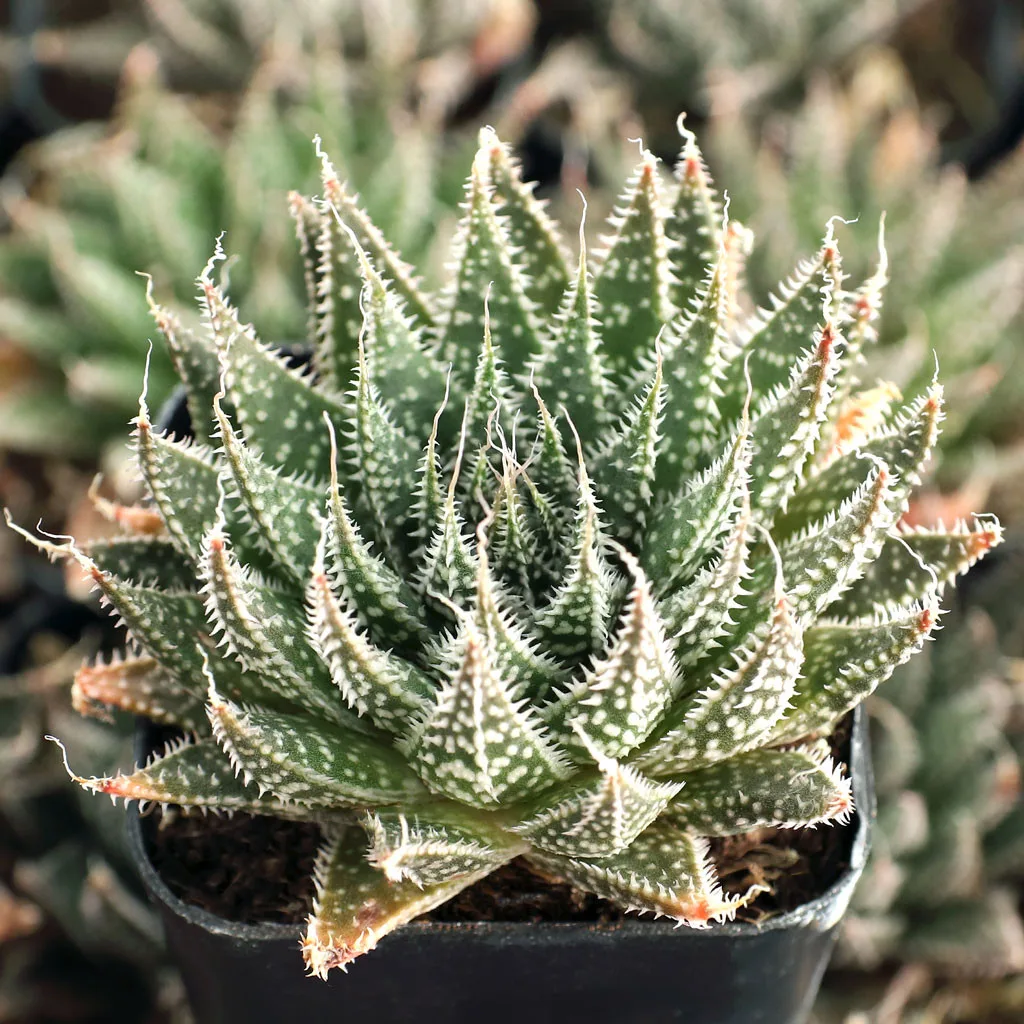
| Care difficulty | 2 / 5 |
|---|---|
| Watering schedule | Water deeply when soil is dry, then let dry out completely before next watering |
| Sunlight requirements | Full sun · Partial shade |
| Ideal temperature | 18 – 28 °C |
| Soil type | Sand · Loam |
| Soil pH | Neutral |
| Soil moisture | Well-drained |
| Fertilizing | Once in spring and once in summer with dilute balanced fertilizer |
| Toxicity | Non-toxic to humans and pets, but ingesting large quantities may cause mild digestive discomfort. |
How to Water Lace Aloe?
Water deeply when soil is dry, then let dry out completely before next watering
Learn more →What Are the Sunlight Requirements for Lace Aloe?
Full sun · Partial shade
Learn more →What Is the Ideal Temperature Range for Lace Aloe?

18 – 28 °C
Learn more →What Soil Is Best for Lace Aloe?
- Soil type
- Sand · Loam
- Soil pH
- Neutral
What Are the Moisture Requirements for Lace Aloe?
Well-drained
Learn more →How to Fertilize Lace Aloe?

Once in spring and once in summer with dilute balanced fertilizer
Learn more →How to Prune Lace Aloe?

Remove spent flower spikes after blooming; trim any dead or damaged leaves at the base as needed.
Learn more →How to Propagate Lace Aloe?

Propagate by offsets (pups) that form around the base in spring or early summer. Gently separate them from the mother plant, allow the cut surface to dry for a day, then pot in slightly moist succulent mix. Seeds can also be sown in spring at 18-21°C, but are slower and less reliable.
Learn more →How to Plant Lace Aloe?
Grow in a very well-drained cactus or succulent potting mix. Place in bright, indirect light or direct morning sun; avoid intense afternoon sun to prevent leaf burn. Water thoroughly when the soil is completely dry, then allow excess to drain freely; reduce watering in winter. Fertilize sparingly with a balanced liquid fertilizer diluted to half strength once in spring and once in summer. Protect from frost; the plant can tolerate light frost if kept dry, but ideally keep above 5°C.
Learn more →Common Pests & Diseases

Diseases
Susceptible to root rot if overwatered or planted in poorly draining soil. May develop leaf spots under excessive humidity or poor air circulation.
Pests
Common pests include mealybugs and spider mites, especially in dry indoor conditions. Regularly inspect leaf axils and treat promptly.
Explore the plant health library →Troubleshooting
Crown Rot, Soft Brown Base, or Mushy Leaves
Lace Aloe (Aloe aristata) is a compact South/East African rosette succulent that rots easily if water collects inside leaf bases or if potting soil stays wet.
| What you notice | Possible explanation | What to check next |
|---|---|---|
| Inner rosette leaves turn brown-black and mushy at the base and pull loose easily | Crown or root rot caused by overwatering, dense soil, or water trapped in the rosette center | Check soil moisture and gently test whether center leaves are firmly attached |
| Leaf tips turn brown and curl inward while leaves feel thin and concave | Underwatering or excessive direct afternoon sun | Check potting mix dryness and evaluate sun exposure |
| Oldest bottom leaves dry out slowly while the central rosette stays plump and green | Normal lower leaf aging as the rosette grows | Verify that central leaves and offshoots are firm |
- Grow in a gritty, fast-draining cactus/succulent compost with extra horticultural grit or perlite in a pot with drainage holes.
- Water thoroughly only after the soil has dried completely, pouring water onto the soil rather than into the rosette crown, and keep very dry in winter.
- Provide bright, filtered light or gentle morning sun, shading from scorching midday summer sun.
Stop watering immediately and discard rotted crowns; salvage any firm, unaffected basal offsets (pups) by letting cut ends callus for a day before potting.
Stretched Pale Rosettes or Mealybugs in Leaf Axils
Low indoor light causes compact rosettes to stretch and lose white banding/spots, while mealybugs hide deep in leaf axils.
| What you notice | Possible explanation | What to check next |
|---|---|---|
| Rosette opens flat and stretches upward with pale green leaves | Insufficient bright light | Evaluate daily light intensity at the growing spot |
| White cottony insects or sticky residue tucked inside leaf axils | Mealybug or scale infestation | Inspect tight overlapping leaf bases closely with a bright light |
- Move to a brighter windowsill with strong indirect light or morning sun.
- Isolate pest-affected plants and dab visible mealybugs with a cotton swab dipped in rubbing alcohol.
- Separate crowded offsets in spring or early summer to improve airflow around the mother rosette.
Keep Lace Aloe (Aloe aristata) away from pets, as ingestion can cause digestive upset.
The Toxicity of Lace Aloe
Non-toxic to humans and pets, but ingesting large quantities may cause mild digestive discomfort.