
Lace Aloe
Also known as: Lace Aloe, Torch Plant
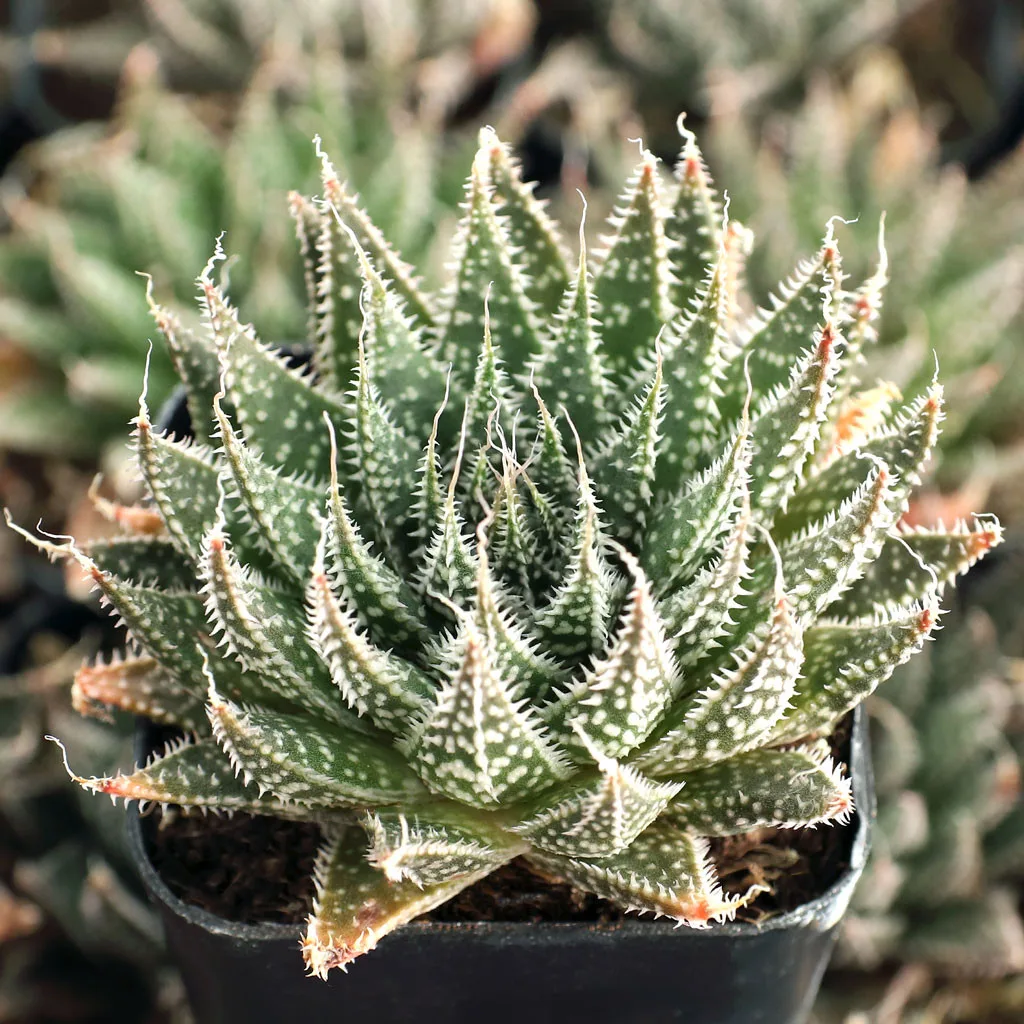
Aloe aristata, commonly known as Lace Aloe, is a small, stemless succulent forming dense rosettes of fleshy, lance-shaped leaves. The leaves are dark green with white spots and soft white teeth along the margins, ending in a delicate, thread-like tip. In summer, it produces slender, unbranched spikes of tubular orange-red flowers, which attract pollinators. This compact plant is ideal for indoor containers, rock gardens, or windowsills, offering year-round visual interest with its intricate foliage pattern.
Scientific classification
- Species
- Lace Aloe (Aloe aristata)
- Genus
- Information to be completed
- Family
- Asphodelaceae
- Non-toxic to humans and pets, but ingesting large quantities may cause mild digestive discomfort.
- Toxicity
- Succulent · Houseplants
- Plant type
- 0.15 - 0.3 metres
- Height
- 0.2 - 0.4 metres
- Spread
- Evergreen
- Foliage
- Clump forming
- Habit
- Spring · Summer
- Season of interest
- Full sun · Partial shade
- Sunlight
- 18 – 28 °C
- Ideal temperature









Lace Aloe pictures
Distribution of Lace Aloe
Distribution map
- Native
- Introduced
- Cultivated
Source:WCVP v16 · Royal Botanic Gardens, Kew · CC BY 3.0 · Boundaries:WGSRPD / TDWG
Toxicity
Non-toxic to humans and pets, but ingesting large quantities may cause mild digestive discomfort.
Lace Aloe care guide
- Water deeply when soil is dry, then let dry out completely before next watering
- Watering
- Full sun · Partial shade
- Sunlight
- 18 – 28 °C
- Ideal temperature

Watering
Water deeply when soil is dry, then let dry out completely before next watering
Fertilizing
 Fertilizing
Once in spring and once in summer with dilute balanced fertilizer
Pruning
 Pruning
Remove spent flower spikes after blooming; trim any dead or damaged leaves at the base as needed.
Propagation
 Propagation
Propagate by offsets (pups) that form around the base in spring or early summer. Gently separate them from the mother plant, allow the cut surface to dry for a day, then pot in slightly moist succulent mix. Seeds can also be sown in spring at 18-21°C, but are slower and less reliable.
Growing
 Growing
Grow in a very well-drained cactus or succulent potting mix. Place in bright, indirect light or direct morning sun; avoid intense afternoon sun to prevent leaf burn. Water thoroughly when the soil is completely dry, then allow excess to drain freely; reduce watering in winter. Fertilize sparingly with a balanced liquid fertilizer diluted to half strength once in spring and once in summer. Protect from frost; the plant can tolerate light frost if kept dry, but ideally keep above 5°C.
Common pests and diseases
Diseases
Susceptible to root rot if overwatered or planted in poorly draining soil. May develop leaf spots under excessive humidity or poor air circulation.
Pests
Common pests include mealybugs and spider mites, especially in dry indoor conditions. Regularly inspect leaf axils and treat promptly.
Explore the plant health library →




