



Planting and Growing orchid cactus 'Shocker'

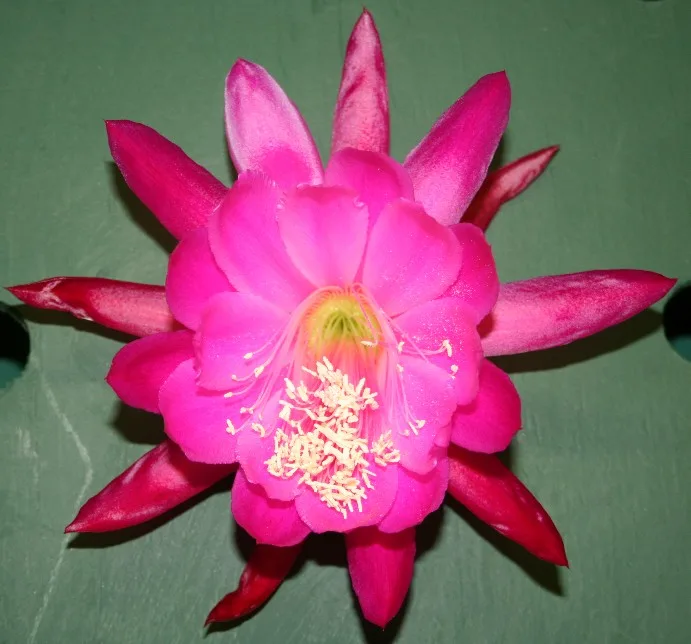
| Care difficulty | 3 / 5 |
|---|---|
| Watering schedule | Moderate regular watering, avoid prolonged drought or waterlogging |
| Sunlight requirements | Partial shade |
| Ideal temperature | Information to be completed |
| Soil type | Loam |
| Soil pH | Acid · Alkaline · Neutral |
| Soil moisture | Well drained |
| Fertilizing | Balanced feed in spring and light repeat in growth season |
| Toxicity | Information to be completed |
How to Water orchid cactus 'Shocker'?
Moderate regular watering, avoid prolonged drought or waterlogging
Learn more →What Are the Sunlight Requirements for orchid cactus 'Shocker'?
Partial shade
Learn more →What Soil Is Best for orchid cactus 'Shocker'?
- Soil type
- Loam
- Soil pH
- Acid · Alkaline · Neutral
What Are the Moisture Requirements for orchid cactus 'Shocker'?
Well drained
Learn more →How to Fertilize orchid cactus 'Shocker'?

Balanced feed in spring and light repeat in growth season
Learn more →How to Prune orchid cactus 'Shocker'?

No pruning required
Learn more →How to Propagate orchid cactus 'Shocker'?

Propagate by stem cuttings in early summer
Learn more →How to Plant orchid cactus 'Shocker'?
In areas where temperatures drop below 10ºC, grow in epiphytic cactus compost in bright filtered light as houseplants or in a warm greenhouse with moderate to high humidity, and a minimum temperature of 10ºC for most of the year but 15ºC in the growing season; from mid-spring to late summer water freely and apply a high-potash fertilizer every 2 weeks as flower buds form, while in winter keep just moist. In warmer climates, grow in fertile, sharply drained soil in light dappled or partial shade. For more advice, see Epiphyllum cultivation
Learn more →Common Pests & Diseases

Diseases
Generally disease-free
Pests
May be susceptible to mealybugs, aphids and glasshouse red spider mite
Explore the plant health library →