



Planting and Growing Impatiens New Guinea Kokomo ('Bicolour Salmon White')

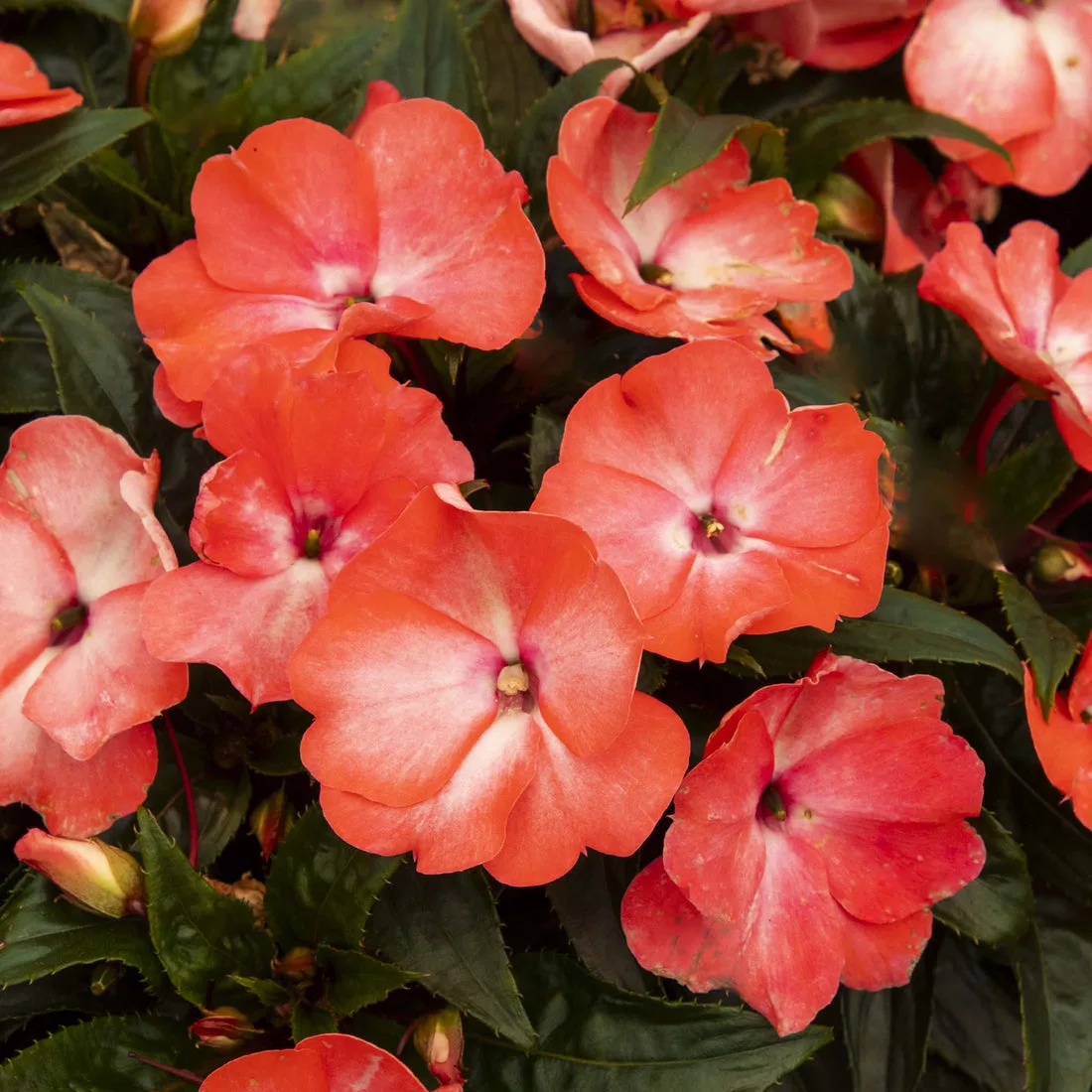
| Care difficulty | 2 / 5 |
|---|---|
| Watering schedule | Moderate regular watering, avoid prolonged drought and stagnant waterlogging |
| Sunlight requirements | Partial shade · Full sun |
| Ideal temperature | Information to be completed |
| Soil type | Chalk · Clay · Loam · Sand |
| Soil pH | Acid · Alkaline · Neutral |
| Soil moisture | Moist but well drained |
| Fertilizing | Balanced perennial feed every four weeks spring through summer growth |
| Toxicity | Information to be completed |
How to Water Impatiens New Guinea Kokomo ('Bicolour Salmon White')?
Moderate regular watering, avoid prolonged drought and stagnant waterlogging
Learn more →What Are the Sunlight Requirements for Impatiens New Guinea Kokomo ('Bicolour Salmon White')?
Partial shade · Full sun
Learn more →What Soil Is Best for Impatiens New Guinea Kokomo ('Bicolour Salmon White')?
- Soil type
- Chalk · Clay · Loam · Sand
- Soil pH
- Acid · Alkaline · Neutral
What Are the Moisture Requirements for Impatiens New Guinea Kokomo ('Bicolour Salmon White')?
Moist but well drained
Learn more →How to Fertilize Impatiens New Guinea Kokomo ('Bicolour Salmon White')?

Balanced perennial feed every four weeks spring through summer growth
Learn more →How to Prune Impatiens New Guinea Kokomo ('Bicolour Salmon White')?

Pinch out growing tip when young for a well-balanced and well-branched plant. Careful and regular dead-heading can prolong the flowering display well into autumn.
Learn more →How to Propagate Impatiens New Guinea Kokomo ('Bicolour Salmon White')?

Propagate by seed or softwood cuttings
Learn more →How to Plant Impatiens New Guinea Kokomo ('Bicolour Salmon White')?
Grow on in warm frost free conditions. Acclimatise plants before planting outside in early summer. Pinching out when young will create a well balanced compact plant that is perfect for container cultivation. A useful bedding plant for any well drained soil in partial shade or sun.
Learn more →Common Pests & Diseases

Diseases
Generally disease-free
Pests
Generally pest-free. May be susceptible to aphids.
Explore the plant health library →