



Planting and Growing wall bellflower

| Care difficulty | 3 / 5 |
|---|---|
| Watering schedule | Water regularly to keep soil evenly moist |
| Sunlight requirements | Full sun · Partial shade |
| Ideal temperature | 15 – 25 °C |
| Soil type | Chalk · Loam · Sand |
| Soil pH | Acid · Alkaline · Neutral |
| Soil moisture | Moist but well drained · Well drained |
| Fertilizing | Monthly with balanced liquid fertilizer during growing season |
| Toxicity | Information to be completed |
How to Water wall bellflower?
Originating from the Dalmatian mountains in Croatia, wall bellflower thrives in rocky crevices where moisture is sparse, showcasing its ability to endure periods of drought. Adapted to these conditions, wall bellflower has developed a preference for drier environments and should be watered sparingly, ideally once every week to mimic its natural habitat's watering cycle. Given its resilience, wall bellflower is well-suited for outdoor growth where it can benefit from natural rainfall patterns. As an evergreen plant, wall bellflower's consistent foliage offers year-round interest without demanding excessive watering.
Learn more →What Are the Sunlight Requirements for wall bellflower?
Wall bellflower thrives best in full sun conditions, where it can receive ample light for optimal growth, health, and enhanced flowering capabilities. While it prefers direct light for long durations throughout the day, wall bellflower is also tolerant of partial sun, making it versatile in varying light environments. In partial sun, the plant may exhibit slower growth and reduced flowering but generally maintains good health. Outdoors, wall bellflower should be positioned in locations that receive several hours of direct sunlight, such as rock gardens or walls. This adaptability in light tolerance makes wall bellflower a resilient and popular choice for gardeners.
Learn more →What Is the Ideal Temperature Range for wall bellflower?

Wall bellflower is remarkably resilient to temperature fluctuations. It can endure cold as low as -30℃ (-22℉) and heat up to 35℃ (95℉). This wide tolerance range means that wall bellflower can thrive in a variety of climates, though care is needed during temperature extremes. Symptoms of overcooling include leaf discoloration and wilting, while overheating can cause leaf burn and stunted growth. To protect against extreme cold, mulching and covering may be necessary, whereas shading and adequate watering help during high heat periods. These adaptive traits make wall bellflower a versatile addition to many gardens.
Learn more →What Soil Is Best for wall bellflower?
Wall bellflower thrives in well-draining soil to prevent water-logging. Use a mix of garden soil, perlite, and compost or peat moss for aeration and nutrients. Combine 2 parts garden soil, 1 part perlite, and 1 part compost. If perlite isn't available, use coarse sand. Add slow-release fertilizer during planting and in the growing season. Ensure containers have drainage holes and avoid overwatering.
- Soil type
- Chalk · Loam · Sand
- Soil pH
- Acid · Alkaline · Neutral
What Are the Moisture Requirements for wall bellflower?
Moist but well drained · Well drained
Learn more →How to Fertilize wall bellflower?

For optimal growth, wall bellflower benefits from balanced nutrition fertilizers during the active growing season, spring to summer, which should be applied monthly. High phosphorus fertilizers can be used every 2-3 months to encourage flowering. Administer fertilizers at a quarter-strength concentration to prevent root burn. Seasonally, reduce fertilization in fall and withhold in winter when growth slows. In different growth stages, young, actively growing wall bellflower need more frequent feeding than established ones. Ensure even distribution and water soil prior to application for effective uptake. Take care to avoid direct contact with leaves and stems.
Learn more →How to Prune wall bellflower?

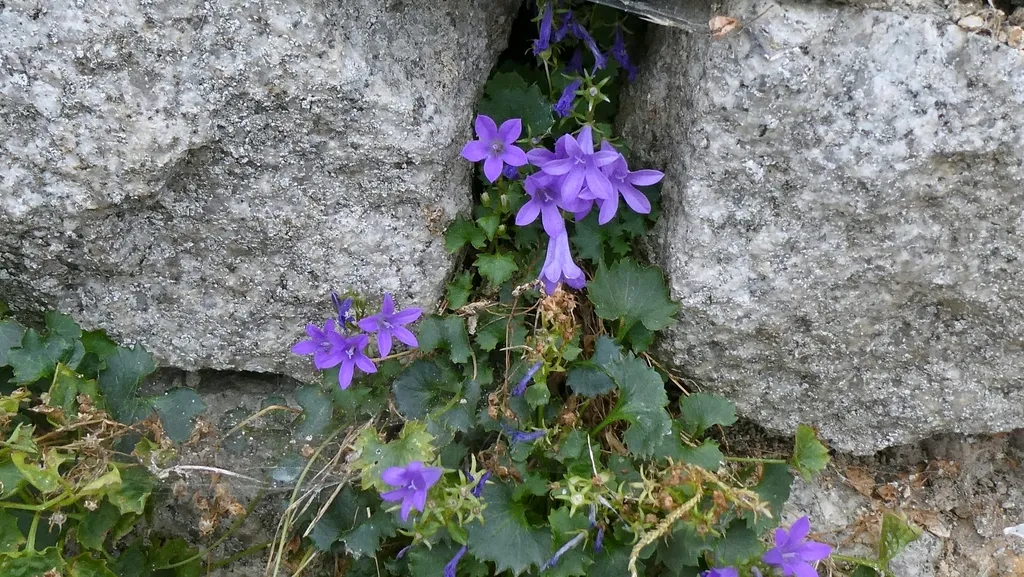
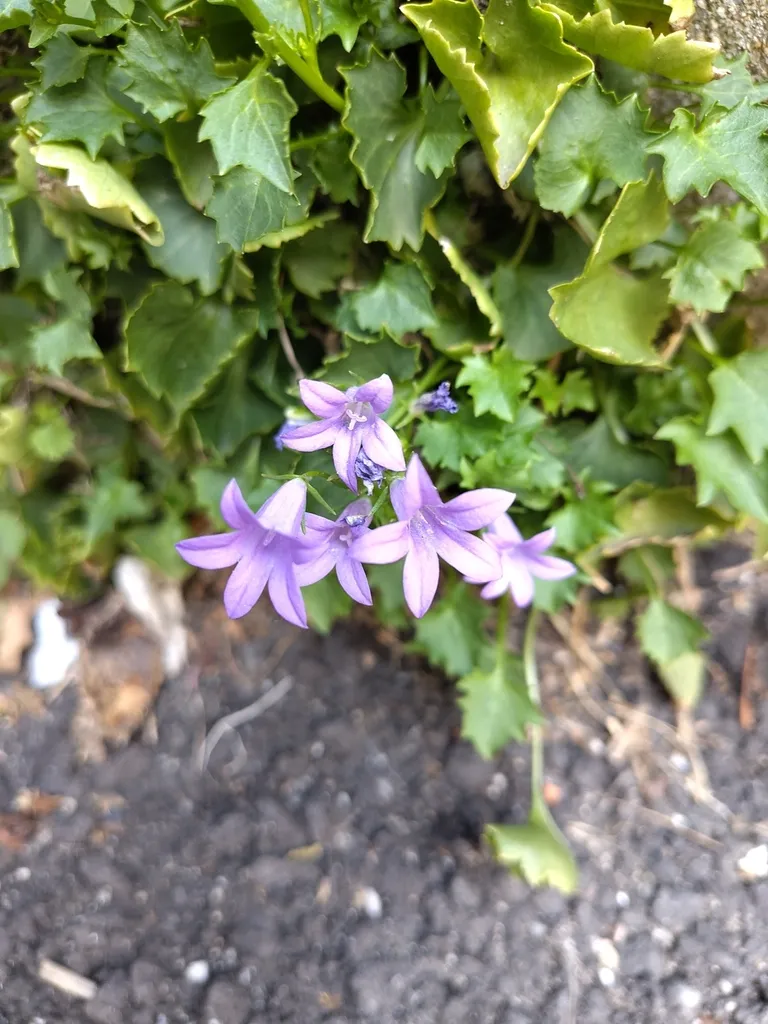
A low-growing perennial with bell-shaped purple flowers, wall bellflower thrives with proper pruning. Key techniques include removing spent flowers to encourage new blooms and trimming back foliage to maintain shape. The optimal pruning period is early spring to late winter, following the plant's growth cycle. Pruning at this time helps manage size, remove dead growth, and promote vigorous flowering. Regular pruning also reduces disease risk and enhances overall plant health.
Learn more →How to Propagate wall bellflower?

A favored perennial in rock gardens, wall bellflower is admired for its ability to flourish in crevices and walls, offering a cascade of vibrant, bell-shaped flowers. Tailored for wall bellflower, propagation through cuttings is a practical choice, allowing for the cloning of this plant to retain its distinctive characteristics. Gardeners should seek robust, non-flowering shoots to snip and root in well-draining soil under partial shade, providing consistent moisture but avoiding waterlogging for optimal root development.
Learn more →How to Transplant wall bellflower?
Optimal transplanting of wall bellflower flourishes when undertaken in mid to late spring, tapping into robust growth cycles. Choose a spot with partial shade and well-draining soil to foster resilience. When moving wall bellflower, gentleness is key – safeguard the root ball for a seamless transition.
Learn more →How to Plant wall bellflower?
Indoors-potted: Inside, wall bellflower brings a touch of perennial charm but requires ample brightness to flourish. Outdoors-potted: Wall bellflower, when kept in outdoor pots, relishes the freedom to bask in full daylight and can enliven balconies or patios. Outdoors-in the ground: Planted directly in garden soil, wall bellflower spreads its beauty naturally, requiring minimal intervention for a stunning display.
Learn more →How to Repot wall bellflower?
For wall bellflower, a modest-sized, evergreen ground cover, repot in late winter-early spring, before new growth starts. Every 2-3 years suffices, as it allows for nutrient replenishment. Choose a slightly larger container with ample drainage. Post-repotting, ensure indirect light and keep the soil consistently moist to aid in recovery. A friendly reminder: wall bellflower thrives when not over-handled, so gentle care is key.
Learn more →Common Pests & Diseases

Diseases
May be susceptible to a rust, Powdery mildews and a leaf spot
Pests
May be susceptible to slugs and snails
Explore the plant health library →Troubleshooting
Leggy Stems, Sparse Flowering, or Root Rot
wall bellflower (Campanula portenschlagiana) performs best in well-drained soil with appropriate sunlight and regular deadheading; soggy soil rots roots, while low light or skipped pinching causes leggy growth.
| What you notice | Possible explanation | What to check next |
|---|---|---|
| Stems stretch tall and floppy with sparse blooms | Insufficient direct sunlight, lack of early-season pinching/deadheading, or excess high-nitrogen fertilizer | Assess daily sun hours and check whether spent flowers are left to set seed |
| Lower leaves turn yellow and plant wilts while soil stays wet and heavy | Root or stem rot from overwatering or poor drainage (May be susceptible to a rust, Powdery mildews and a leaf spot) | Check soil drainage and ensure containers have open drainage holes |
- Grow in fertile, well-drained soil in full sun or partial shade, spacing plants for good airflow.
- Water consistently without waterlogging: Water regularly to keep soil evenly moist.
- Maintain compact flowering growth: No pruning required, spent flowers and stems may be removed to tidy.
Stop watering waterlogged containers immediately and improve drainage before fungal root or stem rot spreads.
Powdery Mildew, Grey Mould, or Aphids and Slugs
Crowded foliage, dry root stress, or damp stagnant air can trigger mildew or grey mould on wall bellflower (Campanula portenschlagiana), while tender shoots attract pests.
| What you notice | Possible explanation | What to check next |
|---|---|---|
| White powdery coating on leaves, or fuzzy grey mold on damp spent flowers | Fungal disease (May be susceptible to a rust, Powdery mildews and a leaf spot) favored by drought stress at the roots or wet, crowded foliage | Inspect lower leaves and spent blooms and check plant spacing |
| Distorted shoot tips with aphids/whiteflies, or ragged holes chewed in young leaves | Common pests (May be susceptible to slugs and snails) | Check shoot tips, leaf undersides, and damp ground around the crown |
- Water at the base of the plant early in the day rather than overhead, and thin or divide congested clumps in spring or autumn.
- Remove mildewed leaves and faded flowers promptly, and clear plant debris at season's end.
- Manage aphids or whiteflies with a firm water spray or insecticidal soap per label directions, and protect young shoots from slugs.
Protect frost-tender bedding or subtropical perennials indoors or under glass before autumn frosts.