



Planting and Growing Hippeastrum 'Double Dragon'

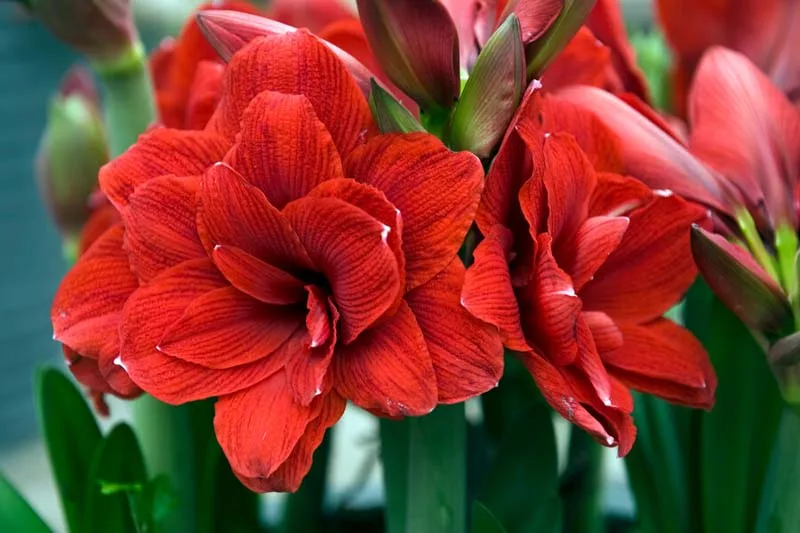
| Care difficulty | 2 / 5 |
|---|---|
| Watering schedule | Moderate regular watering, allowing brief slight drying between soakings |
| Sunlight requirements | Partial shade · Full sun |
| Ideal temperature | Information to be completed |
| Soil type | Loam |
| Soil pH | Neutral |
| Soil moisture | Well drained · Moist but well drained |
| Fertilizing | Balanced perennial feed every four weeks from spring through summer |
| Toxicity | Harmful if eaten. Wear gloves and other protective equipment when handling |
How to Water Hippeastrum 'Double Dragon'?
Moderate regular watering, allowing brief slight drying between soakings
Learn more →What Are the Sunlight Requirements for Hippeastrum 'Double Dragon'?
Partial shade · Full sun
Learn more →What Soil Is Best for Hippeastrum 'Double Dragon'?
- Soil type
- Loam
- Soil pH
- Neutral
What Are the Moisture Requirements for Hippeastrum 'Double Dragon'?
Well drained · Moist but well drained
Learn more →How to Fertilize Hippeastrum 'Double Dragon'?

Balanced perennial feed every four weeks from spring through summer
Learn more →How to Prune Hippeastrum 'Double Dragon'?

Cut back flowering stems as they go over. Cut back leaves as they go yellow, when bulb is going into dormancy
Learn more →How to Propagate Hippeastrum 'Double Dragon'?

Propagate seed as soon as they are ripe. Keep seedlings growing without a dormant period to encourage early flowering. bulbs will take between three and five years to flower. Remove bulb offsets in the autumn
Learn more →How to Plant Hippeastrum 'Double Dragon'?
Plant bulbs in the autumn with the neck and shoulder above the soil surface. Grow in a loam based peat-free potting compost. Water sparingly until in active growth, water regulary when in growth and feed fortnightly with a balanced liquid feed. After flowering, reduce watering as the leaves die off and keep dry when dormant. This Hippeastrum can be grown in a sunny border, but will need winter protection. See Hippeastrum cultivation
Learn more →Common Pests & Diseases

Diseases
May be susceptible to various fungal diseases
Pests
May be susceptible to bulb scale mite, large narcissus bulb fly and slugs and snails throughout the summer months
Explore the plant health library →The Toxicity of Hippeastrum 'Double Dragon'
Harmful if eaten. Wear gloves and other protective equipment when handling