



Planting and Growing thickly matted haired navel-wort

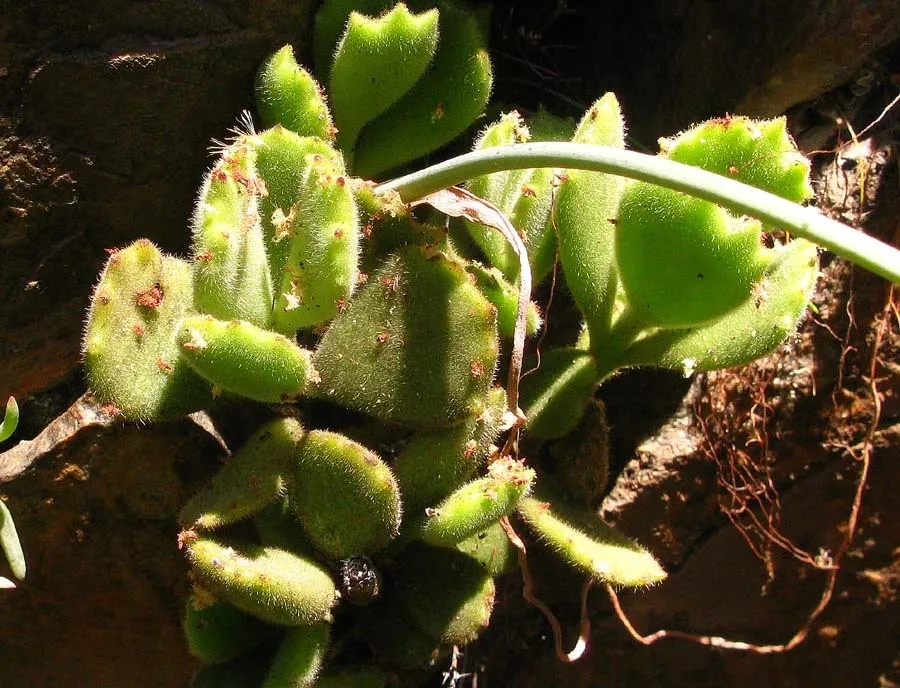
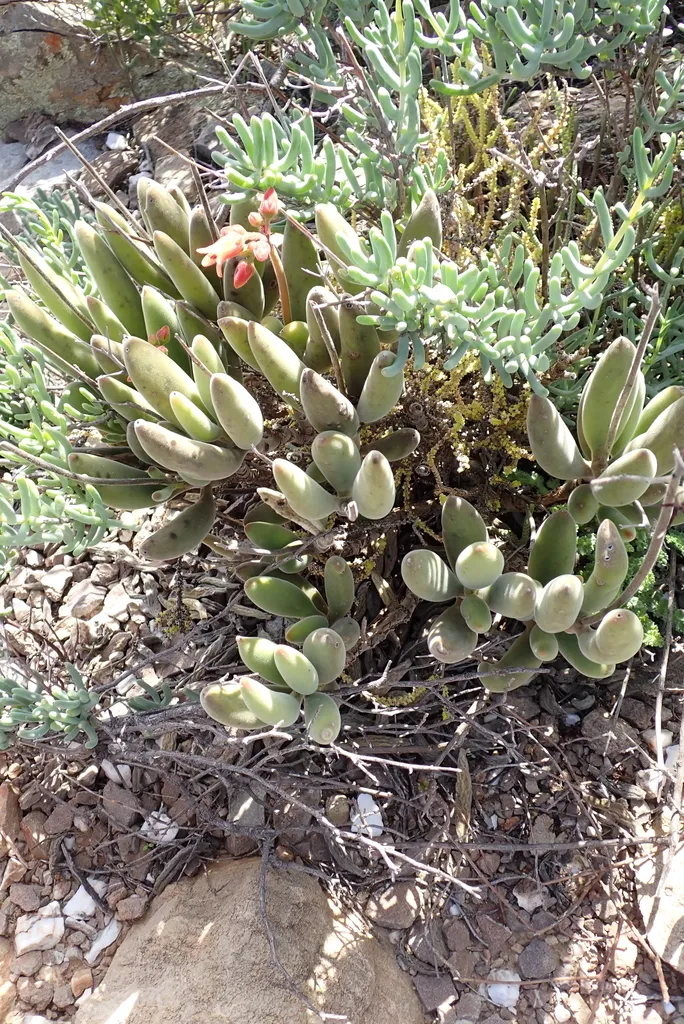
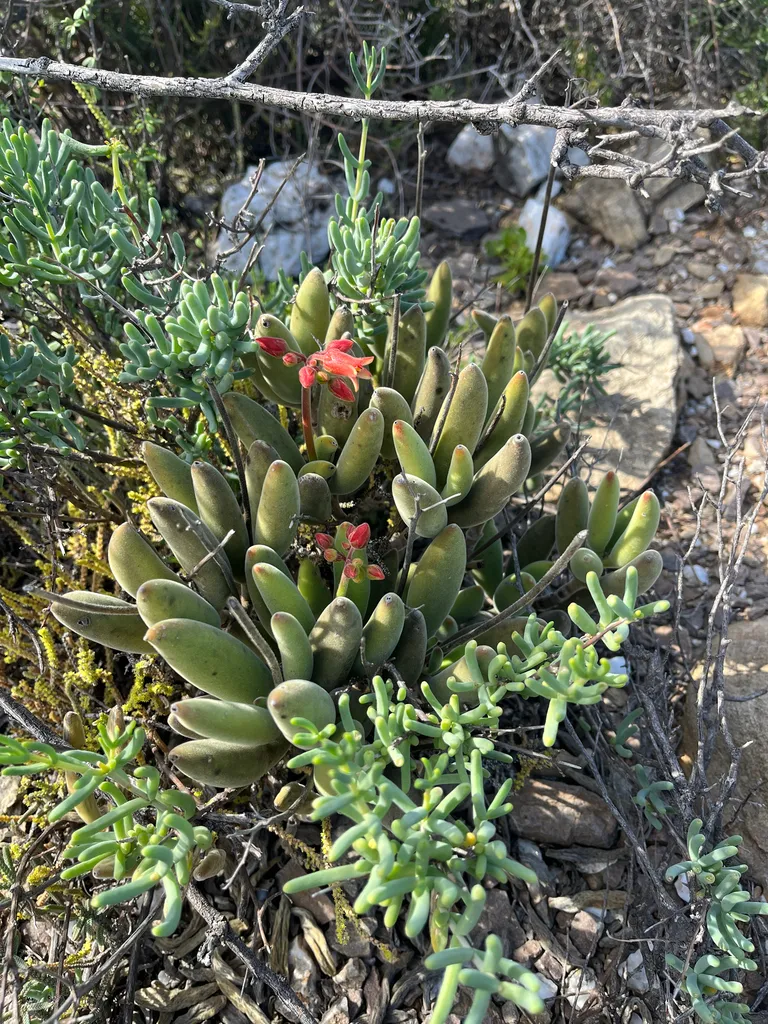
| Care difficulty | 3 / 5 |
|---|---|
| Watering schedule | Water sparsely, let entire succulent substrate dry fully between watering |
| Sunlight requirements | Full sun |
| Ideal temperature | 18 – 28 °C |
| Soil type | Loam · Sand |
| Soil pH | Acid · Alkaline · Neutral |
| Soil moisture | Well drained |
| Fertilizing | Diluted low nitrogen succulent feed once monthly in spring growth window |
| Toxicity | Information to be completed |
How to Water thickly matted haired navel-wort?
Bear's paw thrives in arid environments, displaying a high degree of drought tolerance. This succulent prefers infrequent watering, aligning with its adaptation to store water within its fleshy leaves. Watering should occur once every 2-3 weeks, ensuring the soil dries out between sessions to mimic its natural dry habitat. Typically grown indoors due to its ornamental appeal and manageable size, bear's paw benefits from well-draining soil that prevents root rot – a common issue when overwatered.
Learn more →What Are the Sunlight Requirements for thickly matted haired navel-wort?
Bear's paw flourishes best under full sun conditions, which entails exposure to bright and direct light for at least six hours per day. This optimal lighting promotes vigorous growth and helps maintain the plant’s distinctive fleshy leaves and characteristic 'paw'-like appearance. However, bear's paw is adaptable and can also tolerate partial sun, which includes dappled light or some shade, particularly during the hottest part of the day. Excessive shade can lead to etiolation, where the plant becomes leggy, compromising health and aesthetics. If grown outdoors, bear's paw prefers sunny spots that mimic its native arid environments. Placement near south-facing windows is ideal for indoor growth, as this mimics its natural preference for bright light.
Learn more →What Is the Ideal Temperature Range for thickly matted haired navel-wort?

Bear's paw is notably resilient to temperature variations, tolerating cold down to 0℃ (32℉) and heat up to 43℃ (109℉). This broad tolerance allows bear's paw to thrive in diverse climates, though care must be taken to shield it from extremes. During cold snaps, frost damage may occur, indicated by blackened leaves, requiring relocation to warmer areas. Conversely, intense heat can cause leaf scorch or wilting, necessitating increased shading and hydration. Understanding bear's paw's temperature limits aids in ensuring its health through protective measures and suitable habitat choices.
Learn more →What Soil Is Best for thickly matted haired navel-wort?
Ensure good drainage for bear's paw to prevent root rot. Use a succulent or cactus soil mix, which can be prepared by combining 2 parts potting soil, 1 part perlite or pumice. If these are unavailable, sand can be used as an alternative instead of perlite or pumice. Incorporate slow-release fertilizer during the growing season to enhance growth. Avoid water-logging by using pots with drainage holes and watering sparingly.
- Soil type
- Loam · Sand
- Soil pH
- Acid · Alkaline · Neutral
What Are the Moisture Requirements for thickly matted haired navel-wort?
Well drained
Learn more →How to Fertilize thickly matted haired navel-wort?

For optimal growth, fertilize bear's paw with a balanced Succulents and Cacti Food during the active growing season in spring and summer, every two to four weeks. Dilute the fertilizer to half the recommended strength to prevent overfertilization, which can harm bear's paw's delicate roots. Cease feeding in fall and winter, allowing bear's paw to rest. This targeted nourishment bolsters bear's paw's health, encouraging vibrant foliage and potentially enhancing flowering. With thoughtful application—avoiding direct contact with leaves—a balanced feed contributes to the robust vitality of bear's paw.
Learn more →How to Prune thickly matted haired navel-wort?

In order to keep beautiful shape, some large succulent plants may need pruning. For example, in California, for echeveria planted in the garden, some redundant branches and branches that are too dense need to be cut off in spring and autumn. This depends on what you think and what the succulent plant is used for. Tools for pruning mainly include knife, scissors, and some medicines (such as sulfur powder). In order to propagate new plants, we can also cut some leaves in spring and autumn for cutting. Stout stems with 5-6 leaves are often selected: cut it off with a knife, then smear the wound with sulfur powder, and plant it after the wound is healed. At this time, it is recommended to use a watering can to slightly wet the soil used for cutting.
Learn more →How to Propagate thickly matted haired navel-wort?

Known for its charming leaves that resemble animal paws, bear's paw is effectively multiplied through cuttings. To grow, take healthy fleshy leaves from the succulent, letting the cut end callous over a few days. Once calloused, plant the leaf in well-draining soil and water sparingly to encourage root development. Ensure consistent warmth and indirect sunlight during rooting. Careful handling of the delicate dislodged leaves increases the success rate.
Learn more →How to Transplant thickly matted haired navel-wort?
The perfect time to transplant bear's paw is from early summer to mid-fall, offering optimal growth conditions. Choose a sunny spot with well-draining soil, and ensure the plant isn't over-watered. With these considerations, transplanting bear's paw will be a delightful experience for both the plant and the gardener!
Learn more →How to Care for thickly matted haired navel-wort in Winter?

Bear's paw hails from arid South Africa, naturally equipped to withstand a dry winter rather than freezing cold. Dormant in winter, bear's paw adapts by storing moisture in thick, succulent leaves. To maintain bear's paw in colder climates, shield it from freezing temperatures and limit watering, emulating its native winter environment. Ensure good lighting, minimal moisture, and a frost-free space for a thriving bear's paw this winter!
Learn more →How to Plant thickly matted haired navel-wort?
Indoors-potted: In an indoor setting, bear's paw thrives with minimal fuss – ensure good airflow around the plant to mimic its preferred dry habitat. Outdoors-potted: Bear's paw, when kept outdoors in pots, appreciate a sheltered spot that replicates their natural rocky outcroppings. Outdoors-in the ground: Planting bear's paw directly in the ground requires well-draining soil; they are not tolerant of damp conditions which can lead to root issues.
Learn more →How to Repot thickly matted haired navel-wort?
Bear's paw, with its unique paw-like leaves, thrives best when repotted biennially to accommodate growth. Optimal repotting occurs in spring to encourage vigorous development during its active phase. Select a pot slightly larger than the current to ensure ample room without overwhelming roots. Post-repotting, place in bright, indirect light and water sparingly until stability is evident, typically within a few weeks.
Learn more →Common Pests & Diseases

Diseases
Generally disease free
Pests
May be affected by mealybugs, aphids and scale insects
Explore the plant health library →Troubleshooting
Mushy Translucent Leaves, Leaf Drop, or Basal Stem Rot
thickly matted haired navel-wort (Cotyledon tomentosa) stores water in fleshy leaves and rots rapidly when kept wet in dense soil or cool weather. Overwatering and trapped moisture in dense rosettes or leaf axils quickly cause basal stem and root rot.
| What you notice | Possible explanation | What to check next |
|---|---|---|
| Lower leaves turn translucent, yellow, and mushy, or drop at a light touch while soil is damp | Overwatering, poorly drained potting mix, or water trapped in leaf rosettes | Check whether the potting mix stays wet and inspect the stem base for blackening |
| Leaves look wrinkled, deflated, and thin while the gritty mix is completely dry | Underwatering during warm active growth | Feel deep into the pot and lift it to confirm total dryness |
| A few oldest bottom leaves dry into papery husks while upper growth stays firm | Normal lower leaf reabsorption as stems mature | Confirm upper leaves and stem are firm and unblemished |
- Pot in a sharply drained mineral-rich succulent mix (cactus compost amended with coarse grit, perlite, or pumice) in a pot with drainage holes.
- Water thoroughly only after the entire potting mix has dried out completely, and keep much drier during cool winter rest.
- Water at the soil line rather than pouring water into leaf rosettes or onto fuzzy foliage.
- If basal rot occurs, cut above the blackened stem with a sterile blade, let the cutting callus for several days, and root in dry-to-barely-damp gritty mix.
Stop watering immediately if the stem base turns black and soft; decayed roots cannot recover.
Keep thickly matted haired navel-wort (Cotyledon tomentosa) out of reach of pets and children, as ingestion can cause toxicity.
Stretched Etiolated Growth, Faded Color, or Mealybugs
Insufficient direct sunlight causes stems to stretch and lose compact form or red leaf margins, while mealybugs hide in tight leaf axils.
| What you notice | Possible explanation | What to check next |
|---|---|---|
| Wide gaps between leaves, pale green color, and leaning or floppy stems | Insufficient bright light (etiolation) | Assess daily hours of direct sun or bright windowsill light |
| White cottony tufts in leaf axils or sticky residue on stems | Mealybug or scale infestation | Inspect tight leaf bases, stem junctions, and pot rims closely |
- Move gradually into brighter light (such as a sunny south- or west-facing windowsill) so leaves regain compact growth and natural red-tinted margins without sudden sunburn.
- Prune stretched stems in spring, allow cut ends to callus for a few days, and root cuttings in gritty succulent mix.
- Isolate pest-infested plants and dab visible mealybugs with a cotton swab dipped in rubbing alcohol.
Acclimate shade-grown succulents to intense summer sun gradually over one to two weeks to prevent bleached sunburn scars.