



Planting and Growing chilli pepper 'Hot Thai'

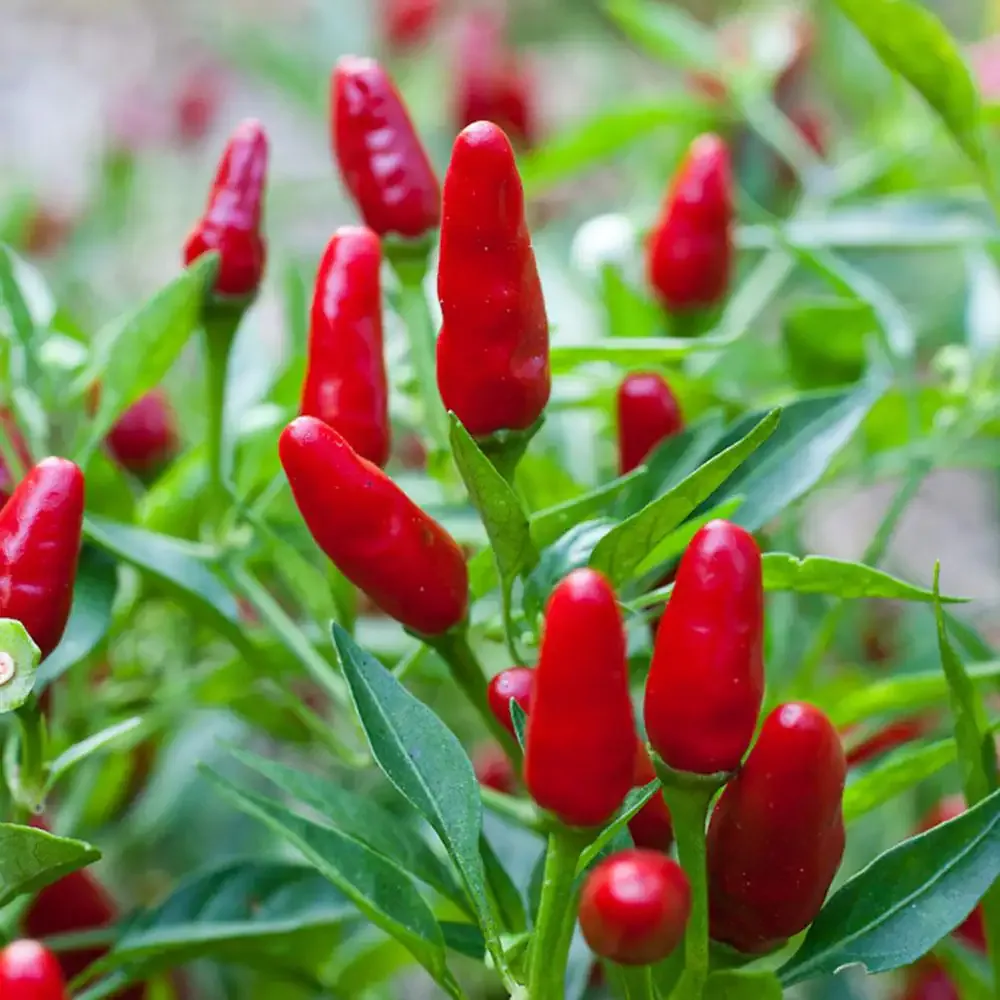
| Care difficulty | 2 / 5 |
|---|---|
| Watering schedule | Keep moisture even through flowering and fruiting, avoiding hard dry swings |
| Sunlight requirements | Full sun |
| Ideal temperature | Information to be completed |
| Soil type | Sand · Loam |
| Soil pH | Acid · Neutral |
| Soil moisture | Well drained · Moist but well drained |
| Fertilizing | Tomato or pepper feed every one to two weeks in fruiting season |
| Toxicity | Irritant if eaten, skin/eye irritant. Wear gloves and other protective equipment when handling] |
How to Water chilli pepper 'Hot Thai'?
Keep moisture even through flowering and fruiting, avoiding hard dry swings
Learn more →What Are the Sunlight Requirements for chilli pepper 'Hot Thai'?
Full sun
Learn more →What Soil Is Best for chilli pepper 'Hot Thai'?
- Soil type
- Sand · Loam
- Soil pH
- Acid · Neutral
What Are the Moisture Requirements for chilli pepper 'Hot Thai'?
Well drained · Moist but well drained
Learn more →How to Fertilize chilli pepper 'Hot Thai'?

Tomato or pepper feed every one to two weeks in fruiting season
Learn more →How to Prune chilli pepper 'Hot Thai'?

Pinch out growing tips to encourage bushiness
Learn more →How to Propagate chilli pepper 'Hot Thai'?

Propagate by seed. See sowing vegetable seeds or sowing seeds indoors for further advice
Learn more →How to Plant chilli pepper 'Hot Thai'?
Sow indoors from late Winter to mid-Spring in a small pot filled with good quality seed compost and cover with a fine layer of vermiculite. When seedlings are 2.5cm tall transplant to individual pots, water and keep in a sunny spot. See how to grow: chilli peppers for further advice
Learn more →Common Pests & Diseases

Diseases
May be susceptible to grey moulds
Pests
May be susceptible to aphids, glasshouse whitefly
Explore the plant health library →The Toxicity of chilli pepper 'Hot Thai'
Irritant if eaten, skin/eye irritant. Wear gloves and other protective equipment when handling]