



Planting and Growing moth orchid Yellow Lightning gx

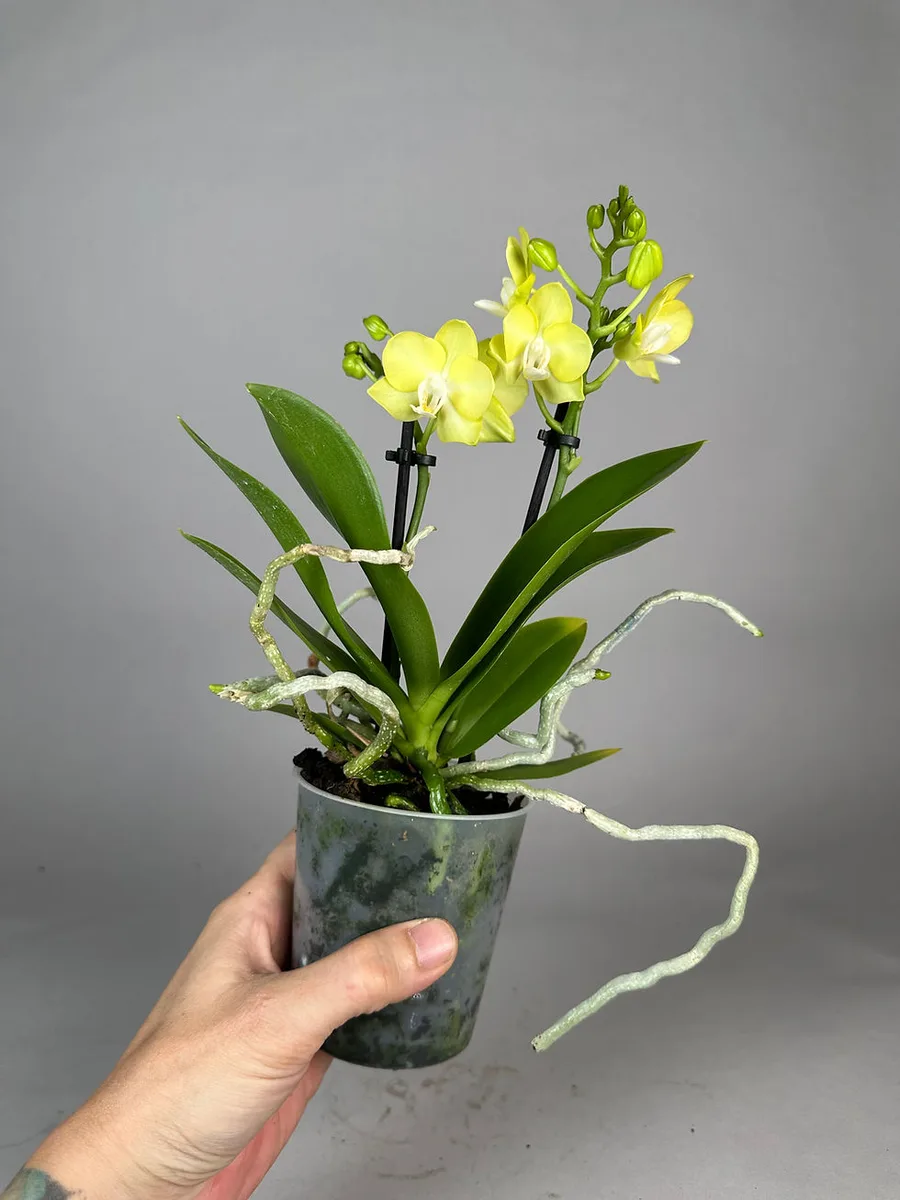
| Care difficulty | 3 / 5 |
|---|---|
| Watering schedule | Keep potting medium lightly moist, airy, and never stagnant |
| Sunlight requirements | Partial shade |
| Ideal temperature | Information to be completed |
| Soil type | Information to be completed |
| Soil pH | Information to be completed |
| Soil moisture | Well drained |
| Fertilizing | Half-strength orchid feed every two to three weeks in active growth |
| Toxicity | Information to be completed |
How to Water moth orchid Yellow Lightning gx?
Keep potting medium lightly moist, airy, and never stagnant
Learn more →What Are the Sunlight Requirements for moth orchid Yellow Lightning gx?
Partial shade
Learn more →What Are the Moisture Requirements for moth orchid Yellow Lightning gx?
Well drained
Learn more →How to Fertilize moth orchid Yellow Lightning gx?

Half-strength orchid feed every two to three weeks in active growth
Learn more →How to Prune moth orchid Yellow Lightning gx?

No pruning required; cut back flowered stems to a lower node to encourage further flowers
Learn more →How to Propagate moth orchid Yellow Lightning gx?

Small plantlets (keiki) may appear from the nodes on the flower stems. Detach plantlets when they have developed several good roots and pot them up in orchid compost. Water sparingly at first, but mist them daily
Learn more →How to Plant moth orchid Yellow Lightning gx?
Grow in open, bark-based, epiphytic orchid compost allowing the aerial roots to hang outside the container. Provide bright filtered light, good ventilation and, from spring to autumn, mist daily for high humidity. Water freely as compost dries out, allowing water to drain and apply an orchid fertiliser monthly. Provide a minimum day temperature of 17°C and night minimum of 15°C. See phalaenopsis cultivation
Learn more →Common Pests & Diseases

Diseases
Generally disease free
Pests
May be affected by aphids, glasshouse red spider mite and mealybugs
Explore the plant health library →