



Planting and Growing Pelargonium 'Best Red'

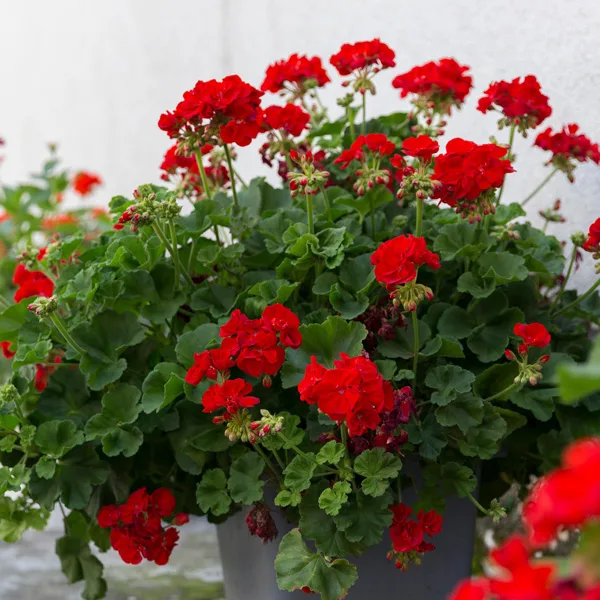
| Care difficulty | 3 / 5 |
|---|---|
| Watering schedule | Allow partial soil drying before watering, avoid cold wet compost around roots |
| Sunlight requirements | Full sun |
| Ideal temperature | Information to be completed |
| Soil type | Loam · Sand |
| Soil pH | Acid · Alkaline · Neutral |
| Soil moisture | Well drained |
| Fertilizing | High-potash pelargonium feed every two weeks through blooming warm season |
| Toxicity | Information to be completed |
How to Water Pelargonium 'Best Red'?
Allow partial soil drying before watering, avoid cold wet compost around roots
Learn more →What Are the Sunlight Requirements for Pelargonium 'Best Red'?
Full sun
Learn more →What Soil Is Best for Pelargonium 'Best Red'?
- Soil type
- Loam · Sand
- Soil pH
- Acid · Alkaline · Neutral
What Are the Moisture Requirements for Pelargonium 'Best Red'?
Well drained
Learn more →How to Fertilize Pelargonium 'Best Red'?

High-potash pelargonium feed every two weeks through blooming warm season
Learn more →How to Prune Pelargonium 'Best Red'?

Deadhead regularly to prolong flowering
Learn more →How to Propagate Pelargonium 'Best Red'?

Take softwood cuttings in summer and overwinter plants in frost free conditions or take softwood cuttings in spring
Learn more →How to Plant Pelargonium 'Best Red'?
Grow in fertile well-drained soil in full sun. Remove spent flowers. To overwinter, grow small plants in late summer from cuttings. See Pelargonium cultivation for further advice
Learn more →Common Pests & Diseases

Diseases
May be susceptible to foot and root rots and grey moulds in wet soils. A virus may occur where cultivars are maintained by cuttings
Pests
May be susceptible to vine weevil, leafhoppers, caterpillars, thrips, fungus gnats and aphids. Aphids are generally more problematic on over-wintered plants
Explore the plant health library →