



Planting and Growing Phlox paniculata Younique Bicolor ('Versbicolor')

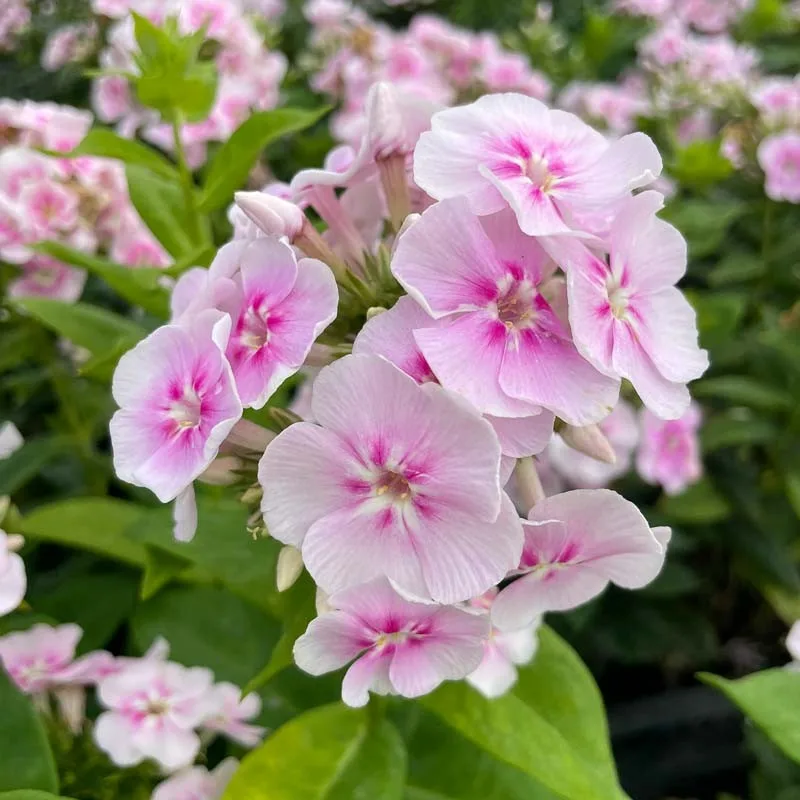
| Care difficulty | 3 / 5 |
|---|---|
| Watering schedule | Uniform mild soil dampness, avoid total dehydration of root ball mass |
| Sunlight requirements | Full sun · Partial shade |
| Ideal temperature | Information to be completed |
| Soil type | Chalk · Clay · Loam |
| Soil pH | Acid · Alkaline · Neutral |
| Soil moisture | Moist but well drained |
| Fertilizing | Weak garden phlox feed every three weeks spring until bloom fades fully |
| Toxicity | Information to be completed |
How to Water Phlox paniculata Younique Bicolor ('Versbicolor')?
Uniform mild soil dampness, avoid total dehydration of root ball mass
Learn more →What Are the Sunlight Requirements for Phlox paniculata Younique Bicolor ('Versbicolor')?
Full sun · Partial shade
Learn more →What Soil Is Best for Phlox paniculata Younique Bicolor ('Versbicolor')?
- Soil type
- Chalk · Clay · Loam
- Soil pH
- Acid · Alkaline · Neutral
What Are the Moisture Requirements for Phlox paniculata Younique Bicolor ('Versbicolor')?
Moist but well drained
Learn more →How to Fertilize Phlox paniculata Younique Bicolor ('Versbicolor')?

Weak garden phlox feed every three weeks spring until bloom fades fully
Learn more →How to Prune Phlox paniculata Younique Bicolor ('Versbicolor')?

Deadhead to prolong flowering then cut down to the base in late autumn
Learn more →How to Propagate Phlox paniculata Younique Bicolor ('Versbicolor')?

Propagate by division in autumn or spring, by basal softwood cuttings in spring or by root cuttings in early autumn or winter
Learn more →How to Plant Phlox paniculata Younique Bicolor ('Versbicolor')?
Thrives in any fertile, humus rich, moist soil in full sun or part shade. Plants will benefit from good air circulation and from watering in extended dry spells. Water at the base if necessary, rather than over the leaves
Learn more →Common Pests & Diseases

Diseases
May be susceptible to powdery mildews and leaf spot
Pests
May be susceptible to stem and bulb eelworm
Explore the plant health library →