



Planting and Growing furry feather calathea

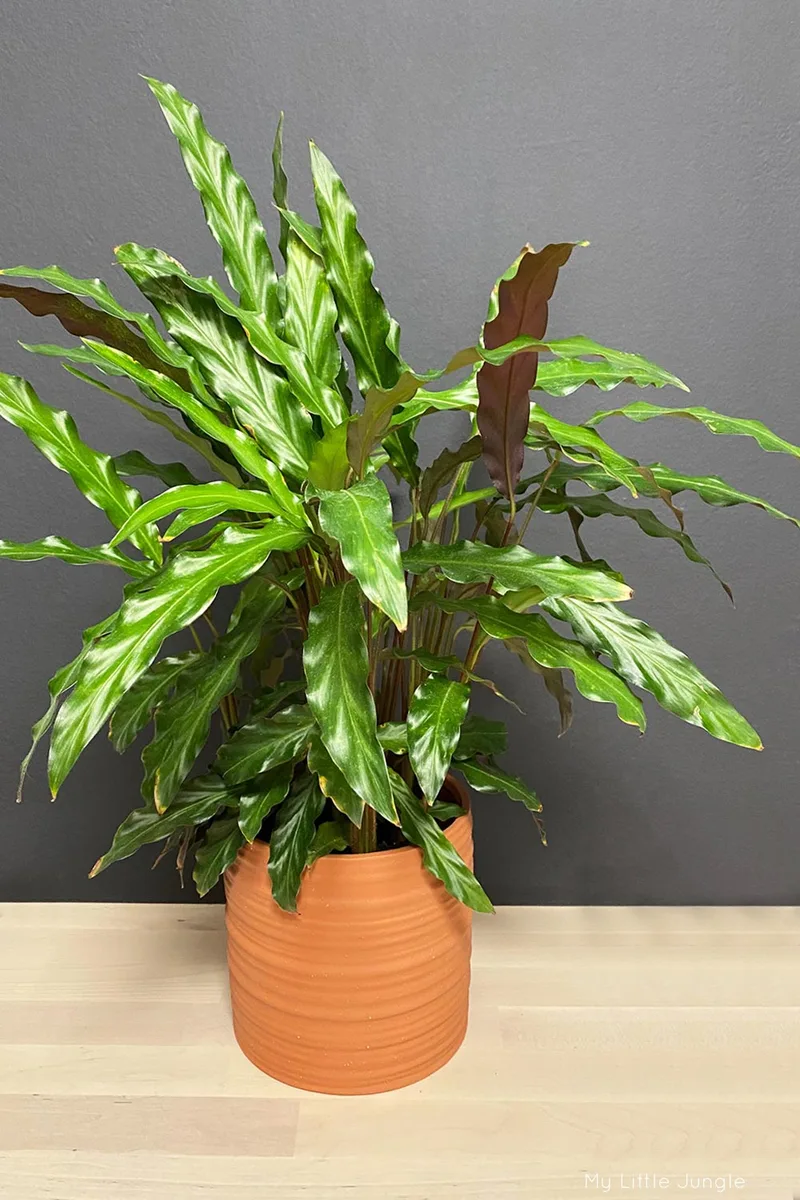
| Care difficulty | 4 / 5 |
|---|---|
| Watering schedule | Keep soil consistently moist, use distilled water |
| Sunlight requirements | Partial shade |
| Ideal temperature | 18 – 27 °C |
| Soil type | Loam · Sand |
| Soil pH | Acid · Alkaline · Neutral |
| Soil moisture | Moist but well drained |
| Fertilizing | Monthly during growing season with half-strength fertilizer |
| Toxicity | Information to be completed |
How to Water furry feather calathea?
Originating from the humid understorey of tropical forests, furry Feather Calathea thrives in moist conditions and exhibits a preference for consistent humidity. This species is moderately drought-tolerant but flourishes when its soil moisture is maintained evenly. Accordingly, it benefits from watering every week to mimic its natural habitat's water availability. As an indoor plant often favored for its lush foliage, furry Feather Calathea prospers when the surrounding air mimics the humidity of its native tropics, which can be achieved with regular misting or a pebble tray.
Learn more →What Are the Sunlight Requirements for furry feather calathea?
Furry Feather Calathea thrives under partial sun exposure, which translates to bright, indirect light for the majority of the day. This lighting condition is vital to sustain its lush foliage without causing the leaves to fade or burn. Furry Feather Calathea can tolerate full shade but with possibly reduced vigor and less vibrant leaf coloration. Placement near east or north-facing windows indoors would suit furry Feather Calathea, ensuring protection from harsh midday and afternoon sun. Outdoors, a spot with dappled light or partial shade is optimal. In suboptimal lighting, furry Feather Calathea may exhibit stunted growth, diminished leaf patterns, and an increased susceptibility to pests and diseases.
Learn more →What Is the Ideal Temperature Range for furry feather calathea?

Furry Feather Calathea can endure temperature variations from 5℃ (41℉) to 43℃ (109℉), showcasing notable resilience. However, it is sensitive to sudden fluctuations. In colder conditions, furry Feather Calathea may exhibit curling leaves and slowed growth, while overheating can cause browning edges and wilting. During cold spells, ensure it remains above 5℃ (41℉) by using insulating materials or relocating it indoors. In heat, maintain hydration and humidity to prevent stress. This tolerance makes furry Feather Calathea suitable for diverse environments, but proactive care against temperature extremes is critical for its health and longevity.
Learn more →What Soil Is Best for furry feather calathea?
Furry Feather Calathea thrives in well-aerated soil that allows for good water drainage to prevent root rot. A suitable soil mix is two parts peat or coco coir, one part perlite, and one part potting mix. In the absence of peat, use an equal mix of coco coir and potting mix with added perlite for aeration. Ensure pots have drainage holes and consider a layer of gravel at the bottom for extra drainage. Periodically amend with a balanced, water-soluble fertilizer following product instructions.
- Soil type
- Loam · Sand
- Soil pH
- Acid · Alkaline · Neutral
What Are the Moisture Requirements for furry feather calathea?
Moist but well drained
Learn more →How to Fertilize furry feather calathea?

For optimal health, furry Feather Calathea thrives with regular feeding of high nitrogen fertilizer during its growing season, spring to summer. Apply a diluted solution every 4 weeks, reducing to every 6 weeks in fall and ceasing in winter to avoid over-fertilization. This regimen encourages lush foliage, supporting vigorous growth. Use quarter-strength, ensuring even distribution without concentrating near roots to prevent burn. Adjust frequency based on growth response, and always apply to moist soil. Over-fertilizing can lead to salt buildup, manifesting as leaf burn, so it's vital to monitor furry Feather Calathea's reaction to feeding and adapt as necessary for its delicate needs.
Learn more →How to Prune furry feather calathea?

Known for its lush, velvety leaves, furry Feather Calathea benefits from occasional pruning to remove dead or yellowing foliage, ensuring healthy growth. The best time to prune is early spring, at the start of its active growth phase. Use clean, sharp scissors to cut near the base without damaging healthy stems. Regular pruning not only enhances the plant's appearance but also prevents pest issues and promotes air circulation, contributing to its overall vigor. Consistent care will result in a more vibrant and fuller plant.
Learn more →How to Propagate furry feather calathea?

Furry Feather Calathea is best propagated through division, ideally during Spring or Autumn. It has a moderate level of propagation difficulty. Successful propagation is indicated by new growth sprouting from the divided sections. Ensure proper root separation to improve success rates.
Learn more →How to Transplant furry feather calathea?
The best time to transplant furry Feather Calathea is during the warm, sunny days of early to mid-summer, for optimal root development. Choose a location with well-drained soil and partial shade. Remember to water furry Feather Calathea consistently after transplanting to help it settle in its new home.
Learn more →How to Care for furry feather calathea in Winter?

Furry Feather Calathea hails from subtropical Brazil, naturally adapting to a mild, non-frosty climate. It retreats into a dormant phase during winter, reducing growth but sustaining life. Attend to furry Feather Calathea in winter by setting it in a well-lit, frost-free space with stable humidity. Regular watering should be decreased, yet it's key to prevent the soil drying completely. Nurture furry Feather Calathea wisely and watch it flourish once again as spring smiles.
Learn more →How to Plant furry feather calathea?
Indoors-potted: Keep your furry Feather Calathea happy indoors with high humidity and steady temperatures; it loves a consistent environment to show off its velvety leaves. Outdoors-potted: Outside in a pot, furry Feather Calathea thrives in sheltered spots with ambient moisture, avoiding the stress of direct elements that can mar its unique foliage. Outdoors-in the ground: Furry Feather Calathea, when planted in the ground outdoors, may not endure harsh winters. It prefers a warm, stable climate akin to its native habitat for optimal growth.
Learn more →How to Repot furry feather calathea?
Repot furry Feather Calathea every 3-4 years in spring, when growth is vibrant. Select a container slightly larger than its current one to accommodate its moderate size. Furry Feather Calathea's unique fuzzy leaves prefer well-draining pots. Post-repotting, maintain consistent moisture without waterlogging and place in bright, indirect light to support its delicate foliage. A friendly reminder: patience is key with this rare beauty!
Learn more →How to Harvest furry feather calathea?

Information to be completed
Learn more →Common Pests & Diseases

Diseases
Generally disease-free
Pests
May be susceptible to glasshouse whitefly and glasshouse red spider mite
Explore the plant health library →The Toxicity of furry feather calathea
Information to be completed