



Planting and Growing hyacinth 'Showmaster'

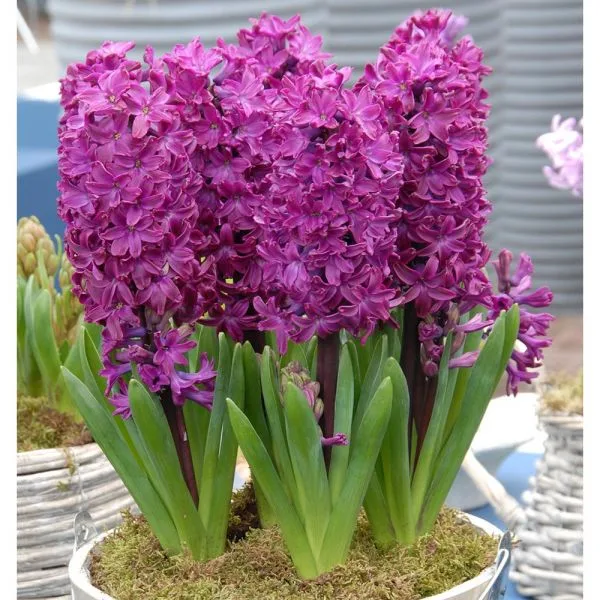
| Care difficulty | 3 / 5 |
|---|---|
| Watering schedule | Keep substrate evenly moist during foliage growth, dry after blooming ends |
| Sunlight requirements | Full sun · Partial shade |
| Ideal temperature | Information to be completed |
| Soil type | Chalk · Clay · Loam · Sand |
| Soil pH | Acid · Alkaline · Neutral |
| Soil moisture | Moist but well drained · Well drained |
| Fertilizing | Weak bulb nutrient feed biweekly prior to flower bud visible emergence |
| Toxicity | Skin irritant. Wear gloves and other protective equipment when handling |
How to Water hyacinth 'Showmaster'?
Keep substrate evenly moist during foliage growth, dry after blooming ends
Learn more →What Are the Sunlight Requirements for hyacinth 'Showmaster'?
Full sun · Partial shade
Learn more →What Soil Is Best for hyacinth 'Showmaster'?
- Soil type
- Chalk · Clay · Loam · Sand
- Soil pH
- Acid · Alkaline · Neutral
What Are the Moisture Requirements for hyacinth 'Showmaster'?
Moist but well drained · Well drained
Learn more →How to Fertilize hyacinth 'Showmaster'?

Weak bulb nutrient feed biweekly prior to flower bud visible emergence
Learn more →How to Prune hyacinth 'Showmaster'?

No pruning required
Learn more →How to Propagate hyacinth 'Showmaster'?

Propagate by removing offsets when dormant in summer
Learn more →How to Plant hyacinth 'Showmaster'?
Plant 10cm deep in autumn in any moderately fertile, humus-rich, well-drained soil. Will not flower in full shade. Protect container grown bulbs from excessive winter wet. Bulbs for indoor displays need to be specially prepared; plant labels will normally indicate whether the bulb is suitable for indoor use. See hyacinth cultivation
Learn more →Common Pests & Diseases

Diseases
Generally disease-free
Pests
May be susceptible to slugs and snails
Explore the plant health library →The Toxicity of hyacinth 'Showmaster'
Skin irritant. Wear gloves and other protective equipment when handling