



Planting and Growing purple coneflower

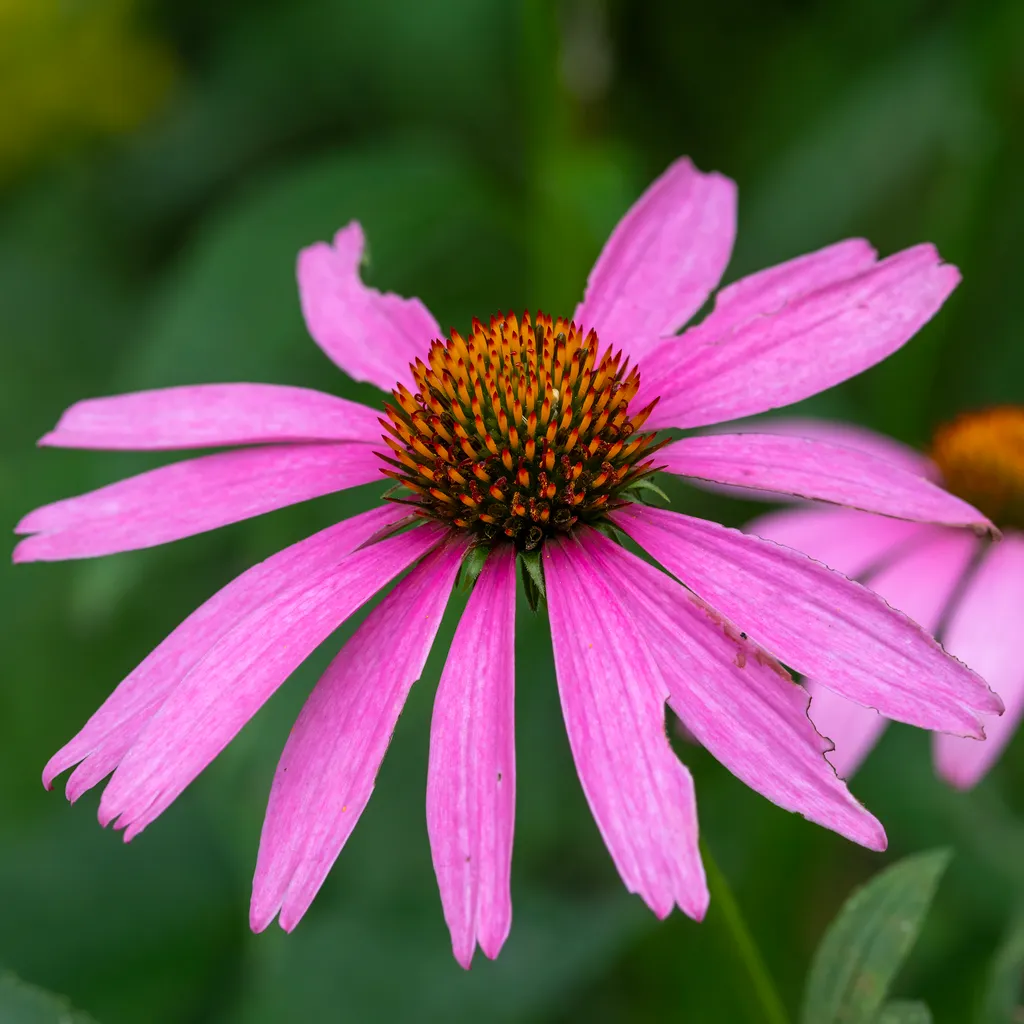
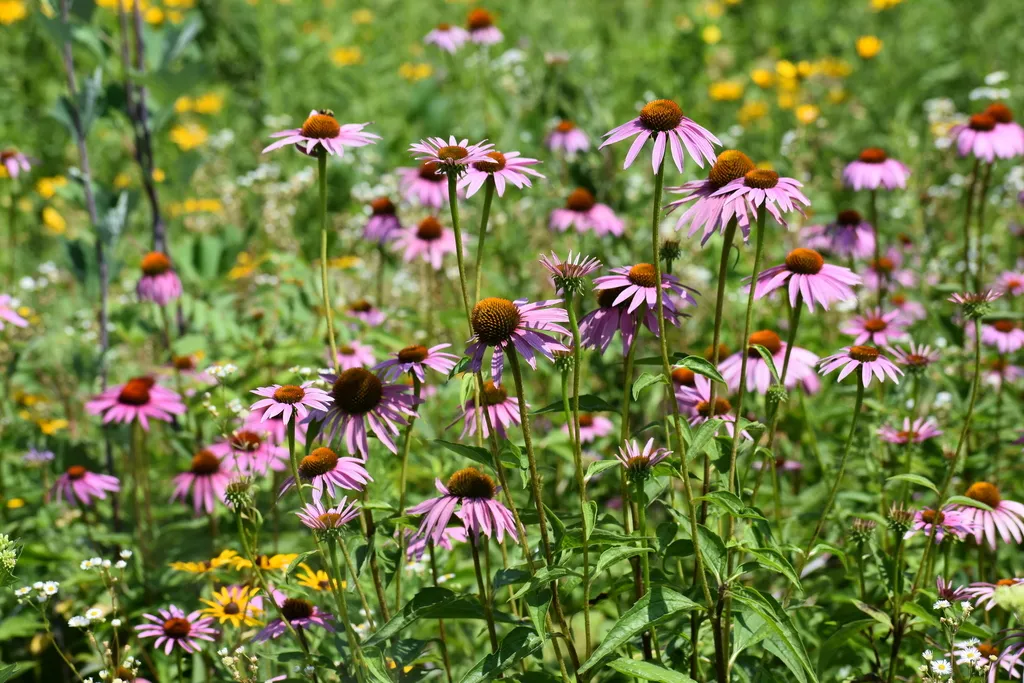
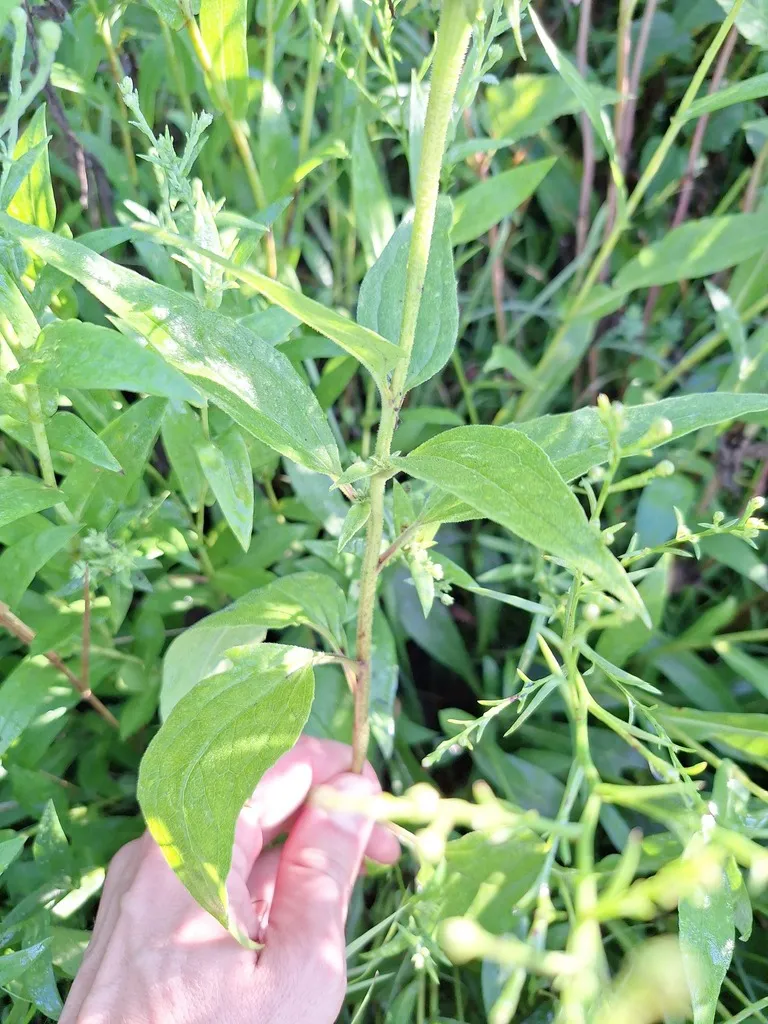
| Care difficulty | 1 / 5 |
|---|---|
| Watering schedule | Moderate regular watering, partial soil drying allowed between irrigation |
| Sunlight requirements | Full sun · Partial shade |
| Ideal temperature | 15 – 25 °C |
| Soil type | Chalk · Loam · Sand |
| Soil pH | Acid · Alkaline · Neutral |
| Soil moisture | Well drained |
| Fertilizing | Diluted coneflower feed monthly spring until late autumn season |
| Toxicity | Information to be completed |
How to Water purple coneflower?
Originating from the prairies of North America, purple coneflower is well-adapted to environments with occasional droughts, showing a preference for moderate moisture levels. This species thrives with a balance between hydration and dryness, reflecting its prairie heritage. It requires watering every week to maintain this equilibrium. As an herbaceous perennial that's often grown outdoors, purple coneflower enters dormancy in colder months, reducing its water needs significantly as it prepares for winter.
Learn more →What Are the Sunlight Requirements for purple coneflower?
Purple coneflower thrives best in full sunlight conditions, requiring at least 6 hours of direct sun daily to optimize growth, health, and flowering capabilities. It flourishes when given ample light, which significantly enhances its robustness and the vibrancy of its blooms. While purple coneflower tolerates partial sunlight, lesser light exposure may lead to weaker stems and reduced flowering. Typically grown outdoors, the optimal planting location is in open areas where light access is unimpeded. Adaptively, purple coneflower can adjust leaf orientation to maximize light absorption, maintaining its health and vivid coloration under varying light conditions.
Learn more →What Is the Ideal Temperature Range for purple coneflower?

Purple coneflower is known for its resilience to temperature fluctuations. It tolerates cold down to 0℃ (32℉) and heat up to 38℃ (100℉). This wide range makes it adaptable to various climates. However, prolonged exposure to temperatures below its cold tolerance can cause wilting or blackened foliage, while excessive heat may lead to scorched leaves. To care for purple coneflower, consider mulching and using frost blankets during cold snaps, and ensure adequate watering and partial shade during extreme heat. These measures help maintain its health and vitality in diverse environmental conditions.
Learn more →What Soil Is Best for purple coneflower?
Purple coneflower planted in gardens prefer fertile, well-drained, neutral, sandy soil with a suitable pH value of 6.5-7.0. With fewer soil requirements than other plants, they can thrive in a variety of soil types, including rock and clay soil. However, purple coneflower do not like humid or silty soil and grow best on fertile soil rich in humus.
- Soil type
- Chalk · Loam · Sand
- Soil pH
- Acid · Alkaline · Neutral
What Are the Moisture Requirements for purple coneflower?
Well drained
Learn more →How to Fertilize purple coneflower?

For optimal growth, purple coneflower requires fertilization with balanced nutrition fertilizers in spring and high phosphorus formulas before flowering season to boost blooms. Apply quarterly at label rates, reducing in late summer to prepare for dormancy. Avoid over-fertilization; use compost for a gentle, organic option. Tailor application frequency to purple coneflower's growth stage, with younger plants benefiting from more frequent feeding. Ensure even distribution to prevent root burn, and water purple coneflower post-application to aid nutrient absorption. This routine nurtures purple coneflower's health and vigor, enhancing its vibrant display.
Learn more →How to Prune purple coneflower?

Purple coneflower, known for its striking, daisy-like blooms and medicinal properties, benefits from periodic pruning. Optimal pruning times are early to late spring. Cut back dead stems and foliage to promote new growth, and remove spent flowers to encourage continuous blooming. Deadheading prevents self-seeding, maintaining plant vigor. Pruning also helps control the plant size and shape, ensuring healthier growth. Use clean, sharp tools to prevent disease. Refer to trusted horticultural guides for detailed techniques.
Learn more →How to Propagate purple coneflower?

Purple coneflower is a hardy perennial that excels in a variety of garden settings. Its resilience is matched by the ease with which it can be propagated through division. To propagate, carefully separate the plant's root ball into smaller clumps, ensuring each has a healthy portion of roots and shoots. Replant these immediately at the same soil depth as the parent for optimal growth. This method yields mature specimens faster than seed propagation and maintains the genetic characteristics of the original.
Learn more →How to Transplant purple coneflower?
The perfect time to transplant purple coneflower is during the delightful mid-spring to early summer months. This ensures it thrives in its new location! Choose a sunny, well-draining area for optimal growth. Remember, gentle handling of the roots promotes a successful transplant!
Learn more →How to Care for purple coneflower in Winter?

Information to be completed
Learn more →How to Plant purple coneflower?
Indoors-potted: Cultivating purple coneflower indoors requires replicating their love for the open skies; ensure your potting spot mimics their natural vigor for space. Outdoors-potted: While potted outdoors, purple coneflower thrive on personal space; be mindful of overcrowding to let its roots and spirit spread. Outdoors-in the ground: Purple coneflower sown in garden soil relish freedom, but watch out for their assertive growth that may require occasional reigning in.
Learn more →How to Repot purple coneflower?
Rejuvenate your purple coneflower by repotting every 2-3 years in spring, promoting robust growth. As a medium-sized, upright perennial, purple coneflower benefits from a wide, stable pot. Opt for one size larger to accommodate its deep roots. Post-repotting, ensure it receives well-draining soil and moderate watering. Fuss-free by nature, purple coneflower will thrive with regular care and the occasional trim.
Learn more →How to Harvest purple coneflower?

Purple coneflower that grow from seeds usually bloom in the second year. When the buds begin to bloom, they can be harvested. The stem should be cut with sharp scissors from the bottom set of leaves. Remove the leaves from the stem after harvesting and remove the extra buds behind the flower heads to avoid excessive consumption of nutrients and water.
Learn more →Common Pests & Diseases

Diseases
Generally disease free
Pests
Generally pest-free
Explore the plant health library →Troubleshooting
purple coneflower: Yellowing, wilting or dieback outdoors
Site conditions and seasonal aging are often as important as pests in outdoor plants. Compare affected and healthy growth.
| What you notice | Possible explanation | What to check next |
|---|---|---|
| Established plants flag during a dry, hot spell and the soil is dry at root depth | Insufficient water reaching roots | Check moisture where roots grow, not just the surface |
| A few shoots die while nearby shoots remain green; the soil stays wet | Drainage problems, local injury, or a pest or disease are alternatives | Inspect shoot bases, drainage, bark damage and visible pests |
- Adjust irrigation to rainfall, soil depth and the plant's establishment; keep water off foliage when feasible.
- Improve drainage and air movement without damaging established roots.
- Prune fully dead or clearly damaged material with clean tools; recheck new growth and nearby plants.
Seasonal leaf loss in deciduous plants is normal. Rapidly expanding dieback or a pattern across nearby plants merits a local extension diagnosis.
purple coneflower: Few flowers or buds fail to open
Watch the pattern, not just one leaf or photograph: coneflower blooms fade and seed heads remain. Compare new and old growth before taking action.
| What you notice | Possible explanation | What to check next |
|---|---|---|
| Long shoots or leaves with few flower buds | Insufficient suitable light, wrong seasonal rest or pruning time | Compare seasonal light and any pruning with the plant’s flowering habit |
| Fine webbing, sticky residue, insects or new spreading lesions accompany the symptom | A pest or disease could coexist with environmental stress | Inspect leaf undersides and nearby plants with a hand lens |
- Move gradually to its preferred light and avoid high-nitrogen feeding as a shortcut
- Inspect affected and unaffected tissues side by side, and isolate visible pests if found.
- Reassess new growth after correcting conditions; for rapid spread or widespread collapse, get a local plant diagnostic opinion.
The pattern can have several causes; neither a yellow leaf nor a single picture identifies a pathogen. After the growing season, the crown can remain alive even as stems die back.
The Toxicity of purple coneflower
Information to be completed