



Planting and Growing desert rose

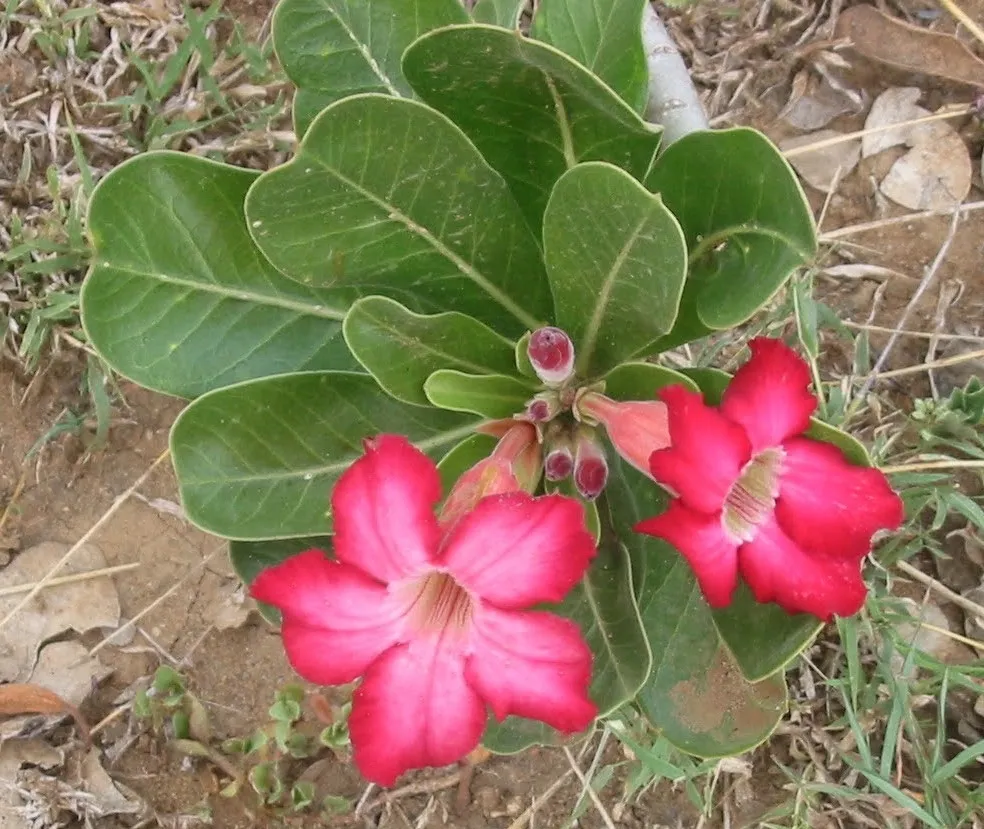
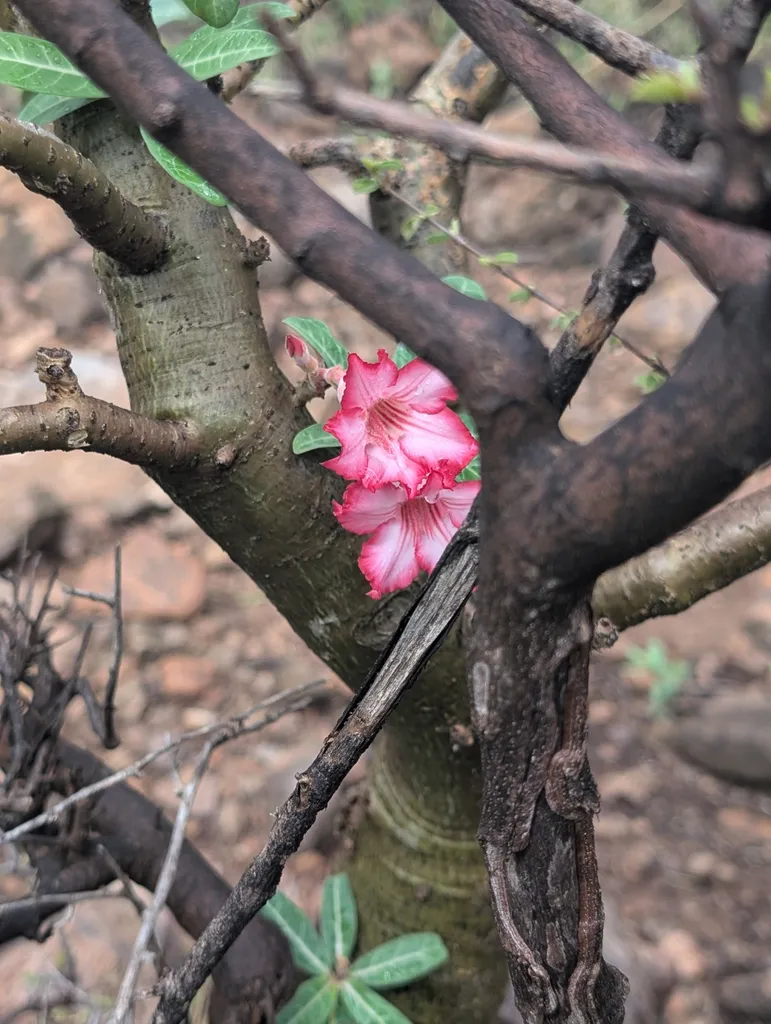
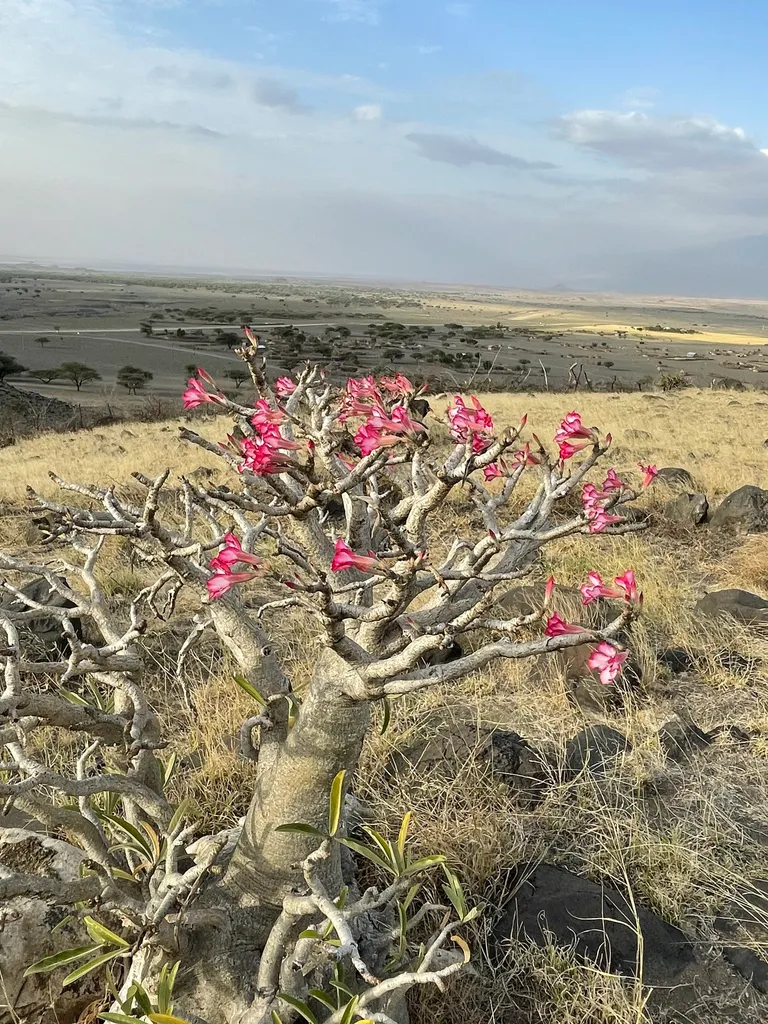
| Care difficulty | 3 / 5 |
|---|---|
| Watering schedule | Water deeply but allow soil to dry completely between waterings |
| Sunlight requirements | Partial shade |
| Ideal temperature | 20 – 30 °C |
| Soil type | Loam · Sand |
| Soil pH | Alkaline · Neutral |
| Soil moisture | Well drained |
| Fertilizing | Every 2 weeks during growing season with high-phosphorus fertilizer |
| Toxicity | Harmful if eaten. Wear gloves and other protective equipment when handling |
How to Water desert rose?
Adapted to arid environments, desert rose thrives with minimal moisture, mirroring its origins in dry, subtropical regions. This species exhibits a strong drought tolerance and prefers a drier climate over high humidity. Its watering needs are modest, requiring hydration once every three weeks to maintain its health. As an outdoor plant often grown for its striking appearance and resilience, desert rose is particularly suited to warm climates where it can receive ample sunlight while relying on infrequent rainfall.
Learn more →What Are the Sunlight Requirements for desert rose?
Desert rose thrives best in conditions of full sunlight, where it can bask in at least six hours of direct rays daily. This ensures vigorous growth and promotes abundant flowering. While tolerating partial sun, its bloom cycle and overall vitality can diminish if deprived of sufficient light. Desert rose possesses adaptive strategies like thick leaves to conserve water, allowing it to endure intense sun without harm. Indoors, a south-facing window suits it well. Outdoors, a spot without shade ensures it meets its sunlight requirements for optimal health.
Learn more →What Is the Ideal Temperature Range for desert rose?

Desert rose exhibits remarkable resilience to heat, tolerating temperatures up to 43℃ (109℉). However, it is sensitive to cold, enduring only down to 5℃ (41℉). This temperature tolerance impacts its care requirements significantly. During hot spells, ensure adequate hydration and protection from extreme sun exposure. Conversely, in cooler weather, move desert rose indoors or provide a heat source. Under too cold conditions, desert rose may display leaf drop and stem shrinkage, while overheating could lead to scorched leaves and stunted growth. Mitigating overcooling involves using insulating materials or relocating the plant. For overheating, provide shade and regular watering to keep it healthy.
Learn more →What Soil Is Best for desert rose?
Desert rose thrives in well-draining soil. For a suitable mix, blend succulent & cactus soil with perlite at a 3:1 ratio to enhance drainage. Alternatively, use coarse sand in place of perlite. Ensure pots have ample drainage holes. Incorporate slow-release fertilizer at the beginning of the growing season for optimal growth. Regular monitoring and adjustments in watering are recommended to avoid water-logging.
- Soil type
- Loam · Sand
- Soil pH
- Alkaline · Neutral
What Are the Moisture Requirements for desert rose?
Well drained
Learn more →How to Fertilize desert rose?

For desert rose, a balanced succulent/cacti fertilizer enhances growth and bloom. During active growth in spring and summer, apply monthly, reducing to quarterly in fall and halting in winter. Use at half-strength to avoid root burn. Note variances in need with seasonal changes; less is more for desert rose's well-being.
Learn more →How to Prune desert rose?

Desert rose will bloom on new growth, so pruning during the spring and summer will help to promote this. However, if any branches have begun to fall during the fall or winter, you may need to prune your plant outside of the growing period. Either way, water your plant well a few days prior to pruning - this will prevent it from becoming stressed after being pruned. Don't forget to also wear gloves - the sap from this plant is toxic. Desert rose can be pruned simply to improve its shape or by using wires to train the growth of the plant towards a specific shape. The latter is a fine art in itself, requiring skill and expertise. While the shape of the plant is up to you, it's a good idea to remove thin branches that are crossing over each other, as well as weak or dead branches. The final length of the branches should also be staggered to prevent the plant from becoming ball-shaped - this doesn't tend to suit the desert rose.
Learn more →How to Propagate desert rose?

Indigenous to arid regions of Africa, desert rose is a succulent with vibrant blooms and a distinctive, bulbous caudex. To propagate the plant, employ stem cuttings, selecting healthy, non-flowering shoots for best results. Cuttings should be dried for a few days to callus, which reduces the risk of rot when planted. Rooting hormone can encourage growth, but isn’t mandatory. Use a well-draining soil medium, keeping it lightly moist until roots develop, ensuring successful propagation of desert rose.
Learn more →How to Transplant desert rose?
The prime time to transplant desert rose is during the balmy days of late spring to early summer. Choose a sunny, well-drained location with proper air circulation for desert rose. Gently ease the plant out of its pot, ensuring minimal root disturbance for a seamless transition. Happy transplanting!
Learn more →How to Care for desert rose in Winter?

Desert rose hails from hot, arid regions of Africa and Arabia, deftly withstands dry, winter periods by entering a dormancy phase. For over-winter care, gardeners should mimic its native conditions: keeping desert rose in a low-moisture environment, with limited watering and a steady temperature above 10°C. Shielding from frost and cold drafts is also crucial to ensure desert rose thrives after winter.
Learn more →How to Plant desert rose?
Indoors-potted: In the cozy indoors, desert rose cherishes stability; avoid relocating it often to keep its vibrant blooms thriving. Outdoors-potted: Desert rose, when outdoor in pots, enjoys a breezy spot. Be mindful of heavy rains which may challenge its drought-loving nature. Outdoors-in the ground: Planted in the ground, desert rose requires minimal interference but ensure excellent drainage to prevent root rot.
Learn more →How to Repot desert rose?
The stout desert rose should be repotted every 2 years to accommodate its growth. Best done in spring, repotting encourages health and bloom. Opt for a slightly larger pot to sustain its sizable caudex and tuberous roots. Afterwards, provide bright light and avoid overwatering to let desert rose thrive. Succulent soil mix is ideal to ensure drainage and prevent root rot.
Learn more →Common Pests & Diseases

Diseases
Generally disease-free
Pests
May be susceptible to aphids
Explore the plant health library →Troubleshooting
Soft, Mushy Caudex (Swollen Trunk) and Yellowing, Dropping Leaves
Adenium obesum (desert rose) stores water in its thick, bottle-shaped caudex and rots rapidly when overwatered, planted in moisture-retentive soil, or kept cool and damp during winter dormancy.
| What you notice | Possible explanation | What to check next |
|---|---|---|
| Lower leaves yellow and drop rapidly while the swollen caudex feels soft, spongy, or indented when gently pressed | Caudex or root rot from overwatering, heavy soil, or cool wet winter conditions | Stop watering immediately, unpot the plant, and inspect the roots and caudex base for brown, mushy decay. |
| Leaves yellow and drop in autumn or winter while the caudex remains rock-hard and firm | Normal seasonal dormancy triggered by cooler temperatures and shorter days | Check caudex firmness; if firm, withhold water almost completely until warm spring growth resumes. |
- Grow in an ultra-fast-draining cactus/succulent or bonsai mineral mix (such as pumice, perlite, coarse grit, and minimal bark/peat) in a shallow, well-drained pot.
- Water thoroughly only after the gritty mix has dried out completely during warm spring and summer growth, and keep nearly dry in winter dormancy.
- If soft rot is found on roots or the lower caudex, cut away all dark, mushy tissue with a sterile blade until only clean white/green flesh remains, let the cut callous for 5 to 7 days in a dry shaded spot, and repot into dry gritty mix.
- Wear gloves when pruning or cutting, as Adenium sap contains toxic cardiac glycosides and irritates skin and eyes.
All parts of Adenium obesum are highly toxic to cats, dogs, and humans if ingested.
Failure to Bloom, Leggy Stems, or Sap-Sucking Pests
Desert roses require intense direct sunlight and warm temperatures to bloom, and frequently attract spider mites, mealybugs, or aphids indoors.
| What you notice | Possible explanation | What to check next |
|---|---|---|
| Stems stretch tall and thin with few or no trumpet-shaped flowers | Insufficient direct sunlight or cool temperatures | Move the plant to a bright south- or west-facing window or sunny outdoor spot receiving at least 6 hours of direct sun. |
| Sticky residue, white cottony tufts, or fine webbing appear on shoot tips and leaf undersides | Mealybugs, aphids, or spider mites | Isolate the plant and inspect shoot tips and leaf undersides closely before treating. |
- Provide at least 6 hours of direct sunlight daily and warm temperatures ideally between 20°C and 32°C (68°F to 90°F).
- Prune leggy branches back lightly in spring (wearing gloves) to encourage a compact, multi-branched canopy that produces more flowers.
- Feed monthly during active warm growth with a balanced or low-nitrogen bloom fertilizer diluted to half strength, and pause feeding in autumn and winter.
Seed-grown Adenium plants develop the widest natural caudex, whereas rooted stem cuttings bloom well but rarely form a large swollen base.
The Toxicity of desert rose
Harmful if eaten. Wear gloves and other protective equipment when handling