



Planting and Growing Allium callimischon subsp. haemostictum

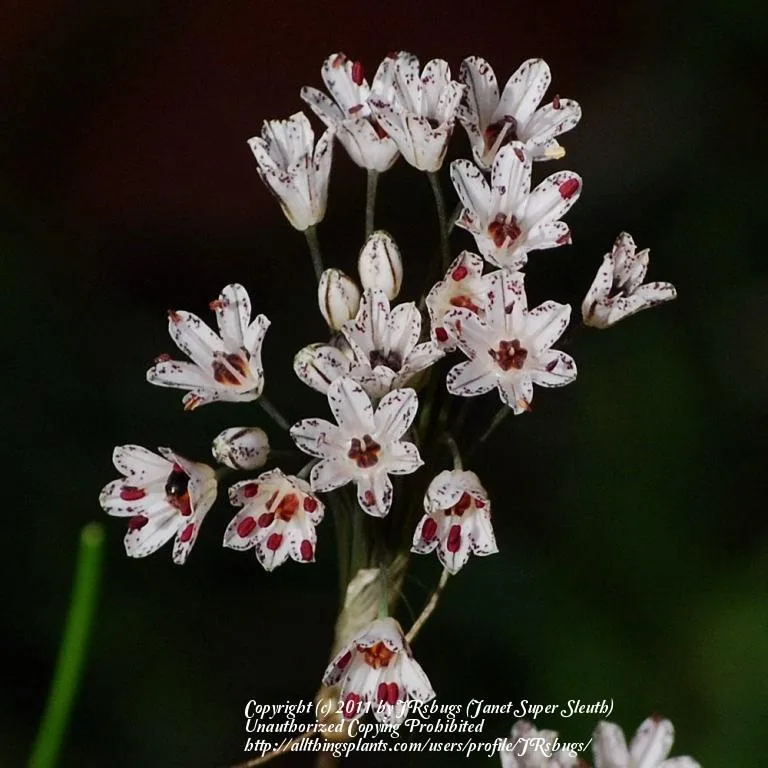
| Care difficulty | 2 / 5 |
|---|---|
| Watering schedule | Regular watering spring growth, reduce irrigation autumn leaf dieback |
| Sunlight requirements | Full sun |
| Ideal temperature | Information to be completed |
| Soil type | Chalk · Loam · Sand |
| Soil pH | Acid · Alkaline · Neutral |
| Soil moisture | Moist but well drained · Well drained |
| Fertilizing | Weak bulb liquid feed applied once before spring leaf emergence phase |
| Toxicity | Ornamental bulbs - not to be eaten |
How to Water Allium callimischon subsp. haemostictum?
Regular watering spring growth, reduce irrigation autumn leaf dieback
Learn more →What Are the Sunlight Requirements for Allium callimischon subsp. haemostictum?
Full sun
Learn more →What Soil Is Best for Allium callimischon subsp. haemostictum?
- Soil type
- Chalk · Loam · Sand
- Soil pH
- Acid · Alkaline · Neutral
What Are the Moisture Requirements for Allium callimischon subsp. haemostictum?
Moist but well drained · Well drained
Learn more →How to Fertilize Allium callimischon subsp. haemostictum?

Weak bulb liquid feed applied once before spring leaf emergence phase
Learn more →How to Prune Allium callimischon subsp. haemostictum?

No pruning required, other than to remove old flowered stems and foliage
Learn more →How to Propagate Allium callimischon subsp. haemostictum?

Propagate by offsets which can be carefully detached by lifting the bulb after flowering has finished. See bulb propagation
Learn more →How to Plant Allium callimischon subsp. haemostictum?
Grow in full sun and fertile well-drained soil. It is best to grow in containers where garden soil is heavy clay and prone to saturation over winter. See allium cultivation
Learn more →Common Pests & Diseases

Diseases
May be susceptible to onion white rot, and onion downy mildew
Pests
May be susceptible to allium leaf miner and onion fly
Explore the plant health library →The Toxicity of Allium callimischon subsp. haemostictum
Ornamental bulbs - not to be eaten