



Planting and Growing Cucumis sativus 'Party Time'

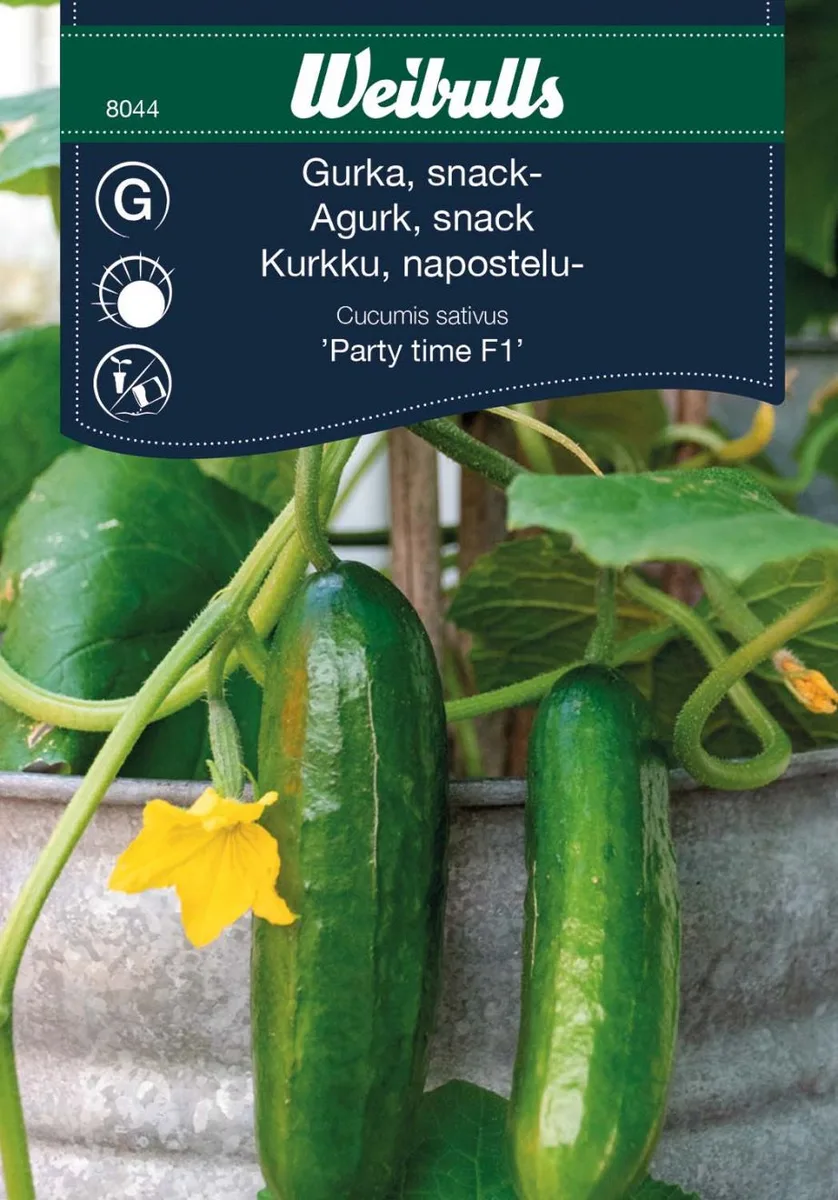
| Care difficulty | 2 / 5 |
|---|---|
| Watering schedule | Moderate regular watering, avoid prolonged drought and stagnant waterlogging |
| Sunlight requirements | Full sun |
| Ideal temperature | Information to be completed |
| Soil type | Clay · Loam · Sand |
| Soil pH | Acid · Alkaline · Neutral |
| Soil moisture | Moist but well drained |
| Fertilizing | Balanced perennial feed every four weeks spring through summer growth |
| Toxicity | Information to be completed |
How to Water Cucumis sativus 'Party Time'?
Moderate regular watering, avoid prolonged drought and stagnant waterlogging
Learn more →What Are the Sunlight Requirements for Cucumis sativus 'Party Time'?
Full sun
Learn more →What Soil Is Best for Cucumis sativus 'Party Time'?
- Soil type
- Clay · Loam · Sand
- Soil pH
- Acid · Alkaline · Neutral
What Are the Moisture Requirements for Cucumis sativus 'Party Time'?
Moist but well drained
Learn more →How to Fertilize Cucumis sativus 'Party Time'?

Balanced perennial feed every four weeks spring through summer growth
Learn more →How to Prune Cucumis sativus 'Party Time'?

Under glass, remove the tip of the plant once it reaches the top of the support. Shorten sideshoots to two leaves beyond any developing fruit, or to 60cm if they have no fruit. If left to trail outdoors shorten the main shoot, and sideshoots with no fruit, after seven leaves
Learn more →How to Propagate Cucumis sativus 'Party Time'?

Propagate by seed. See sowing vegetable seeds
Learn more →How to Plant Cucumis sativus 'Party Time'?
Start from seed or buy as small plants and grow in a heated greenhouse, or on a windowsill. Can be moved to an unheated greenhouse, or outdoors, once all risk of frost has passed. Water regularly, feed plants in containers every 10-14 days, and provide support. See cucumber cultivation for further advice
Learn more →Common Pests & Diseases

Diseases
Has some resistance, but may be susceptible cucumber mosaic virus and powdery mildews
Pests
May be susceptible to glasshouse whitefly and glasshouse red spider mite under glass. Outdoors may be susceptible to slugs and snails
Explore the plant health library →