



Planting and Growing sowbread

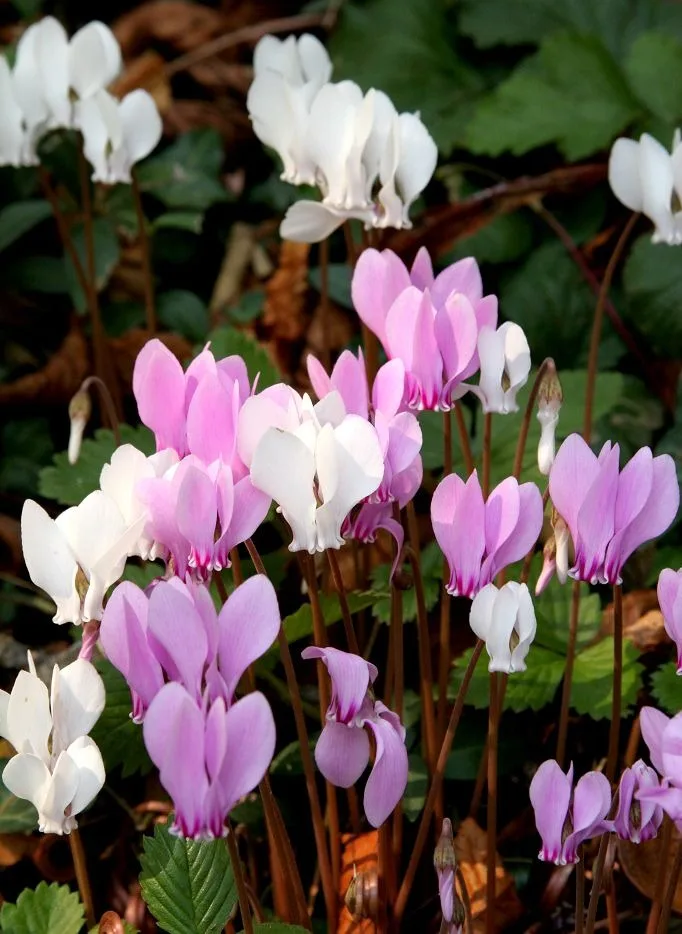
| Care difficulty | 2 / 5 |
|---|---|
| Watering schedule | Moderate regular watering, allowing brief slight drying between soakings |
| Sunlight requirements | Partial shade |
| Ideal temperature | Information to be completed |
| Soil type | Chalk · Clay · Loam · Sand |
| Soil pH | Acid · Alkaline · Neutral |
| Soil moisture | Well drained |
| Fertilizing | Balanced perennial feed every four weeks from spring through summer |
| Toxicity | Ornamental bulbs, not to be eaten. Wear gloves and other protective equipment when handling |
How to Water sowbread?
Moderate regular watering, allowing brief slight drying between soakings
Learn more →What Are the Sunlight Requirements for sowbread?
Partial shade
Learn more →What Soil Is Best for sowbread?
- Soil type
- Chalk · Clay · Loam · Sand
- Soil pH
- Acid · Alkaline · Neutral
What Are the Moisture Requirements for sowbread?
Well drained
Learn more →How to Fertilize sowbread?

Balanced perennial feed every four weeks from spring through summer
Learn more →How to Prune sowbread?

No pruning required
Learn more →How to Propagate sowbread?

Propagate by seed, sown in darkness as soon as ripe. Can be beneficial to soak seed for 10 hours prior to sowing
Learn more →How to Plant sowbread?
Grow in a cool glasshouse or bulb-frame in a mix of equal parts loam, leaf mould, peat (or peat substitute) and sharp sand. Plant 2 to 2.5cm deep or with the tops of the tubers just at the soil surface. Site in bright filtered light and provide moderate humidity. Water moderately when in growth but reduce humidity and water as the leaves fade. Keep completely dry when dormant. Apply a low-nitrogen liquid fertiliser every two months when in full leaf. See hardy cyclamen cultivation for further advice
Learn more →Common Pests & Diseases

Diseases
Generally disease free outdoors
Pests
Mice and squirrels may be a problem
Explore the plant health library →The Toxicity of sowbread
Ornamental bulbs, not to be eaten. Wear gloves and other protective equipment when handling