



Planting and Growing early Dutch honeysuckle

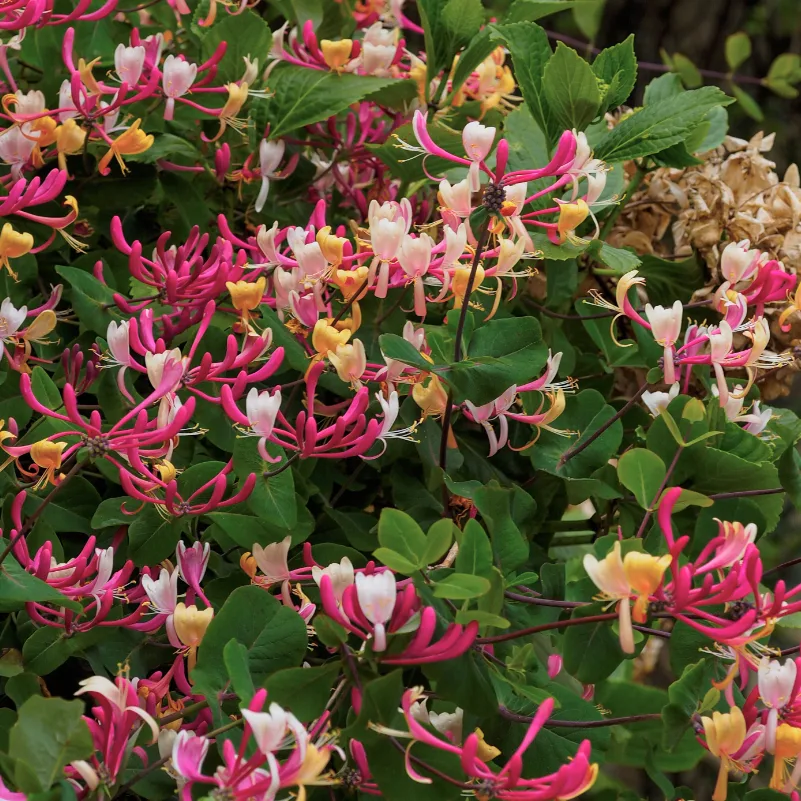
| Care difficulty | 3 / 5 |
|---|---|
| Watering schedule | Moderate regular watering, allowing brief slight drying between soakings |
| Sunlight requirements | Full sun · Partial shade |
| Ideal temperature | Information to be completed |
| Soil type | Chalk · Clay · Loam · Sand |
| Soil pH | Acid · Alkaline · Neutral |
| Soil moisture | Moist but well drained |
| Fertilizing | Balanced perennial feed every four weeks from spring through summer |
| Toxicity | Fruit are ornamental - not to be eaten. Wear gloves and other protective equipment when handling |
How to Water early Dutch honeysuckle?
Moderate regular watering, allowing brief slight drying between soakings
Learn more →What Are the Sunlight Requirements for early Dutch honeysuckle?
Full sun · Partial shade
Learn more →What Soil Is Best for early Dutch honeysuckle?
- Soil type
- Chalk · Clay · Loam · Sand
- Soil pH
- Acid · Alkaline · Neutral
What Are the Moisture Requirements for early Dutch honeysuckle?
Moist but well drained
Learn more →How to Fertilize early Dutch honeysuckle?

Balanced perennial feed every four weeks from spring through summer
Learn more →How to Prune early Dutch honeysuckle?

Routine pruning is unnecessary; shorten overlong shoots to fit the available space. Prune after flowering has finished.
Learn more →How to Propagate early Dutch honeysuckle?

Propagate by layering, hardwood cuttings or semi-hardwood cuttings
Learn more →How to Plant early Dutch honeysuckle?
Vigorous honeysuckle best in partial shade but tolerates full sun, thrives in any moist but well-drained soil
Learn more →Common Pests & Diseases

Diseases
May be susceptible to powdery mildews, fungal leaf spot, silver leaf and honey fungus (rarely)
Pests
May be susceptible to honeysuckle aphids, Thrips and glasshouse whitefly
Explore the plant health library →The Toxicity of early Dutch honeysuckle
Fruit are ornamental - not to be eaten. Wear gloves and other protective equipment when handling