



Planting and Growing Arabian jasmine

| Care difficulty | 3 / 5 |
|---|---|
| Watering schedule | Keep soil consistently moist, reduce watering in winter |
| Sunlight requirements | Partial shade |
| Ideal temperature | 20 – 30 °C |
| Soil type | Loam |
| Soil pH | Neutral |
| Soil moisture | Moist but well drained |
| Fertilizing | Weekly during growing season |
| Toxicity | Information to be completed |
How to Water Arabian jasmine?
Originating from tropical regions, arabian jasmine thrives in environments with high humidity and consistent moisture. It exhibits a preference for evenly moist soil, without being waterlogged. Watering once every 1-2 weeks suffices to meet its hydration needs while mimicking its natural habitat's conditions. As an evergreen plant often grown indoors for its fragrant flowers, arabian jasmine benefits from regular misting to maintain the ambient humidity it craves.
Learn more →What Are the Sunlight Requirements for Arabian jasmine?
Arabian jasmine flourishes in environments with partial sun, preferring bright but indirect light for optimal growth and abundant blooming. While arabian jasmine can withstand a range of lighting conditions - from full sun to full shade - overexposure or underexposure to light affects its vigor and flowering potential. In full sun, arabian jasmine may experience stress, leading to leaf scorch, while in full shade, it may become leggy, with fewer flowers. Ideally, arabian jasmine should be positioned outdoors where filtered sunlight is available or indoors near a window with sheer curtains to diffuse direct sunlight.
Learn more →What Is the Ideal Temperature Range for Arabian jasmine?

Arabian jasmine demonstrates considerable resilience to temperature variations, enduring from cold extremes as low as 0℃ (32℉) to heat up to 43℃ (109℉). This wide range implies adaptability but highlights the need for protective measures. In colder climates, frost damage can manifest as blackened leaf tips; while in extreme heat, leaf wilting or yellowing may occur. Overcooling can be mitigated by using frost cloths or moving the plant indoors, whereas overheating can be managed by providing shade and adequate watering. Its broad temperature tolerance makes arabian jasmine suitable for diverse environments, though careful seasonal adjustments are key to maintaining plant health.
Learn more →What Soil Is Best for Arabian jasmine?
Arabian jasmine thrives in well-draining soil. A suitable soil mix combines equal parts potting mix, perlite, and compost. If perlite isn't available, sand can substitute. Ensure high drainage to prevent water-logging, vital for arabian jasmine's health. Add slow-release fertilizer annually for better growth. This straightforward mix benefits both novice and experienced gardeners.
- Soil type
- Loam
- Soil pH
- Neutral
What Are the Moisture Requirements for Arabian jasmine?
Moist but well drained
Learn more →How to Fertilize Arabian jasmine?

For robust growth and prolific blooming, feed arabian jasmine every two weeks with a high nitrogen fertilizer during the growing season. This regimen supports foliage health and flower production. Use half-strength for delicate roots and less frequently in winter, as over-fertilization can harm arabian jasmine. Safety tip: Avoid contact with foliage to prevent burns. Adapting fertilization practice based on seasonal growth ensures arabian jasmine's vitality and flourishing.
Learn more →How to Prune Arabian jasmine?

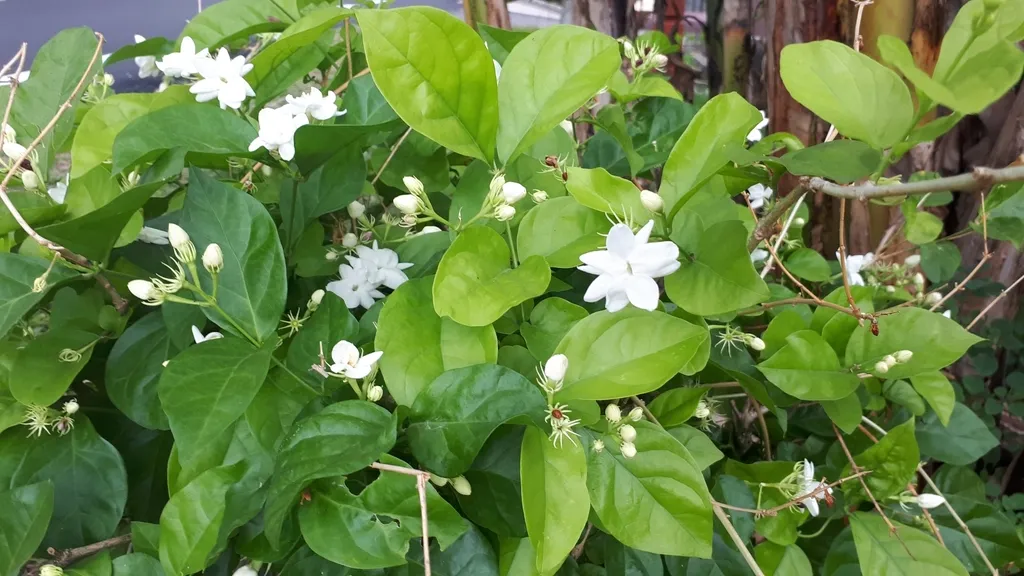
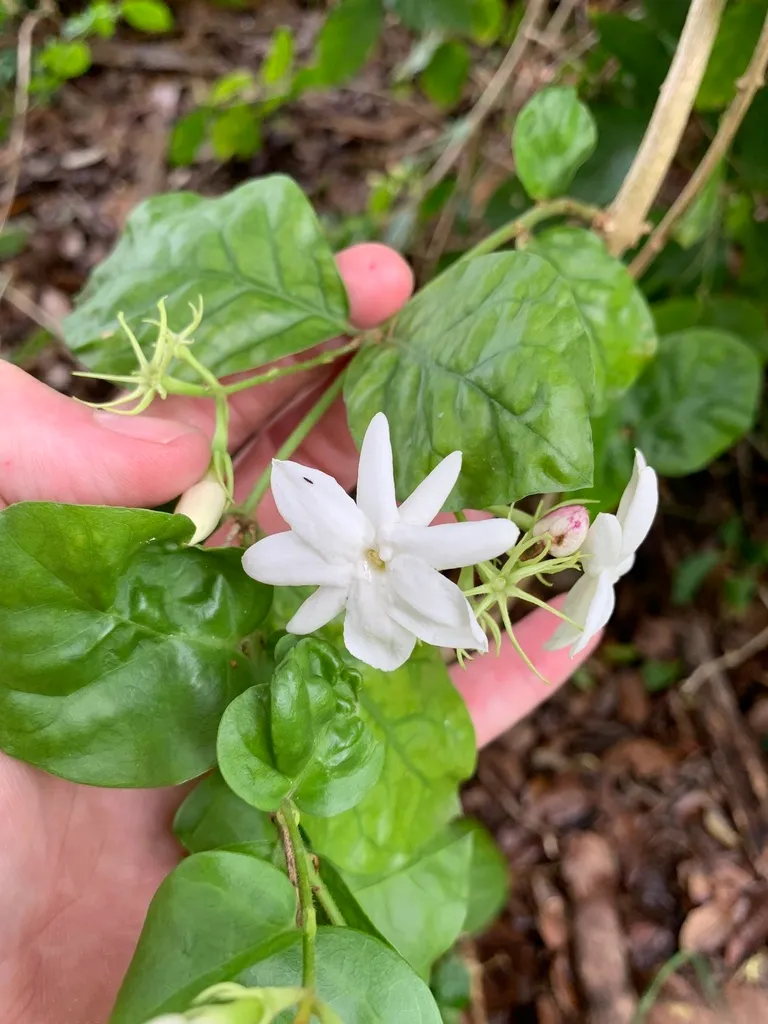
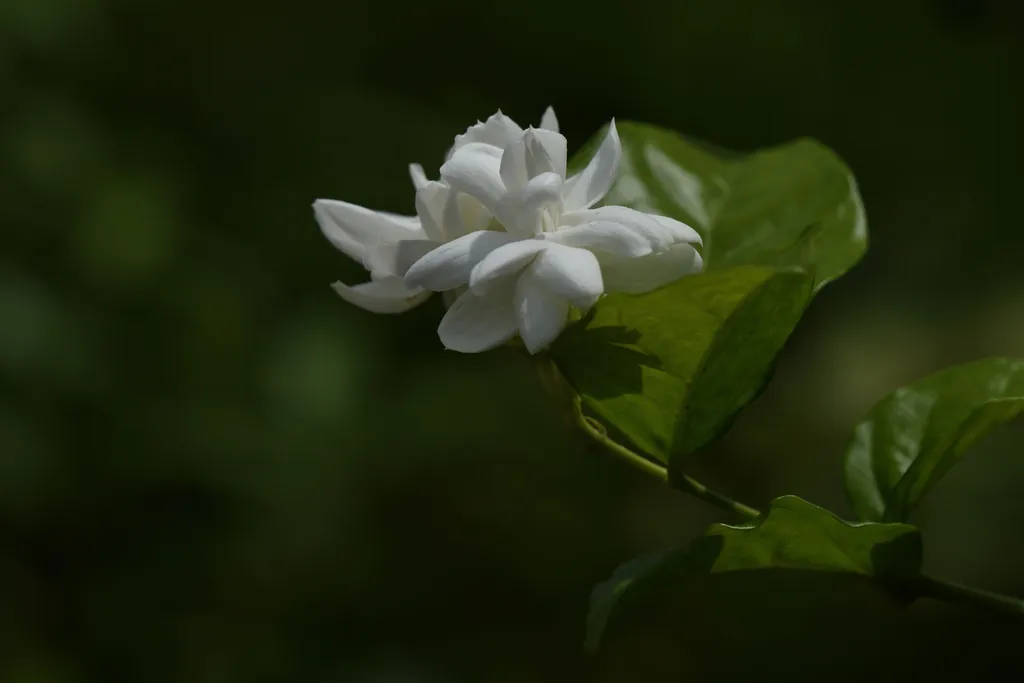
Arabian jasmine is a fragrant, evergreen vine or shrub known for its white, star-shaped flowers. Prune in late spring, post-bloom, to encourage new growth and shape the plant. Trim back to strong lateral branches, removing any dead or weak stems. Regular pruning enhances air circulation and sunlight penetration, promoting healthier blooms. Avoid over-pruning as it may reduce flowering. Ensure tools are clean to prevent disease transmission. Refer to trusted gardening guides for detailed instructions.
Learn more →How to Propagate Arabian jasmine?

Arabian jasmine can be effectively propagated through the method of cuttings. Gardeners should select healthy, non-flowering stems for this purpose. Cuttings should be about 4 to 6 inches long and have several leaf nodes. Remove the lower leaves, and dip the cut end into a rooting hormone before planting in a well-draining soil mix. Maintain consistent moisture and high humidity around the cuttings by covering them with a plastic bag or placing them in a propagator. Root development typically occurs within a few weeks, after which they can be transplanted.
Learn more →How to Transplant Arabian jasmine?
To transplant arabian jasmine effectively, choose early spring to late spring, or late fall to late winter, as these are ideal seasons allowing for optimal root establishment. Ensure a sunny, well-draining location and consider adding compost to enrich the soil for healthier growth.
Learn more →How to Care for Arabian jasmine in Winter?

Arabian jasmine thrives in its native tropical climate, where winters are warm. Naturally, this plant doesn't have adaptations to cold winters. For gardeners, winter care involves keeping the plant indoors or in a heated greenhouse. Pay close attention to humidity levels, as arabian jasmine requires them to remain high. Additionally, water sparingly and make sure the plant receives ample sunlight for warmth and photosynthesis.
Learn more →How to Plant Arabian jasmine?
Indoors-potted: Ensure arabian jasmine has room to sprawl indoors; regular pruning will maintain its compact shape and encourage fuller growth. Outdoors-potted: When potted outdoors, rotate arabian jasmine occasionally to ensure even growth on all sides due to its sprawling habit. Outdoors-in the ground: Arabian jasmine, being a robust plant, can spread quickly in the ground; allocate space wisely to prevent overgrowth into neighboring plants.
Learn more →How to Repot Arabian jasmine?
Repot arabian jasmine, a lush, evergreen shrub, every 2-3 years to accommodate its rapid growth. The best time to repot is spring, fostering vigorous roots in the growing season. Choose a slightly larger pot to give ample space without overpotting. Post-repotting, ensure well-drainage, avoid direct sunlight, and water moderately. Friendly reminder: arabian jasmine's love for warmth means keeping them cozy for a thriving companion.
Learn more →How to Harvest Arabian jasmine?

Arabian jasmine generally blooms in spring and summer, and the flowers are always full of aroma. Picking flowers for home flower arrangements can also promote blooming. Long tendrils of vine varieties can bring movement and romance. Be sure to pick blooms before the buds are fully opened. Cut in the morning or evening, when they are most hydrated. Prune the base of branches at an angle of 45 degrees to increase the water absorption area, and place it in a vase with water quickly. Arabian jasmine can live in a vase about a week.
Learn more →Common Pests & Diseases

Diseases
May be susceptible to honey fungus (rarely)
Pests
May be susceptible to aphids, scale insects and mealybugs and glasshouse red spider mite under glass
Explore the plant health library →Troubleshooting
Interveinal Yellowing (Chlorosis) or Brown Leaf Tips
Arabian jasmine (Jasminum sambac) prefers slightly acidic, humus-rich, well-drained soil and moderate-to-high humidity; alkaline water or soggy roots trigger leaf yellowing.
| What you notice | Possible explanation | What to check next |
|---|---|---|
| New upper leaves turn yellow while leaf veins remain dark green | Iron or micronutrient chlorosis caused by high soil pH (alkaline soil/hard tap water) or cold wet roots | Check soil/water alkalinity and whether yellowing is strongest on newest leaves |
| Older lower leaves turn uniformly yellow and drop while potting mix stays wet | Overwatering, poor drainage, or cold drafts damaging roots | Feel two inches into the mix and inspect drainage holes |
| Leaf tips and edges turn dry and brown in indoor rooms | Low indoor humidity, dry heating vents, or soluble salt buildup | Check room humidity and look for white mineral crust on the soil surface |
- Grow in a well-draining, slightly acidic organic potting mix and water with rainwater or filtered water when the top inch of soil feels dry.
- If interveinal chlorosis appears on new growth, check soil pH and apply a chelated iron or acid-loving plant fertilizer per label directions during active growth.
- Increase local humidity with a pebble tray or humidifier and keep away from cold drafts below 10–15°C (50–59°F).
Stop fertilizing chlorotic plants until root drainage and soil pH are verified, as excess salts worsen root burn.
Bud Drop, Poor Blooming, or Whiteflies/Scale/Sooty Mold
Flower bud drop and sap-sucking pests are common when indoor humidity fluctuates or air movement is limited.
| What you notice | Possible explanation | What to check next |
|---|---|---|
| Flower buds turn yellow-brown and drop before opening | Sudden temperature swings, cold drafts, dry air, or soil moisture extremes | Check proximity to vents/drafty windows and review watering consistency |
| Sticky honeydew, black sooty mold coating leaves, or whiteflies/scale/spider mites on undersides | Whiteflies, scale insects, mealybugs, or spider mites | Inspect leaf undersides and stems closely |
- Place in bright, indirect light (or gentle morning sun) and maintain steady soil moisture and humidity without moving the plant abruptly once budded.
- Prune lightly right after flowering to maintain a bushy shape and encourage new flowering shoots.
- Isolate pest-infested plants, wipe off honeydew/sooty mold with a damp cloth, and apply insecticidal soap or horticultural oil per label directions.
Ensure good ventilation around Arabian jasmine (Jasminum sambac) to prevent sooty mold from sticking to honeydew.